
 한국어
 English
 日本語
 中文(简体)
 Viewing now
Noczyme Capsule 10000 (Pancreatin Enteric-Coated Microgranules)
Pancreatin Enteric Coated Micronized Tablets 162.7mg
Hard capsule · OTC medication
Korea Pharma Bio Co., Ltd.
MFDS item code 200907915 · Approved 2009.11.06
Improvement of pancreatic exocrine insufficiency
This medication is used for pancreatic exocrine function disorders, which refers to conditions where enzymes that assist digestion are not adequately secreted by the pancreas, resulting in decreased digestive function.
Take 2∼4 capsules (20,000-40,000 EP units of lipolytic activity) 3 times daily with meals and plenty of water, without chewing. Adjust the dose as appropriate according to the individual patient's needs, the severity of the disease, and the composition of the food. Do not exceed a daily dose of 15,000-20,000 EP units of lipolytic activity per kg of body weight. If necessary, for ease of administration, open the capsule and swallow its contents without chewing.
This medicine should not be taken by individuals who are allergic to beef or pork, or who have hypersensitivity to this drug or its components. Patients with acute pancreatitis or those with chronic pancreatitis that has acutely worsened should also avoid this medication. Before taking this drug, patients with cystic fibrosis, pregnant women or those who may become pregnant, as well as nursing mothers should consult with their physician or pharmacist. Additionally, those taking folic acid supplements should be aware that this medication may interfere with folic acid absorption, so consulting a professional is advised. Patients taking diabetes medications such as acarbose or miglitol should closely monitor their blood sugar levels, as this medication may affect blood sugar control. If any allergic symptoms occur during use, such as skin rashes, sneezing, tearing, or bronchospasms, discontinue use immediately and consult healthcare personnel. Be mindful of possible symptoms like loss of appetite, dizziness, rhinitis, diarrhea, abdominal pain, nausea, vomiting, dyspepsia, stomatitis, fatigue, etc. In cystic fibrosis patients, high dosages may cause intestinal strictures or colitis, so immediate contact with a healthcare provider is necessary if abdominal pain or unusual symptoms occur. Special caution is needed for children, as ulcers may develop around the mouth or anus. This medication should only be used to improve dyspepsia caused by pancreatic diseases, and care should be taken to prevent the powder form from being inhaled. If symptoms do not improve after taking the medication for more than 2 weeks, discontinue use and seek professional advice. The capsules should be swallowed whole with plenty of water without chewing, and especially for children, care should be taken to ensure that the medicine does not remain in the mouth for long. Store this medication in a sealed container to protect it from air and moisture. Keep it in a place that is cool and dry, away from direct sunlight, and out of reach of children. It is crucial not to transfer the medicine to another container, and to store it in its original container to prevent misuse and maintain the quality of the medication.
Not everyone experiences these, and they can vary from person to person.
Patients taking this medication should consult with their doctor or pharmacist if taking folic acid supplements, acarbose, or miglitol.
This medication should be stored in a sealed container to protect it from air and moisture. The recommended storage temperature is room temperature between 1°C and 30°C. This will help maintain the drug's efficacy and safety for an extended period.
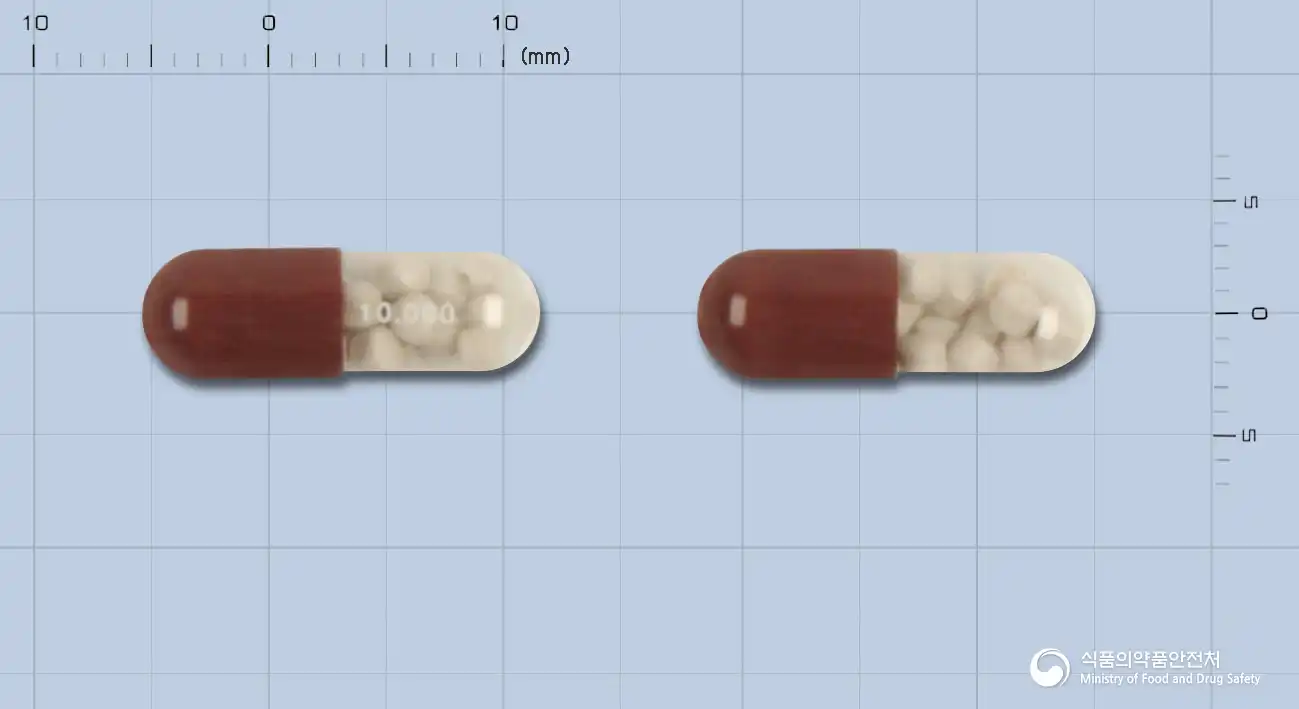
Hard capsules with an opaque brown upper part and a transparent colorless lower part containing enteric-coated microgranules with a unique smell.
100 capsules per bottle
Even with the same ingredient, strength, dosage form and how it is taken can differ.
Viewing nowPancreatin Enteric Coated Micronized Tablets 162.7mg
Hard capsule · OTC medication
Korea Pharma Bio Co., Ltd.
Pancreatin Enteric Coated Micronized Tablets 592.28mg
OTC medication
Korea Pharmbio Co., Ltd.
Even with the same ingredient, the dose and directions can differ by strength and dosage form. Talk to a doctor or pharmacist before switching from a medication you are already taking.
No questions yet.
For anything that needs medical judgment, consult a doctor or pharmacist.
This drug information is based on data provided by the Korea Ministry of Food and Drug Safety.
Consult a doctor or pharmacist for accurate dosage, administration, and usage instructions.