
 한국어
한국어 English
 日本語
日本語 中文(简体)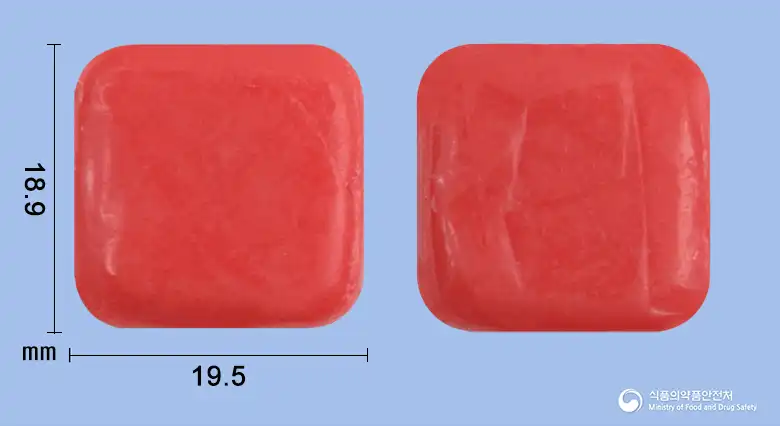
Summary
- Main use
- Improves dry eyes, night blindness, bone growth deficiency, and prevents rickets
- Who takes it
- Adults · Children
- Adult dose
- Ages 8 and older: 2 tablets twice a day. Dissolve in the mouth or chew before swallowing.
- Child dose
- Ages 36 months to under 8 years: 1 tablet twice a day. Dissolve in the mouth or chew before swallowing.
Ingredients
- Synthetic Retinol Acetate Concentrate Powder4mg / 1 tablet
- Riboflavin Sodium Phosphate1mg / 1 tablet
- Pyridoxine Hydrochloride Powder 33.3%4.14mg / 1 tablet
- Cyanocobalamin Powder 0.1%3mg / 1 tablet
- Ascorbic Acid Coated26.04mg / 1 tablet
- Tocopherol Acetate5mg / 1 tablet
- Folic Acid0.12mg / 1 tablet
- Nicotinamide5.4mg / 1 tablet
- Anhydrous Dibasic Calcium Phosphate52.7mg / 1 tablet
- Magnesium Glycerophosphate10mg / 1 tablet
- Magnesium Oxide1mg / 1 tablet
- Orotic Acid Hydrate10mg / 1 tablet
- Ubidecarenone1mg / 1 tablet
- Cholecalciferol Granules2.5mg / 1 tablet
- Thiamine Nitrate Powder 33.3%3.07mg / 1 tablet
- Manufacturer
- 한미약품(주)
Efficacy & effects
Improves dry eyes, night blindness, bone growth deficiency, and prevents rickets
- Fatigue
- physical fatigue
- dry eyes
- night blindness
- bone growth deficiency
View approved original textHide original text
Vitamins A, B1, B2, B6, C, D, and E are needed during growth periods, when feeling physical fatigue during illness and post-illness, during pregnancy and nursing, and in old age. These vitamins help alleviate dry eyes and prevent night blindness, supporting the healthy growth of bones and teeth. In particular, Vitamin D plays a crucial role in preventing rickets. Therefore, this medication is used for overall growth, physical recovery, eye health, dental growth, and prevention of rickets.
How to take
Adult dose
Ages 8 and older: 2 tablets twice a day. Dissolve in the mouth or chew before swallowing.
Child dose
Ages 36 months to under 8 years: 1 tablet twice a day. Dissolve in the mouth or chew before swallowing.
Precautions
This medication should be used cautiously in women who are in the first three months of pregnancy or those who may become pregnant because administering more than 5,000 IU of Vitamin A may cause the risk of congenital malformations. Patients with hypercalcemia, sarcoidosis, kidney disease, renal failure, and kidney stones, as well as people allergic to any of the components of this medication, and infants under 12 months should not take this medication. It is advisable not to take this medication along with drugs such as phosphates, calcium salts, oral tetracycline preparations, antacids, and levodopa. Before taking this medication, infants under one year old, patients receiving medical treatment, children exposed to sunlight for extended periods, patients with hyperoxaluria, pregnant or potentially pregnant women, nursing mothers, premature infants, infants, patients with heart and kidney dysfunction, patients with hypoproteinemia, patients on cardiac glycosides, and those with a history of gout or kidney stones should consult a professional. If symptoms such as nausea, vomiting, itching, dry skin, joint swelling, diarrhea, rash, hypotension, or irregular heartbeats occur while taking this medication, discontinue use immediately and consult a professional. Also, side effects such as menstrual changes, increased risk of thrombosis, tolerance development, neurological symptoms, hematological adverse reactions, exacerbation of peptic ulcers, increased risk of hypercalcemia, and osteoporosis may occur, so caution is advised. It is essential to adhere to the prescribed dosage and administration, and when given to children, supervision by a guardian is necessary. During treatment, it is advisable to avoid beverages containing tannins, such as green tea or black tea, and consult a professional before and after tests, as this medication may affect urine test results. This medication should be stored in a cool, dry place out of reach of children, and direct sunlight should be avoided. Also, it is important not to transfer it to other containers to maintain quality.
Side effects and when to seek care immediately
Mild side effects
Nausea, vomiting, itching, dry and rough skin, painful joint swelling, diarrhea, abdominal discomfort, constipation, rash, redness, loose stools, hypotension, facial flushing, irregular heartbeat, skin rash, red spots, muscle spasms, central nervous system function impairment, menstrual changes (earlier than expected or increased volume), bleeding, sensory neuropathy or neurological symptoms, hematological adverse reactions, exacerbation of peptic ulcers, impaired glucose tolerance, and hyperuricemia
Not everyone experiences these, and they can vary from person to person.
Interactions
Drug interactions
This medication should not be taken with phosphates, calcium salts, oral tetracycline preparations, antacids, or levodopa. If taken with estrogen-containing oral contraceptives, cardiac glycosides, anti-aldosterone drugs, or triamterene, consult a physician or pharmacist.
Food interactions
This medication should be avoided when consuming teas that contain tannins, such as green tea or black tea, during or before and after taking it.
Storage
This medication should be stored in a sealed container to prevent air ingress, and it is recommended to keep it at room temperature between 1°C and 30°C. Storing it this way will maintain its effectiveness and prevent deterioration.
Appearance and packaging
Appearance
Quadratic or oval chewable tablets with a strawberry flavor and reddish color
Package unit
10 tablets/stick, 200 tablets (10 tablets/stick X 20), 120 tablets/can
Questions about this medicine
No questions yet.
For anything that needs medical judgment, consult a doctor or pharmacist.