한국어
 English
 日本語
 中文(简体)
 Viewing now
Amromax 10 mg Tablet (Amlodipine Mesylate Hydrate)
Amlodipine Mesylate Monohydrate 12.79mg
Tablet · Prescription medication
Albozen Korea Co., Ltd.
MFDS item code 200500962 · Notified 2005.02.04 · Insurance code 652601190
Treatment of hypertension and myocardial ischemia (e.g., stable angina)
This medication is used for the treatment of hypertension and myocardial ischemia caused by stable angina due to fixed coronary artery obstruction, as well as variant angina due to vasospasm of the coronary vasculature.
Adults: Administer amlodipine 5 mg orally once daily. If symptoms do not improve within 2 ∼ 4 weeks, the dose may be increased according to the patient's response, up to a maximum of 10 mg daily. Adjust the dose as appropriate according to symptoms.
This medication should not be used in certain patients. For example, it can be risky for patients who have an allergy to this drug or similar components, pregnant or nursing women, patients in a state of cardiogenic shock, those with severe aortic stenosis or unstable angina, patients who have recently suffered a myocardial infarction, and patients with severe liver dysfunction or hypotension. Additionally, patients with very poor renal function, elderly patients, patients with acute heart failure, patients in hypertensive crisis, patients with mildly impaired liver function or restricted cardiac function, patients with low cardiac reserve, or diabetic patients should use this medication cautiously. Generally, this drug has good tolerability, but side effects such as facial flushing or warmth, fatigue, edema, palpitations, dizziness, headache, dyspepsia, drowsiness, and ankle swelling may occur. Rarely, symptoms such as dry mouth, increased sweating, hypotension, syncope, sensory disturbances, erectile dysfunction, and skin rash may occur, so if any abnormal symptoms arise, consult a doctor immediately. Abrupt discontinuation of this medication may worsen symptoms; therefore, when stopping or adjusting the dosage, it should be done cautiously and slowly under a doctor's guidance. Special caution is required for patients with impaired liver function or heart failure. It should be taken with a sufficient amount of water, and due to the blood pressure-lowering effects, there may be dizziness or drowsiness; caution is needed when driving or operating hazardous machinery. This medication can be taken with other antihypertensives, diuretics, antibiotics, hypoglycemic agents, etc., but it is advisable to avoid taking it with grapefruit juice, as this can excessively enhance its blood pressure-lowering effects. Also, since combining with certain medications may alter blood concentration, it is important to inform the doctor of all medications being taken. If pregnant or nursing, it is recommended to avoid this medication as its safety has not been established, and safety in children has also not been confirmed. Elderly patients may have slower drug metabolism; therefore, it should be started at a low dose and used cautiously. In cases of overdose, severe hypotension, headache, and cardiac abnormalities may occur, necessitating immediate medical treatment, as this drug is not removed by hemodialysis and requires specialized treatment. This medication should be kept out of the reach of children, and care should be taken not to transfer it to another container, as that could alter its quality.
Flushing accompanied by a feeling of heat, increased frequency of fatigue, edema, palpitations, angina, dizziness, headache, migraine, weakness, abdominal pain, nausea, dyspepsia, drowsiness, ankle edema, dry mouth, increased sweating, weakness, lethargy, pain, weight gain, weight loss, chills, hypotension, orthostatic hypotension, position-related dizziness, peripheral ischemia, vasculitis, syncope, tachycardia, peripheral edema, increased tension, sensory decline, paresthesia, peripheral neuropathy, dysgeusia, tremors, paralysis, erectile dysfunction, gynecomastia, changes in bowel habits, gastritis, gingival hypertrophy, pancreatitis, vomiting, fullness, loss of appetite, increased appetite, dysphagia, abdominal bloating, hyperglycemia, thirst, increased serum cholesterol levels, elevated creatine kinase, arthralgia, low back pain, muscle cramps, myalgia, increased skeletal muscle tone, arthrosis, single contraction, ataxia, back pain, leukopenia, thrombocytopenia, insomnia, mood changes, sexual dysfunction, dream abnormalities, depersonalization, apathy, anxiety, memory loss, hypersensitivity, depression, anxiety, confusion, fear, discomfort, cough, dyspnea, rhinitis, epistaxis, hair loss, purpura, skin discoloration, urticaria, photosensitivity reactions, rash, erythematous rash, papular rash, moist skin, capillary dilation, urticaria, itching, vascular edema, toxic epidermal necrolysis, tinnitus, visual disturbances, conjunctivitis, diplopia, eye pain, dry eyes, olfactory disturbances, increased urinary frequency, urinary disorders, nocturia, polyuria, dysuria, hepatitis, jaundice, elevated liver enzymes, itching, erythema multiforme, exfoliative dermatitis, mucous membrane syndrome, myocardial infarction, arrhythmia, chest pain, hypotension, sinoatrial block, atrioventricular block, abdominal discomfort, substernal pain, diarrhea, loose stools, constipation, erythematous skin lesions, papular rash, heaviness, heat sensation, impaired glucose tolerance, weakness, systemic hypotension, flushing, headache, reflex tachycardia, heart rhythm abnormalities, shock state, unconsciousness, comatose state, non-cardiogenic pulmonary edema
Not everyone experiences these, and they can vary from person to person.
This medication is sensitive to light and should be stored in a container that blocks light. Additionally, it should be stored at room temperature between 1 and 30 degrees Celsius to maintain its efficacy.
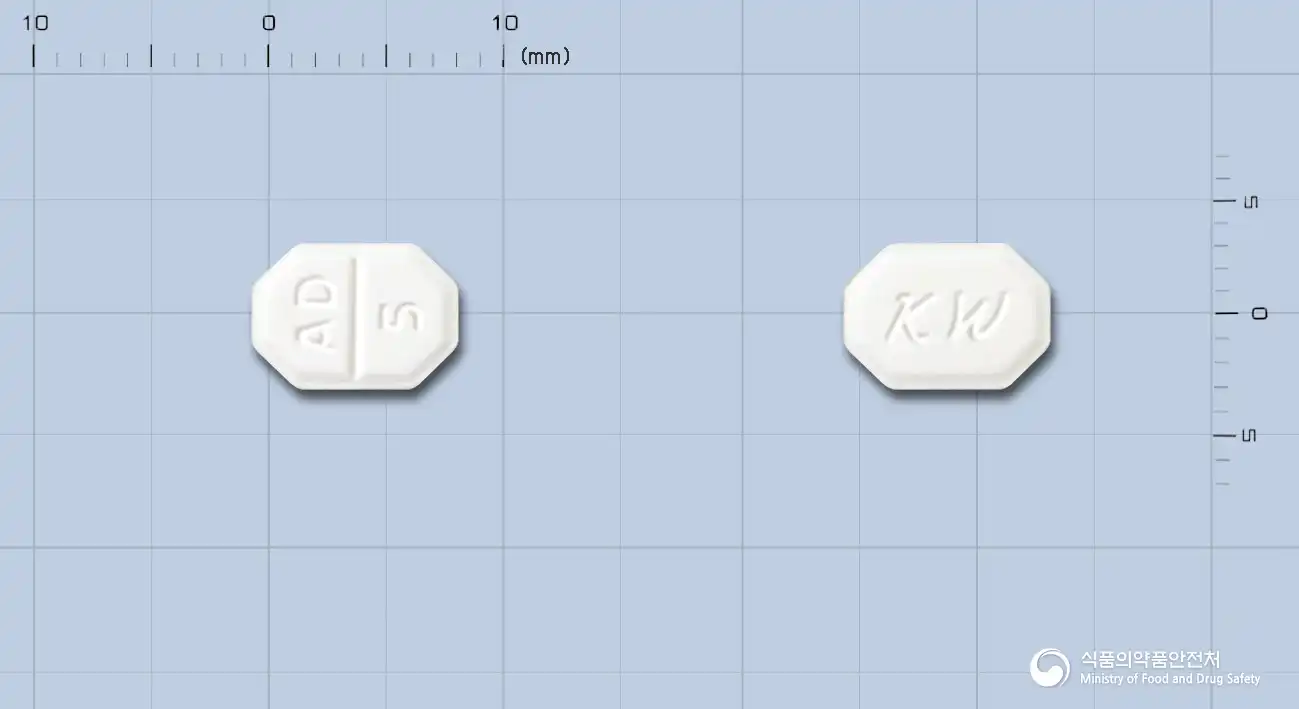
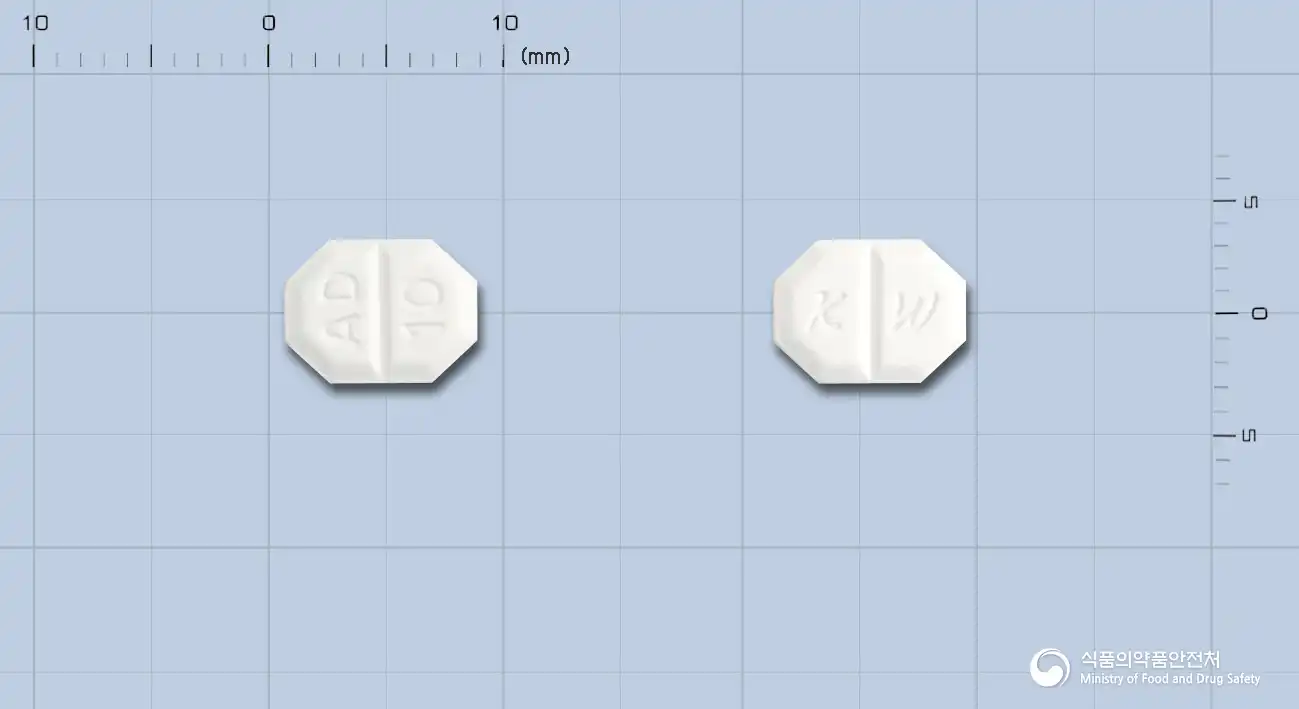
Octagonal tablet, white to grayish-white in color
30 tablets/bottle, 100 tablets/bottle
Even with the same ingredient, strength, dosage form and how it is taken can differ.
Even with the same ingredient, the dose and directions can differ by strength and dosage form. Talk to a doctor or pharmacist before switching from a medication you are already taking.
No questions yet.
For anything that needs medical judgment, consult a doctor or pharmacist.
This drug information is based on data provided by the Korea Ministry of Food and Drug Safety.
Consult a doctor or pharmacist for accurate dosage, administration, and usage instructions.