
 한국어
한국어 English
 日本語
日本語 中文(简体)
 Viewing now
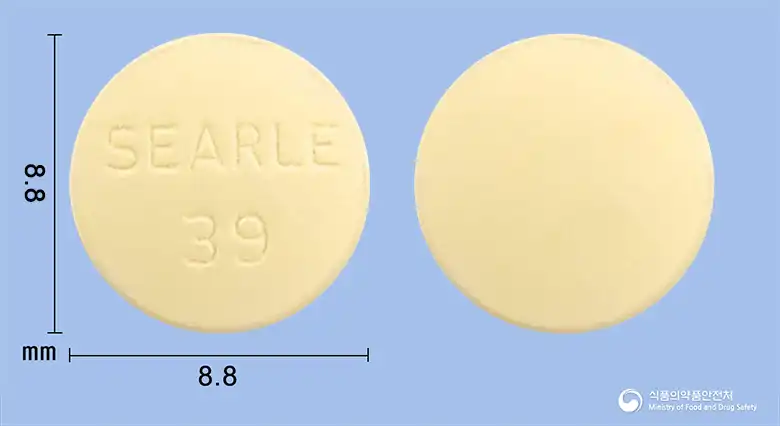
Aldactone Film-Coated Tablets 25mg (Spironolactone)
Spironolactone 25mg
Tablet · Prescription medication
Pfizer Korea Co., Ltd.
MFDS item code 200409929 · Approved 2006.09.11 · Insurance code 648900610
Improvement of hypertension (essential, renal) and edema (cardiac, renal)
This medication is used to treat hypertension, particularly essential and renal hypertension, as well as primary aldosteronism and hypokalemia. It is also effective in managing cardiac edema due to congestive heart failure, renal edema due to kidney disease, hepatic edema resulting from liver disease, and idiopathic edema of unknown cause. It helps to alleviate symptoms and improve health by eliminating or regulating excess body fluids in these conditions. Therefore, it is used for the treatment of various conditions related to hypertension and edema.
As spironolactone, 50-100mg is administered orally in divided doses per day. When used as a diuretic, it is advisable to combine it with other diuretics. When discontinuing treatment, the dose should be gradually reduced over a period of 2-3 days before stopping entirely. Adjustments should be made based on age and symptoms.
This medication should only be used for specific conditions and should not be used unnecessarily. It should not be combined with potassium-rich medications or foods, and potassium-sparing diuretics, as this can lead to serious hyperkalemia. Care should be taken when administering to patients with impaired liver function, as serious side effects such as hepatic encephalopathy may occur. In patients with severe heart failure, potassium levels in the blood should be monitored frequently during treatment, and potassium supplements should also be avoided. This medication should not be administered to patients with very poor kidney function, anuria, acute renal failure, or hyperkalemia. Caution should be exercised when administering to patients with coronary artery disease or cerebrovascular disease, those with reduced liver or kidney function, patients on salt restrictions, and infants. During treatment, regular blood tests are needed due to the potential for electrolyte imbalance. If hyperkalemia is suspected, an electrocardiogram should be performed immediately, and potassium levels in the blood should be monitored consistently. This medication can cause drowsiness or dizziness, so attention should be paid to driving or operating machinery during the initial phase of treatment. When taken with other medications, interactions may increase the risk of hyperkalemia or hypotension, so consultation with a physician is advised. It is recommended not to take this medication during pregnancy as it may affect the fetus, and during breastfeeding, one should either discontinue breastfeeding or avoid taking this medication. Safety for children has not been established, so caution is required when using in this population. Elderly patients are particularly vulnerable to hypotension or electrolyte imbalance, and treatment should start at a low dose while monitoring their condition. In cases of overdose, symptoms may include vomiting, dizziness, confusion, and immediate medical attention should be sought for proper treatment. This medication should be kept out of reach of children and stored in its original container for safety. To avoid nighttime diuresis, it is advisable to take this medication in the morning.
Urticaria, severe swelling (edema), severe rash accompanied by fever, blisters, skin peeling, pain in oral/ocular mucosa, toxic epidermal necrolysis (TEN), Stevens-Johnson syndrome (SJS), drug reaction with eosinophilia and systemic symptoms (DRESS), difficulty breathing or shortness of breath, asthma attacks, respiratory abnormalities with cough and fever, yellowing of skin or eyes (jaundice), liver dysfunction, sudden and severe headache
Not everyone experiences these, and they can vary from person to person.
This medication may be sensitive to air and moisture, and should be stored in a tightly sealed container. It should be kept away from direct sunlight and stored at room temperature, avoiding extremes of heat or cold.
Pale yellow round film-coated tablet
100 tablets (10 tablets/blister x 10)
Even with the same ingredient, strength, dosage form and how it is taken can differ.
Viewing nowSpironolactone 25mg
Tablet · Prescription medication
Pfizer Korea Co., Ltd.
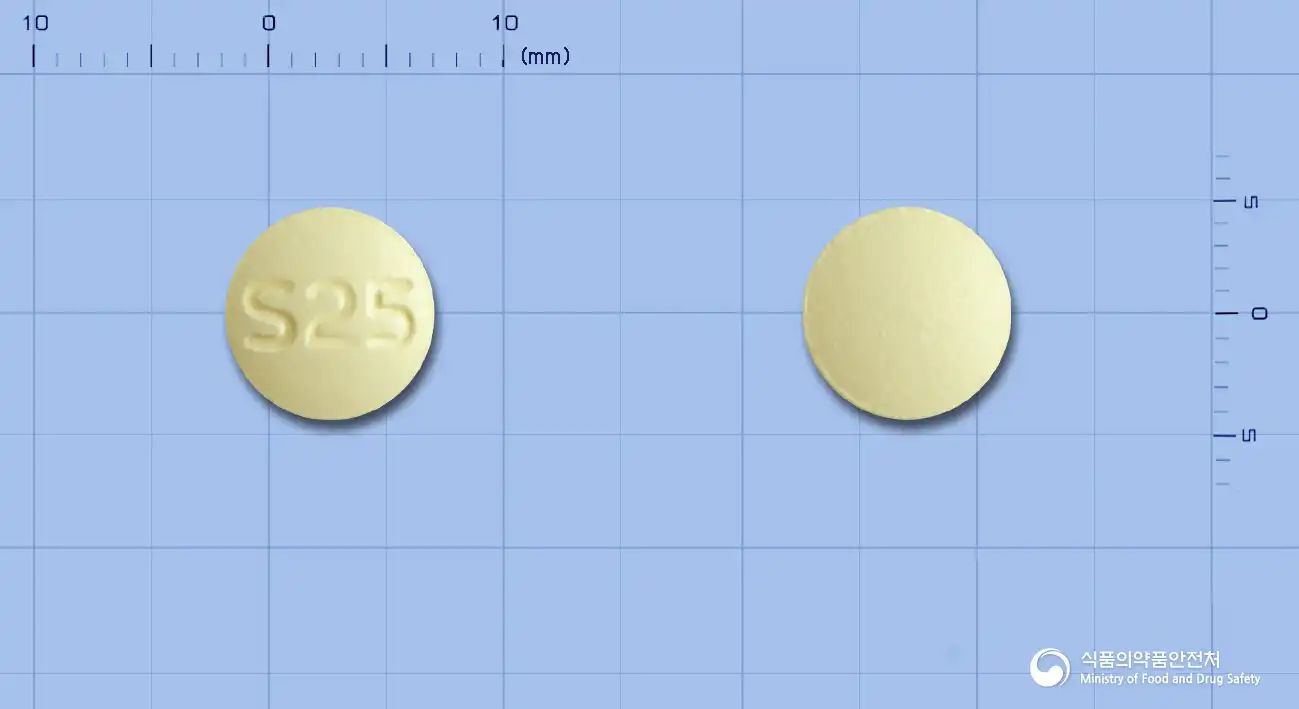
Spironolactone 25mg
Tablet · Prescription medication
Koo Joo Pharmaceutical Co., Ltd.
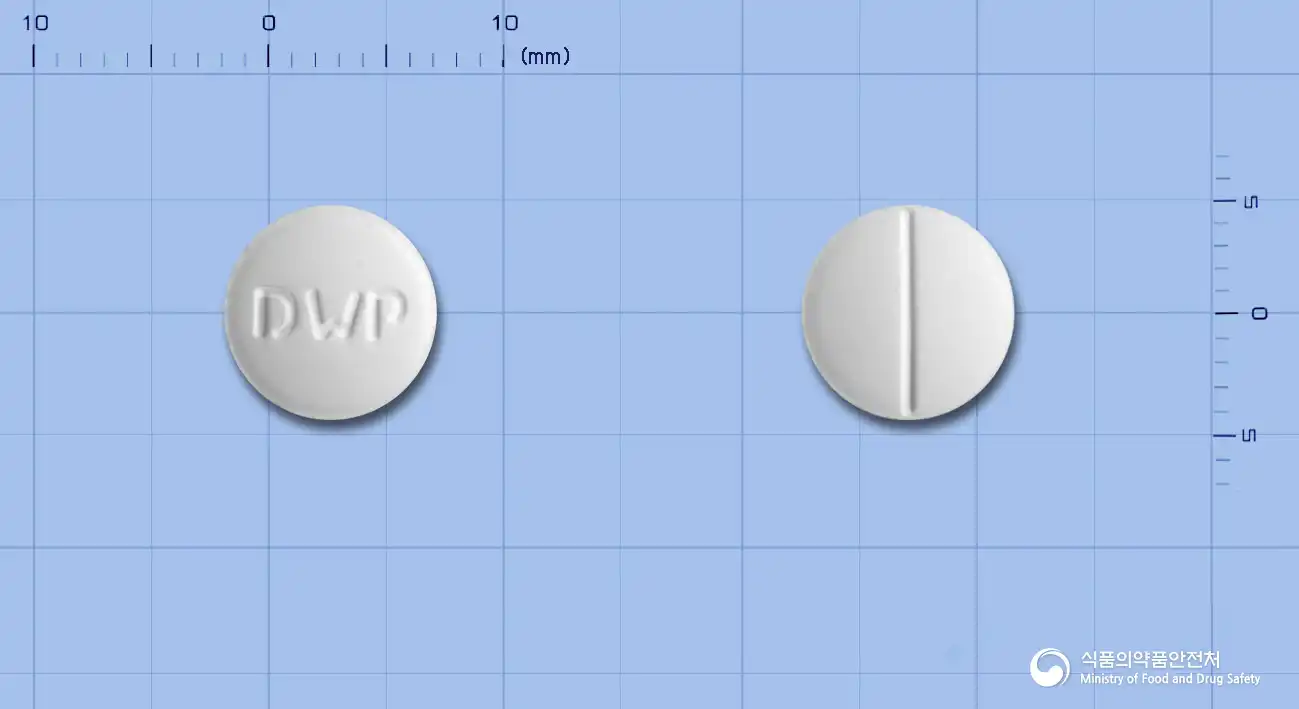
Spironolactone 50mg
Tablet · Prescription medication
Daewon Pharmaceutical Co., Ltd.
Even with the same ingredient, the dose and directions can differ by strength and dosage form. Talk to a doctor or pharmacist before switching from a medication you are already taking.
No questions yet.
For anything that needs medical judgment, consult a doctor or pharmacist.
This drug information is based on data provided by the Korea Ministry of Food and Drug Safety.
Consult a doctor or pharmacist for accurate dosage, administration, and usage instructions.