
 한국어
한국어 English
 日本語
日本語 中文(简体)
 Viewing now
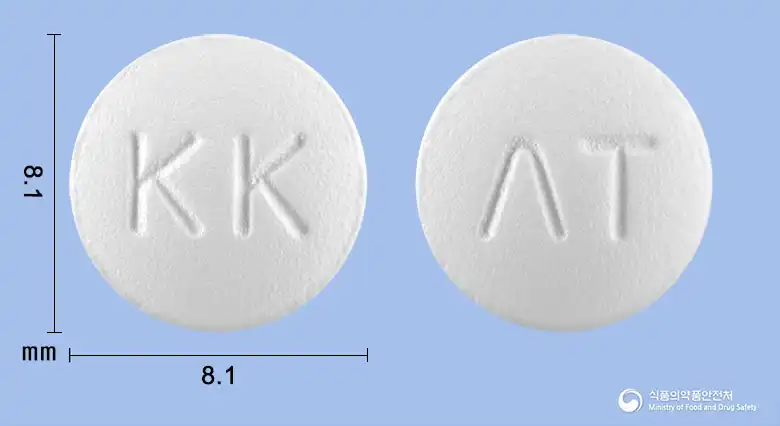
Atenolmin Tablets 50 milligrams (Atenolol)
Atenolol 50mg
Tablet · Prescription medication
Genewon Science Co., Ltd.
MFDS item code 200404669 · Notified 2004.01.07 · Insurance code 671700730
Improvement of hypertension and angina
This medication is used for cardiovascular diseases such as hypertension and angina.
Hypertension: The initial adult dose is 50 mg of Atenolol taken once daily alone or in combination with a diuretic orally. If there is no effect, the dose may be increased to 100 mg once daily, not exceeding 100 mg per day. Angina: 100 mg once daily divided into 1-2 doses, not exceeding 100 mg per day. Renal impairment: For creatinine clearance of 15-35 mL/min/1.73m², administer 50 mg once daily; for less than 15, ...
This medication should not be used in certain patients. For example, it should not be administered to individuals with allergies to the active ingredients or additives, severe bronchial asthma, chronic obstructive pulmonary disease, severe bradycardia, heart block, severe hypotension, or heart failure. Caution is advised when using this medication in certain patients. Special observation and attention are necessary for individuals with bronchial asthma or those at risk for congestive heart failure, for individuals who have difficulty controlling diabetes, for those with severe liver or kidney dysfunction, and elderly patients. Side effects that may occur include skin rash, itching, decreased tear secretion, visual disturbances, bradycardia, hypotension, palpitations, dizziness, fatigue, indigestion, and bronchospasm. If these symptoms occur, immediate consultation with medical personnel is recommended. Patients using this medication for a long time should regularly check heart function, blood pressure, and electrocardiograms, and should not stop taking the medication suddenly, but gradually reduce the dosage as directed by a doctor. Sudden cessation can worsen heart disease symptoms. It is advisable to avoid dangerous activities such as driving or operating machinery while taking this medication. Dizziness may occur especially at the beginning of treatment. Since this medication can interact with other drugs, caution is required when used in conjunction with insulin, calcium channel blockers, and adrenergic agents. Additionally, patients who require surgery should inform the anesthesiologist of their use of this medication. Women who are pregnant or may become pregnant should use this medication cautiously, and those who are breastfeeding should either avoid taking it or stop breastfeeding. The safety for pediatric patients has not been established, so caution is necessary. Elderly patients should start with a low dose and be closely monitored. In cases of overdose, severe bradycardia, hypotension, bronchospasm, and hypoglycemia may occur, so administration should be stopped immediately, and appropriate treatment at a medical institution should be sought. This medication should be stored out of reach of children and should be kept away from high temperatures above 25 degrees Celsius.
Not everyone experiences these, and they can vary from person to person.
This medication may be sensitive to air and moisture, so it should be stored in a tightly sealed container. It is advisable to maintain a storage temperature between 1 degree to 30 degrees Celsius to preserve the medication's effectiveness and safety.
White round film-coated tablet
30 tablets/bottle, 500 tablets/bottle
Even with the same ingredient, strength, dosage form and how it is taken can differ.
Viewing nowAtenolol 50mg
Tablet · Prescription medication
Genewon Science Co., Ltd.
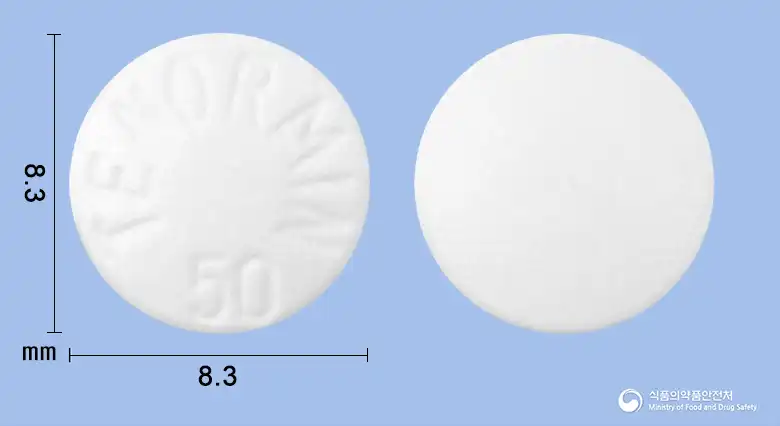
Atenolol 50mg
Tablet · Prescription medication
Hyundai Pharmaceutical Co., Ltd.
Atenolol
Prescription medication
Ildong Pharmaceutical Co., Ltd.
Atenolol 50mg
Prescription medication
Samjin Pharmaceutical Co., Ltd.
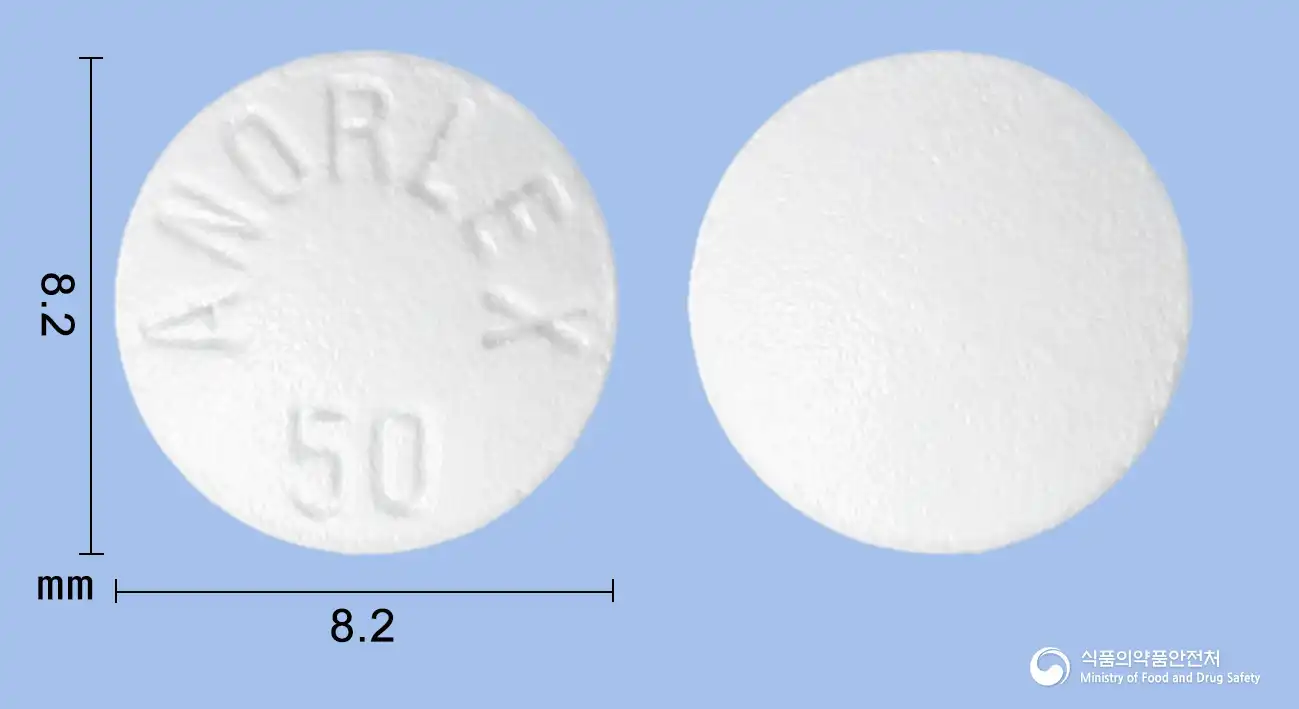
Atenolol 50mg
Tablet · Prescription medication
(CMG Pharmaceutical Co., Ltd.)
Atenolol
Prescription medication
Korea United Pharmaceutical Co., Ltd.
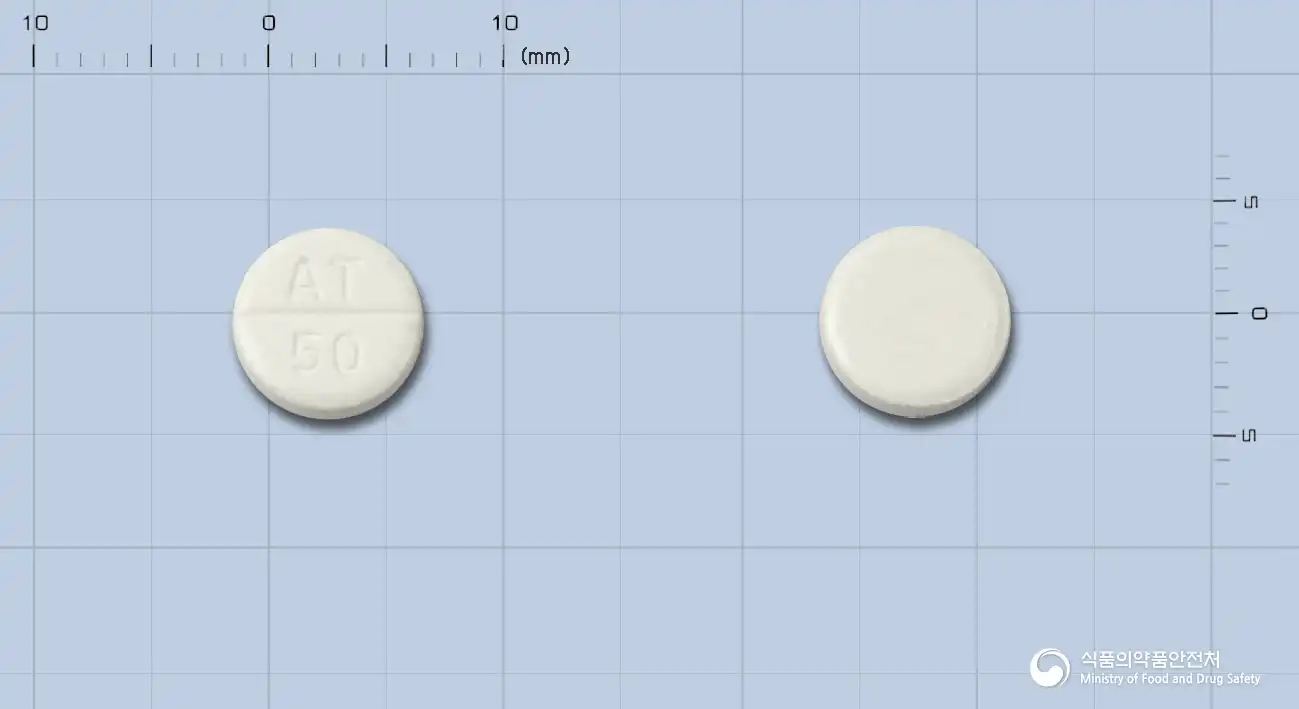
Atenolol 50mg
Tablet · Prescription medication
Daewoo Pharmaceutical Co., Ltd.
Atenolol
Prescription medication
Daewoong Pharmaceutical Co., Ltd.
Even with the same ingredient, the dose and directions can differ by strength and dosage form. Talk to a doctor or pharmacist before switching from a medication you are already taking.
No questions yet.
For anything that needs medical judgment, consult a doctor or pharmacist.
This drug information is based on data provided by the Korea Ministry of Food and Drug Safety.
Consult a doctor or pharmacist for accurate dosage, administration, and usage instructions.