
 한국어
한국어 English
 日本語
日本語 中文(简体)
 Viewing now
KMS Cephalexin Capsules 250 mg
Cefaclor Hydrate 250mg
Hard capsule · Prescription medication
KMS Pharmaceutical Co., Ltd.
MFDS item code 200403254 · Notified 2004.05.20 · Insurance code 654700780
Treatment of respiratory and urinary tract infections such as otitis media and pneumonia
This medication is effective against various bacteria, including Streptococcus pneumoniae, influenza bacteria, and Staphylococcus. It is used to treat respiratory infections such as otitis media, pneumonia, laryngopharyngitis, tonsillitis, and bronchitis. It is also effective for urinary tract infections such as pyelonephritis, cystitis, and gonococcal urethritis. It is prescribed for skin and soft tissue infections such as abscesses, boils, folliculitis, and soft tissue infections. Additionally, it helps treat wound infections like traumatic infections. Overall, it is used for the treatment of various bacterial infections.
As Cefaclor hydrate, take 250mg (potency) orally every 8 hours. In cases of severe infection (such as pneumonia) and infections with low susceptibility, the dose can be doubled. For acute gonococcal urethritis, this medication should be combined with 3g of this drug and 1g of probenecid as a single dose.
Administer 20mg (potency) per kg of body weight divided every 8 hours. In cases of severe infection, otitis media, and infections with low susceptibility, a dosage of 40mg (potency) per kg of body weight can be given, with a maximum dosage of
This drug is an antibiotic that kills bacteria by binding to specific proteins and disrupting their cell wall synthesis. This drug should not be used in patients who have previously experienced severe allergic reactions or shock due to this medication or similar drugs. Caution should be exercised in patients with allergies to penicillin antibiotics, a tendency to develop allergic symptoms such as asthma and rashes, severe renal impairment, or a history of gastrointestinal diseases. While taking this drug, serious allergic reactions such as shock may rarely occur, so symptoms should be closely monitored, and if severe skin reactions such as rashes, blisters, or mucosal damage occur, the medication should be discontinued immediately, and medical attention sought. Laboratory tests may show abnormalities such as leukopenia, anemia, and thrombocytopenia, so regular monitoring is necessary, and any unusual symptoms affecting liver or kidney function should be reported immediately. The gastrointestinal system may experience rare but severe colitis, diarrhea, and abdominal pain, so if symptoms worsen, consult a physician immediately. Respiratory symptoms may develop, leading to cough or difficulty breathing, requiring careful attention. Temporary anxiety, agitation, dizziness, and drowsiness may occur in the central nervous system, so caution is advised when driving or operating machinery. This medication may cause vitamin K deficiency symptoms, so patients with a tendency to bleed should be particularly cautious, and elderly or renal-impaired patients require careful dosage adjustment and monitoring. Additionally, there may be interactions with other medications, so it is essential to consult with a physician or pharmacist when taking this drug alongside anticoagulants, diuretics, or oral contraceptives. Women who are pregnant or breastfeeding should only use this drug cautiously if absolutely necessary, as its safety has not been fully established, and nursing mothers should be aware that the medication may be excreted in small amounts in breast milk. Finally, it is important to take this drug only for the appropriate duration to prevent antibiotic resistance, and any adverse symptoms during the course of treatment should be discussed with healthcare professionals immediately.
Shock (anaphylaxis symptoms: general rash, swelling, difficulty breathing, vascular edema, sensory disturbances, fainting, hypertension, vascular dilation), Stevens-Johnson syndrome, toxic epidermal necrolysis, agranulocytosis, granulocytopenia, pancytopenia, anemia, thrombocytopenia, aplastic anemia, hemolytic anemia, hepatitis, jaundice, elevated AST, ALT, ALP, liver dysfunction symptoms, reversible interstitial nephritis, elevated BUN, elevated serum creatinine, acute
Hives, rashes, itching, erythema, fever, lymphadenopathy, arthralgia, serum sickness-like reactions, nausea, vomiting, diarrhea, abdominal pain, gastrointestinal discomfort, heartburn, loss of appetite, agitation, anxiety, muscle tension, nervousness, insomnia, confusion, dizziness, hallucinations, drowsiness, stomatitis, candidiasis, symptoms of vitamin K deficiency (hypoprothrombinemia, bleeding tendency), symptoms of vitamin B deficiency (stomatitis, stomatitis, loss of appetite, neuropathy), headache
Not everyone experiences these, and they can vary from person to person.
This medication should be stored in a tightly sealed container to protect it from air and moisture, maintaining a storage temperature between 1 and 30 degrees Celsius. Therefore, it is crucial to avoid direct sunlight and not store it in excessively hot or cold places to ensure the medication's effectiveness.
A hard capsule filled with yellowish powder with a purple upper part and a white lower part
30 capsules/bottle, 100 capsules/bottle, 300 capsules/bottle
Even with the same ingredient, strength, dosage form and how it is taken can differ.
Viewing nowCefaclor Hydrate 250mg
Hard capsule · Prescription medication
KMS Pharmaceutical Co., Ltd.

Cefaclor Hydrate 250mg
Hard capsule · Prescription medication
Ildong Pharmaceutical Co., Ltd.

Cefaclor Hydrate 250mg
Hard capsule · Prescription medication
Kolon Pharmaceutical Co., Ltd.
Cefaclor Hydrate 3.75g
Syrup · Prescription medication
Youngjin Pharmaceutical Co., Ltd.

Cefaclor Hydrate 250mg
Hard capsule · Prescription medication
Shinil Pharmaceutical Co., Ltd.
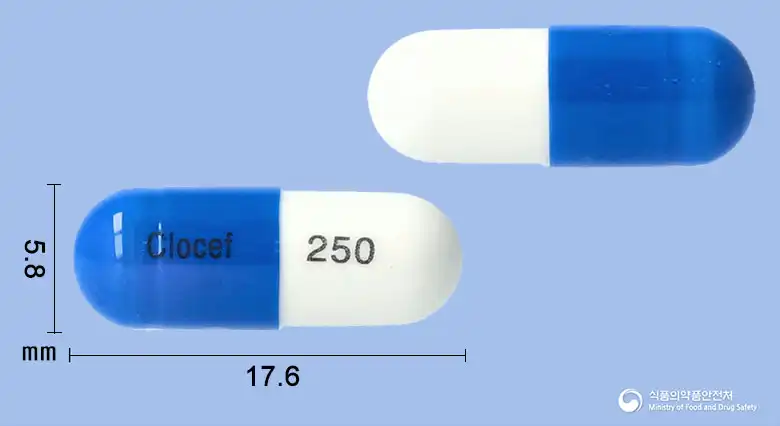
Cefaclor Hydrate 250mg
Hard capsule · Prescription medication
Hanmi Pharmaceutical Co., Ltd.
Cefaclor Hydrate 2.5g
Syrup · Prescription medication
Hanmi Pharmaceutical Co., Ltd.
Cefaclor Hydrate 3.75g
Syrup · Prescription medication
Shinpoong Pharmaceutical Co., Ltd.
Even with the same ingredient, the dose and directions can differ by strength and dosage form. Talk to a doctor or pharmacist before switching from a medication you are already taking.
No questions yet.
For anything that needs medical judgment, consult a doctor or pharmacist.
This drug information is based on data provided by the Korea Ministry of Food and Drug Safety.
Consult a doctor or pharmacist for accurate dosage, administration, and usage instructions.