
 한국어
 English
 日本語
 中文(简体)
 Viewing now
Prop Tablet 20 mg (Propiverine Hydrochloride)
Propiverine Hydrochloride 20mg
Tablet · Prescription medication
Dae Hwa Pharmaceutical Co., Ltd.
MFDS item code 200402114 · Notified 2004.12.14 · Insurance code 645602090
Relief of overactive bladder symptoms (urgency, etc.), and urinary frequency and incontinence due to bladder disorders
This medication is used to alleviate symptoms of frequent urination and incontinence occurring due to neurogenic bladder, neurogenic frequency, unstable bladder, and bladder irritation caused by chronic cystitis or chronic prostatitis. It also improves symptoms of urinary urgency, frequency, and urge incontinence caused by overactive bladder. With these efficacies, it helps enhance the quality of life of patients and treats uncomfortable urination symptoms.
Adults: Administer propiverine hydrochloride 20 mg orally once daily after meals. Adjust the dose as appropriate according to symptoms; if the effect is insufficient and there are no safety concerns, the dose may be increased to 20 mg 2 times daily.
This medication should not be used in certain patients. People who are allergic to this drug or its ingredients should not take it. Patients with gastrointestinal blockage should avoid taking this drug, as it may exacerbate symptoms by inhibiting intestinal muscle movement. Patients with decreased gastrointestinal function or excessive relaxation of the intestines may also experience exacerbation of symptoms due to the action of this drug. Patients who have difficulty urinating should be cautious, as the anticholinergic action of this drug could reduce bladder muscle contractions and worsen symptoms. Patients with glaucoma, particularly those with closed-angle glaucoma, should not take this drug, as it may raise intraocular pressure and exacerbate symptoms. Patients with severe myasthenia gravis should also avoid using this drug, as it may worsen symptoms. Patients with severe heart diseases should be cautious as arrhythmias may occur as a side effect from this drug. Patients with toxic megacolon or ulcerative colitis may experience severe problems in the intestines upon taking this drug. Patients with moderate to severe hepatic dysfunction or a history of arrhythmia should also avoid taking this drug. Additionally, this medication contains lactose, so individuals with lactose intolerance or related genetic disorders should not take it. When using this drug, patients with urination difficulties, weak liver or kidney function, Parkinson's disease, cerebrovascular diseases, or hyperthyroidism should be especially cautious. Elderly patients are also at a higher risk for decreased liver and kidney function, so the drug should be started at a low dose and carefully monitored. Patients with autonomic nervous system disorders, coronary artery disease, heart failure, cerebral arteriosclerosis, or glaucoma should also exercise caution. This drug may cause neuropsychiatric reactions such as changes in mental state, hallucinations, and delusions, so symptoms should be well observed. Severe constipation or abdominal bloating may occur in the digestive system, so caution is advised. Cardiac side effects have been reported, including palpitations, arrhythmias, and changes in blood pressure, thus immediate consultation with a physician is warranted for any abnormal symptoms. Blood-related side effects may include thrombocytopenia, making it necessary to check for bleeding tendencies. Kidney dysfunction or urinary retention symptoms may also develop, so careful observation of urinary output is needed. Serious allergic reactions such as Stevens-Johnson syndrome can manifest on the skin; thus, immediate discontinuation is required if symptoms such as fever, rash, or itching occur. Acute glaucoma attacks due to increased ocular pressure can occur occasionally, requiring immediate treatment for any vision loss or eye pain. Hepatic dysfunction, muscle pain, and weakness have also been reported, necessitating caution upon the appearance of symptoms. When taking this drug, using other anticholinergics, tricyclic antidepressants, phenothiazine drugs, or MAO inhibitors may increase the risk of side effects, so consultation with a physician or pharmacist is essential. Women who are pregnant or may become pregnant should avoid this medication due to lack of established safety. Women who are breastfeeding should also discontinue nursing as this medication may be excreted in breast milk. It is advisable not to administer this drug to children, as its safety has not been established. In case of overdose, symptoms such as mental confusion, seizures, severe gastrointestinal issues, and cardiac abnormalities may occur, necessitating immediate hospital treatment. This drug should be stored out of the reach of children and should not be transferred to a different container for safety reasons. Finally, this medication has been reported to pose a risk for certain cancers in animal studies after prolonged high-dose administration; therefore, strict adherence to a physician's instructions is necessary for long-term use.
Not everyone experiences these, and they can vary from person to person.
This medication should be stored in a tightly closed container to prevent exposure to air or moisture. The storage temperature should maintain room temperature between 1 degree Celsius and 30 degrees Celsius.
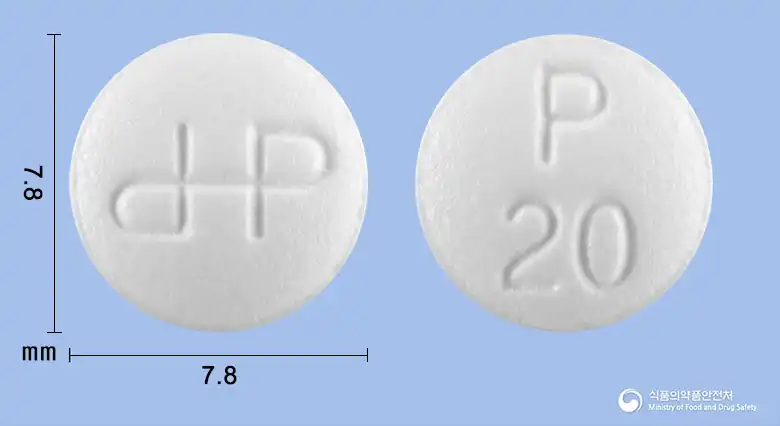
Odorless white flat round film-coated tablets
30 tablets/bottle, 100 tablets/bottle
Even with the same ingredient, strength, dosage form and how it is taken can differ.
Viewing nowPropiverine Hydrochloride 20mg
Tablet · Prescription medication
Dae Hwa Pharmaceutical Co., Ltd.

Propiverine Hydrochloride 10mg
Tablet · Prescription medication
Chaeil Pharmaceutical Co., Ltd.

Propiverine Hydrochloride 20mg
Tablet · Prescription medication
Jeil Pharmaceutical Co., Ltd.

Propiverine Hydrochloride 20mg
Tablet · Prescription medication
Shinpoong Pharmaceutical Co., Ltd.

Propiverine Hydrochloride 20mg
Tablet · Prescription medication
Dongguk Pharmaceutical Co., Ltd.

Propiverine Hydrochloride 20mg
Tablet · Prescription medication
Iyeon Pharmaceutical Co., Ltd.

Propiverine Hydrochloride 20mg
Tablet · Prescription medication
Daewoong Pharmaceutical Co., Ltd.

Propiverine Hydrochloride 20mg
Tablet · Prescription medication
Bionex Co., Ltd.
Even with the same ingredient, the dose and directions can differ by strength and dosage form. Talk to a doctor or pharmacist before switching from a medication you are already taking.
No questions yet.
For anything that needs medical judgment, consult a doctor or pharmacist.
This drug information is based on data provided by the Korea Ministry of Food and Drug Safety.
Consult a doctor or pharmacist for accurate dosage, administration, and usage instructions.