
 한국어
 English
 日本語
 中文(简体)
Summary
- Main use
- Treatment of hypertension and angina
- Who takes it
- Adults
- Adult dose
- 1. Essential hypertension, renal parenchymal hypertension Adults: Administer 20 ~ 40 mg of efonidipine hydrochloride orally in 1 ~ 2 divided doses daily. If adequate blood pressure reduction is not achieved, the maximum daily dose is 60 mg. The dose may be adjusted as appropriate according to symptoms. 2. Angina pectoris Adults: Administer 40 mg of this drug orally once daily after meals. The dose may be adjusted as appropriate according to symptoms.
Ingredients
- Manufacturer
- Green Cross Corporation
Efficacy & effects
Treatment of hypertension and angina
- Essential hypertension
- renal parenchymal hypertension
- angina
View approved original textHide original text
Used for essential hypertension, renal parenchymal hypertension, and angina.
How to take
Adult dose
1. Essential hypertension, renal parenchymal hypertension Adults: Administer 20 ~ 40 mg of efonidipine hydrochloride orally in 1 ~ 2 divided doses daily. If adequate blood pressure reduction is not achieved, the maximum daily dose is 60 mg. The dose may be adjusted as appropriate according to symptoms. 2. Angina pectoris Adults: Administer 40 mg of this drug orally once daily after meals. The dose may be adjusted as appropriate according to symptoms.
Precautions
This medication should not be used by women who are pregnant, may become pregnant, or are breastfeeding. It should be used with caution in patients with severely impaired liver function, elderly patients, patients with severe hypotension, and patients with cardiac conduction dysfunction. Taking this medication may cause an increase in heart rate, flushing, and headaches. Liver and kidney function test results may change, so regular tests are necessary, and any abnormalities should be reported immediately. Careful observation of symptoms is necessary as cardiac conduction abnormalities or excessive blood pressure lowering can cause shock. Symptoms such as flushing, palpitations, dizziness, headaches, nausea, abdominal pain may occur, and if any skin rash or itching appears, use should be discontinued. Discontinuing this medication suddenly may worsen symptoms, so the dosage should be gradually reduced as directed by a physician. If blood pressure becomes too low, dosage adjustment or temporary discontinuation may be necessary. Patients undergoing peritoneal dialysis should be cautious as the dialysis solution may become cloudy, to distinguish it from an infection. When operating dangerous machinery, such as when driving or working at heights, caution is required as dizziness may occur. If taken with other antihypertensive agents or specific medications, the effect may be intensified, so it is essential to consult with healthcare providers. It is advisable to avoid taking this medication with grapefruit juice as it may raise the blood concentration of the drug and lead to side effects. It is safest not to use this medication during pregnancy or while breastfeeding. Safety in children has not been established, so it is not for use in children. Elderly patients should start at a lower dose to avoid excessively low blood pressure and should be carefully monitored during treatment. Care should be taken not to swallow pieces of the pill packaging as it may cause injury to the esophagus.
Side effects
Palpitations, flushing, headache, increased serum total cholesterol, increased ALT, increased AST, syndrome of inappropriate antidiuretic hormone secretion, atrioventricular junction rhythm, heart block, excessive blood pressure reduction, shock, increased AST, increased ALT, increased LDH, increased ALP, increased bilirubin, increased BUN, increased serum creatinine, increased urine protein, eosinophilia, decreased hemoglobin, decreased hematocrit, decreased red blood cells, decreased white blood cells, decreased platelets, facial flushing, heat sensation, bradycardia, chest pain, hypotension, sweating, tachycardia, atrial fibrillation, ectopic beats, heaviness, dizziness, orthostatic dizziness, staggering, drowsiness, paralysis, tinnitus, diarrhea, nausea, vomiting, discomfort in the upper abdomen, abdominal pain, constipation, rash, itching, thickening of the gums, general malaise, frequent urination, edema, increased triglycerides, increased serum creatine phosphokinase, increased uric acid, decreased serum potassium
Not everyone experiences these, and they can vary from person to person.
Storage
This medication should be stored in a tightly sealed container to prevent air or moisture ingress, ideally at room temperature between 1°C and 30°C. Proper storage will help maintain the medication's effectiveness and prevent degradation.
Appearance and packaging
Appearance
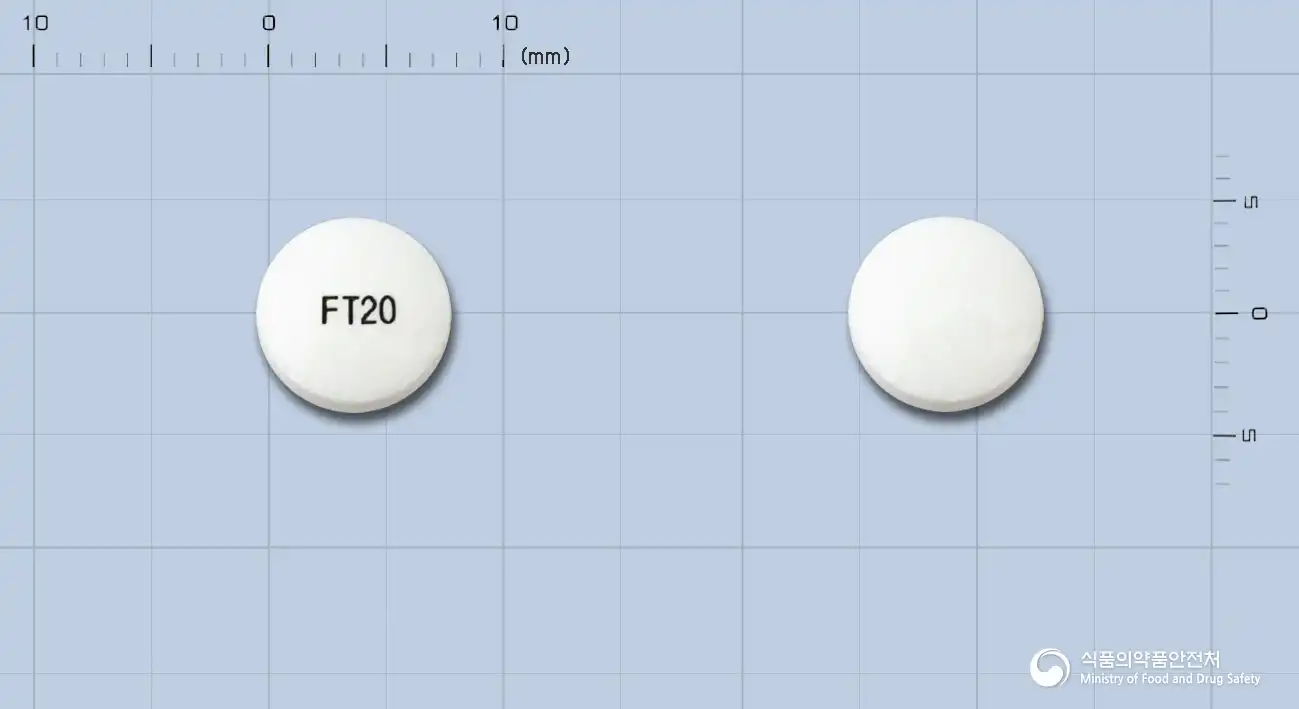
It is a round film-coated tablet that is white or slightly yellowish-white.
Package unit
[20 mg]: 30 tablets (10 tablets/PTP × 3), 100 tablets (10 tablets/PTP × 10) [40 mg]: 30 tablets (10 tablets/PTP × 3), 100 tablets/bottle
Questions about this medicine
No questions yet.
For anything that needs medical judgment, consult a doctor or pharmacist.