
 한국어
한국어 English
 日本語
日本語 中文(简体)
Dosage form image
Viewing nowWithus Atenolol Tablet 50mg
Atenolol
Prescription medication
Withus Pharmaceutical Co., Ltd.
MFDS item code 199802611 · Notified 1998.05.28
This product's status changed to Approval withdrawn on 2023.08.18. It may no longer be sold, so consult a doctor or pharmacist before taking it.
Improvement of hypertension and angina
This medication is used for hypertension and angina.
Hypertension: The initial adult dose of atenolol is 50mg once daily, either as monotherapy or in combination with a diuretic. If no effect is observed within 1-2 weeks, increase to 100mg once daily. Do not exceed 100mg per day. Angina: Administer 100mg per day divided into 1-2 doses. Do not exceed 100mg per day. In renal impairment, adjust dosage according to age and symptoms.
This medication should not be used by those with allergies to the active ingredient or excipients. Patients with severe bronchial asthma or chronic obstructive pulmonary disease should not take this medication. It is also safe not to administer in patients with diabetic ketoacidosis or metabolic acidosis. Patients with very slow heart rates (bradycardia) or cardiac conduction disorders may be at risk when using this medication. Patients with cardiogenic shock, right heart failure due to pulmonary hypertension, or congestive heart failure should not take this medication. Individuals with severe hypotension or peripheral circulation disorders should also avoid the use of this medication. This medication may affect thyroid function, so caution is required for patients with hyperthyroidism. Since this medication contains lactose, patients with lactose intolerance or related genetic disorders should avoid taking it. Patients who may experience bronchial asthma or bronchospasm should be closely monitored by their doctor while using this medication. Patients at risk of heart failure should be cautious when using this medication in combination with other cardiac drugs. Diabetics should frequently check their blood sugar levels, as this medication can affect blood sugar control. Patients with severely impaired liver or kidney function may require dosage adjustments. Elderly patients should start at a low dose and be closely monitored. This medication can cause various side effects, including skin rash, itching, reduced tear production, vision impairment, bradycardia, hypotension, dizziness, and gastrointestinal disorders. Caution is warranted as it may affect the respiratory system, potentially causing shortness of breath or wheezing. Liver dysfunction or renal impairment symptoms have also been reported, necessitating regular check-ups. When taking this medication for a long time, regular checks of heart function, blood pressure, and electrocardiograms are essential, and it should not be stopped suddenly but gradually reduced. Patients scheduled for surgery should inform their doctor about the use of this medication to minimize the risk of cardiac suppression during anesthesia. It is advisable to avoid driving or operating dangerous machinery initially after starting this medication due to potential dizziness. The safety of this medication during pregnancy or breastfeeding has not been established, so it should only be used when necessary. In breastfeeding, discontinuation of nursing is recommended. The safety in children has not been adequately confirmed, so caution is advised in their use. In cases of overdose, symptoms such as decreased heart rate, heart failure, hypotension, bronchospasm, and hypoglycemia may occur, requiring immediate medical attention. Keep this medication out of reach of children and do not store it at temperatures above 25 degrees Celsius. Transferring to another container may alter the quality, so it is safest to store in its original container.
Not everyone experiences these, and they can vary from person to person.
This medication should be stored in a tightly sealed container to protect it from air and moisture. Additionally, it is best to store it at room temperature between 1 degree and 30 degrees Celsius, avoiding extremes of heat or cold.
White film-coated round tablet
30 tablets/bottle, 500 tablets/bottle
Even with the same ingredient, strength, dosage form and how it is taken can differ.
Atenolol
Prescription medication
Withus Pharmaceutical Co., Ltd.
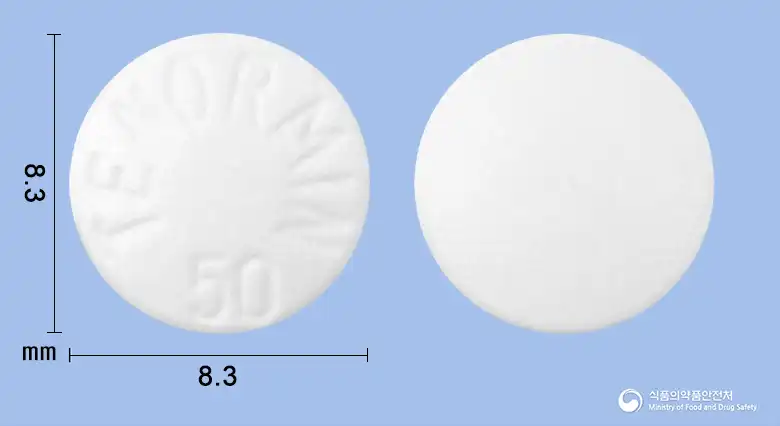
Atenolol 50mg
Tablet · Prescription medication
Hyundai Pharmaceutical Co., Ltd.
Atenolol
Prescription medication
Ildong Pharmaceutical Co., Ltd.
Atenolol 50mg
Prescription medication
Samjin Pharmaceutical Co., Ltd.
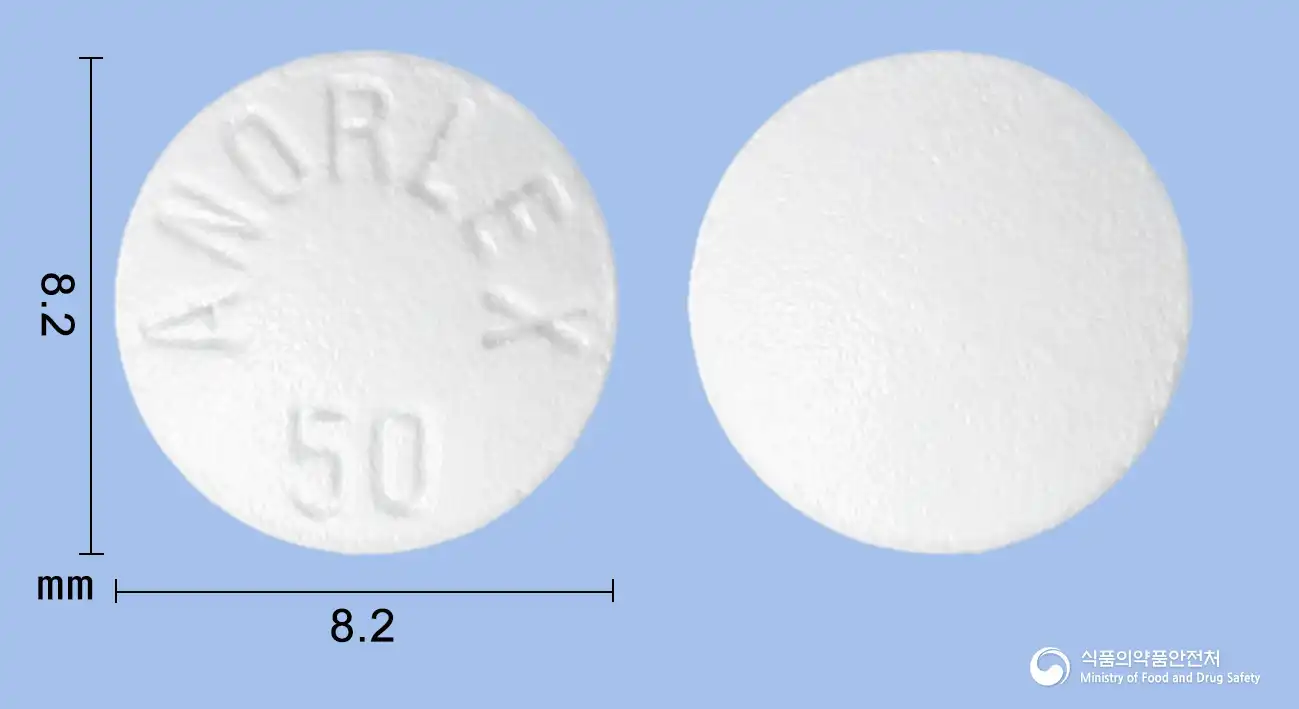
Atenolol 50mg
Tablet · Prescription medication
(CMG Pharmaceutical Co., Ltd.)
Atenolol
Prescription medication
Korea United Pharmaceutical Co., Ltd.
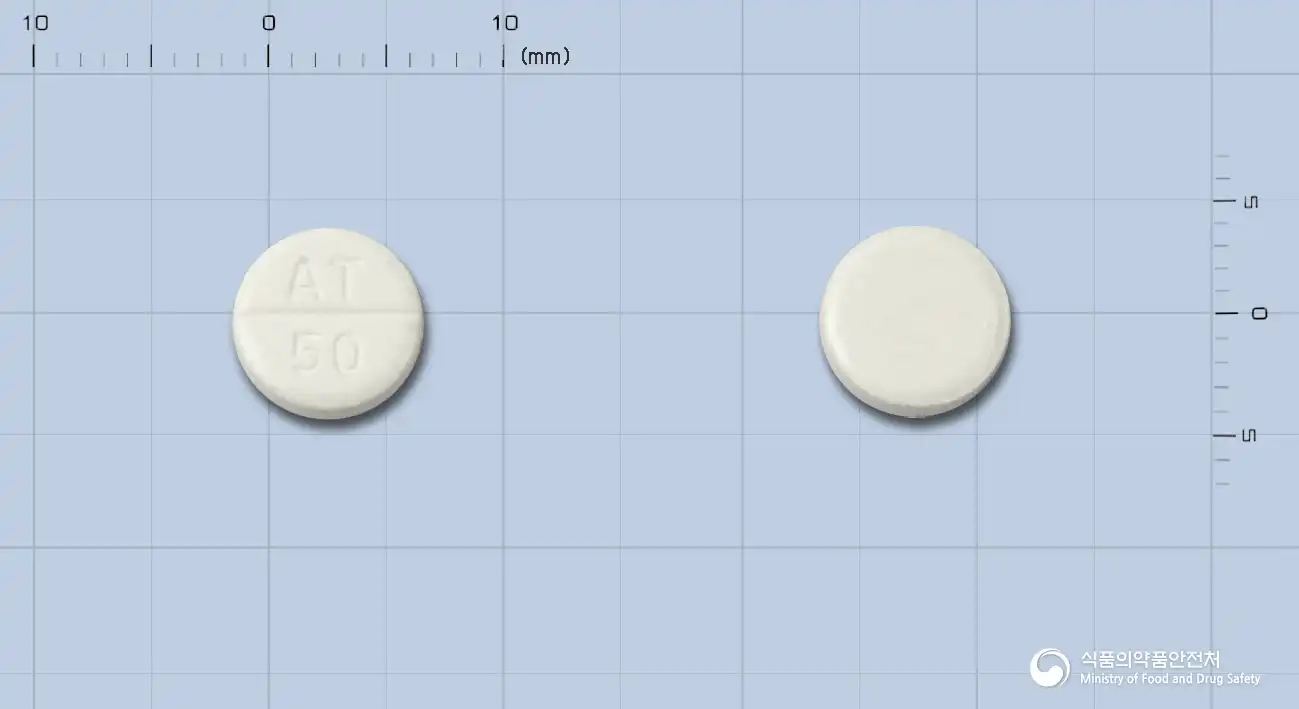
Atenolol 50mg
Tablet · Prescription medication
Daewoo Pharmaceutical Co., Ltd.
Atenolol
Prescription medication
Daewoong Pharmaceutical Co., Ltd.
Even with the same ingredient, the dose and directions can differ by strength and dosage form. Talk to a doctor or pharmacist before switching from a medication you are already taking.
No questions yet.
For anything that needs medical judgment, consult a doctor or pharmacist.
This drug information is based on data provided by the Korea Ministry of Food and Drug Safety.
Consult a doctor or pharmacist for accurate dosage, administration, and usage instructions.