한국어
 English
 日本語
 中文(简体)
 Viewing now
Molsiton Tablet 4 milligrams (Molcidomine)
Molsidomine 4mg
Tablet · Prescription medication
Erison Pharmaceutical Co., Ltd.
MFDS item code 199802244 · Notified 1998.05.07 · Insurance code 620500050
Prevention and maintenance treatment of angina pectoris
This medication is used for the prevention and maintenance treatment of angina. Please note that it is not to be used as emergency treatment during acute angina attacks. By taking it consistently, it helps prevent the recurrence of angina and stabilize symptoms. It contributes to improving the quality of life of patients by enhancing heart blood flow. It is used as an important therapeutic method for managing angina.
The usual initial dose of molsidomine is 1 ~ 2 mg per dose, taken orally 2 ~ 3 times daily after meals. If necessary, the dose may be increased to 4 mg per dose 3 times daily. For the treatment of severe angina pectoris, start with an initial dose of 4 mg per dose, taken orally 2 ~ 3 times daily after meals.
Use is not recommended in children and adolescents under 18 years of age.
This medication may not be suitable for certain patients. For example, patients who have had allergies or hypersensitivity reactions to this medication or its ingredients, those with serious heart or circulatory issues, should not take this medication. Additionally, patients with very low blood pressure, those in shock, and breastfeeding women should also avoid it. This medication can be dangerous if taken with certain substances, so patients taking specific drugs such as Sildenafil should definitely avoid it. Since it contains lactose, it should not be administered to patients with lactose intolerance or related genetic disorders. This medication should be used cautiously in patients with heart-related diseases. For example, patients with issues related to the aorta or heart valves or those who have recently experienced a myocardial infarction should use this medication carefully. While taking this medication, neurological symptoms such as headaches or dizziness may occur. Most of the time, these symptoms will resolve over time, but if they persist, it may be necessary to adjust the dosage. Blood pressure may drop or shock symptoms may appear, in which case it is safest to stop taking the medication. Additionally, gastrointestinal symptoms such as nausea or dyspepsia can occur rarely. Immune system adverse reactions such as skin itching or allergic reactions, and in severe cases, asthma or anaphylactic shock can also occur. In the event of severe hypotension, the medication should be stopped immediately, and if there are symptoms of hypotension, it is advisable to avoid driving or operating machinery. This medication's effects appear slowly, making it unsuitable for treating acute angina. Taking this medication with other drugs that lower blood pressure or with alcohol can enhance the blood pressure-lowering effects, so caution is advised. In particular, taking it with Sildenafil can pose a serious risk of severe blood pressure drop, so it should never be taken together. Pregnant or breastfeeding women should avoid this medication as its safety has not been established. In cases of overdose, symptoms such as low blood pressure, weakness, dizziness, coma, or decreased heart function can occur. In such cases, the patient should be laid down with their legs elevated, and if necessary, stomach pumping and intensive care should be administered. If blood pressure drops severely, replenishing blood volume and administering specific medications may be necessary, so immediate medical attention should be sought. This medication should be kept out of the reach of children, and care should be taken not to transfer it to another container as this could degrade its quality. Lastly, in animal experiments, there have been cases of tumors around the nasal area from overdose, but there is currently no evidence that it causes cancer in humans.
Not everyone experiences these, and they can vary from person to person.
This medication is sensitive to light, so it should be stored in a dark container away from direct sunlight. Additionally, it is important to keep it in a sealed container to avoid contact with air. The storage temperature should be room temperature, meaning a general indoor temperature that is neither too hot nor too cold.
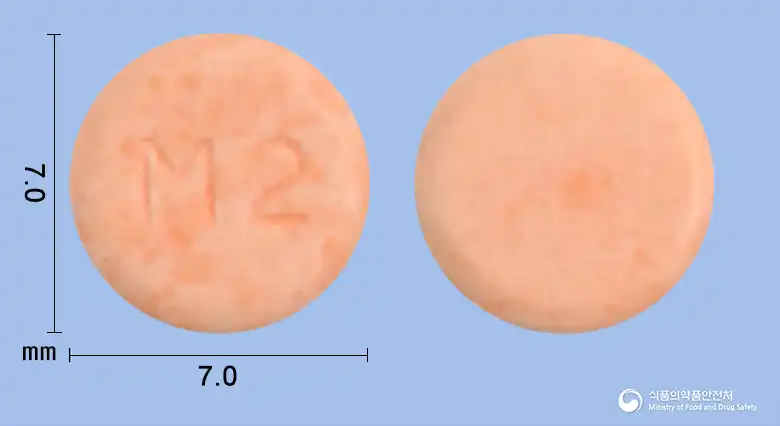
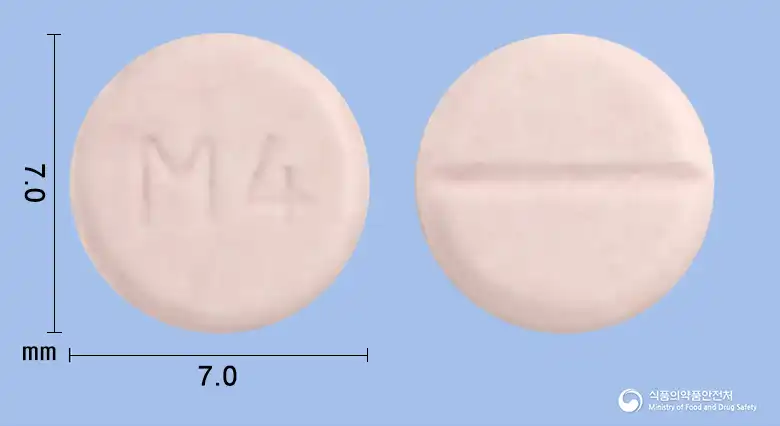
Light pink round tablet
100 tablets/box[(10 tablets/PTP*10)], 100 tablets/bottle, 30 tablets/bottle, 300 tablets/bottle, 500 tablets/bottle
Even with the same ingredient, strength, dosage form and how it is taken can differ.
Even with the same ingredient, the dose and directions can differ by strength and dosage form. Talk to a doctor or pharmacist before switching from a medication you are already taking.
No questions yet.
For anything that needs medical judgment, consult a doctor or pharmacist.
This drug information is based on data provided by the Korea Ministry of Food and Drug Safety.
Consult a doctor or pharmacist for accurate dosage, administration, and usage instructions.