
 한국어
 English
 日本語
 中文(简体)
 Viewing now
Pentasa Sustained Release Tablets 500 mg (Mesalazine)
Mesalazine 500mg
Tablet · Prescription medication
Korea Ferring Pharmaceutical Co., Ltd.
MFDS item code 199704519 · Approved 1997.09.05 · Insurance code 652500230
Treatment of mild to moderate ulcerative colitis and Crohn's disease
This medication is used to treat mild to moderate ulcerative colitis and Crohn's disease. Both conditions cause inflammation in the intestines, leading to symptoms such as abdominal pain and diarrhea. This medication reduces the inflammation and alleviates the symptoms. With consistent use, it can help restore intestinal health and improve quality of life. Therefore, it assists in improving symptoms through continuous treatment.
This medicine must not be crushed or chewed. To make administration easier, it may be divided or suspended in water or juice immediately before administration. Ulcerative colitis: For adults, during an acute flare, administer up to 4g of mesalazine per day orally, once daily or in 2~4 divided doses. For maintenance therapy, administer 2g per day orally as a single daily dose. Crohn's disease: For adults, administer up to 4g of mesalazine per day orally in divided doses.
Ulcerative colitis: For children aged 6 years and older, during an acute flare, administer 30~50mg/kg per day orally in divided doses. The total daily dose must not exceed 4g. Ulcerative colitis: For maintenance therapy in children aged 6 years and older, administer 15~30mg/kg per day orally in divided doses. The total daily dose must not exceed 2g. Ulcerative colitis: As a general rule, the recommended dose for children weighing no more than 40kg is half the adult dose, while the recommended dose for a child weighing 40kg corresponds to the usual adult dose. Crohn's disease: For children aged 6 years and older, during an acute flare, administer 30~50mg/kg per day orally in divided doses. Crohn's disease: For maintenance therapy in children aged 6 years and older, administer 15~30mg/kg per day orally in divided doses. Crohn's disease: As a general rule, the recommended dose for children weighing no more than 40kg is half the adult dose, while the recommended dose for a 40kg child corresponds to the usual adult dose.
This medication should not be administered to certain patients. Patients allergic to this medication or its components, salicylic acid, or salicylates should not use it. Patients with severely impaired liver or kidney function should also avoid taking this medication. Those with peptic ulcers or blood coagulation issues should abstain from using it. It is not for use in children under 6 years of age. Caution is necessary for patients who have experienced asthma attacks or allergic reactions due to salicylates or non-steroidal anti-inflammatory drugs (NSAIDs). Patients with poorly controlled heart failure and those taking more than 15 mg of methotrexate weekly should also avoid this medication. Caution is advised when using this medication in patients such as those with bronchial asthma, those with a history of allergic reactions to other medications, patients with reduced liver or kidney function, and those with blood disorders. Women who are pregnant or may become pregnant, breastfeeding mothers, and children and adolescents aged between 6 and 18 years should also use with caution. Moreover, patients with a previous allergy to sulfasalazine-containing preparations should be vigilant. While taking this medication, side effects such as diarrhea, nausea, abdominal pain, headache, vomiting, and skin rash may commonly occur. Occasionally, severe allergic reactions, high fever, and serious skin reactions (such as Stevens-Johnson syndrome, toxic epidermal necrolysis, etc.) may occur, necessitating caution. During treatment, regular blood tests, liver function tests, kidney function tests, and urine tests are required. If kidney function deteriorates, the medication should be immediately discontinued. Asthma patients should take under strict medical supervision. Those who have had hypersensitivity reactions to sulfasalazine should be even more cautious when using this medication. Inflammation of the heart, such as myocarditis or pericarditis, can occur rarely, so the medication should be stopped immediately if symptoms are suspected. If symptoms of blood disorders (such as bleeding, bruising, anemia, fever, sore throat) occur, blood tests should be performed and the medication should be discontinued if necessary. If dehydration symptoms occur while taking this medication, electrolyte levels should be checked and managed accordingly. Patients with impaired liver function should periodically check liver function, and those with reduced kidney function are not recommended to use this medication. Furthermore, as this medication may cause kidney stones, adequate hydration is required. This medication may cause discoloration of urine if it comes into contact with certain bleaches, thus caution is required. When taking other medications alongside this one, drug interactions may occur, so it is essential to consult with a doctor or pharmacist. Special caution is required when used concomitantly with drugs that may cause kidney toxicity, anticoagulants, corticosteroids, methotrexate, antirheumatic drugs, antihypertensives, antiplatelet agents, and alcohol. Women who are pregnant or breastfeeding should consider the potential risks and benefits of this medication and use it with caution. This medication passes through the placenta and is secreted in breast milk; therefore, breastfeeding should be discontinued if diarrhea or other adverse reactions appear during lactation. Experience with this medication in children and adolescents is limited, so it should be administered considering safety and efficacy carefully. Elderly patients may have decreased kidney and liver function, so treatment should start at a low dosage, with the condition closely monitored through blood tests. In cases of overdose, general symptoms of salicylate toxicity may appear. No specific antidote exists, so treatment and observation according to symptoms are necessary. When taking this medication, it should not be crushed or chewed, but taken whole, and may be mixed with water or juice at the time of consumption if needed. Keep out of reach of children and do not transfer to another container for safety.
Diarrhea, nausea, abdominal pain, headache, vomiting, rash, drug reaction with eosinophilia and systemic symptoms (DRESS syndrome), Stevens-Johnson syndrome (SJS), toxic epidermal necrolysis (TEN), anemia, aplastic anemia, agranulocytosis, neutropenia, leukopenia, pancytopenia, thrombocytopenia, anaphylaxis, dizziness, peripheral neuropathy, idiopathic intracranial hypertension, myocarditis, pericarditis, dyspnea, cough, bronchoconstriction, allergic alveolitis, pulmonary eosinophilia, interstitial lung disease, pulmonary infiltrate, pneumonia, pleuritis, distension, increased amylase, acute pancreatitis, colitis, increased aminotransferases, increased cholestatic liver function tests, hepatotoxicity, rash (including urticaria, erythematous rash), photosensitivity, alopecia, allergic rash, erythema multiforme, myalgia, arthralgia, erythema nodosum, renal dysfunction, nephrolithiasis, urine discoloration, reversible oligospermia, abdominal bloating, belching, increased methemoglobin levels, conjunctivitis, benign intracranial hypertension in adolescents, angioedema
Not everyone experiences these, and they can vary from person to person.
This medication should be stored in a tightly closed container to prevent exposure to air or moisture. It should be kept at normal room temperature, not too hot or too cold.
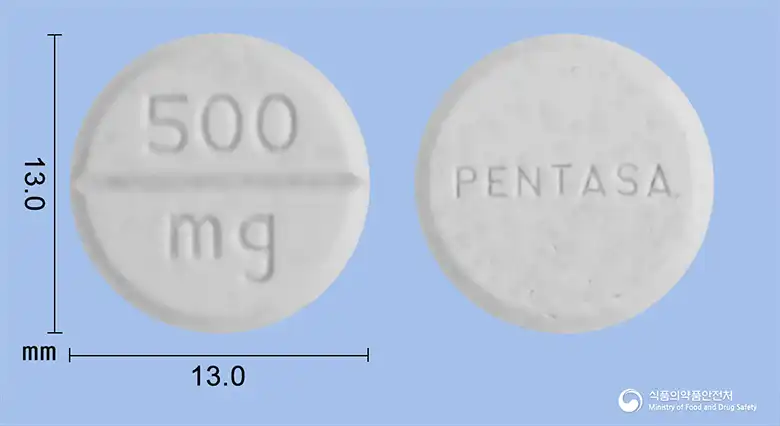
Round tablets with a whitish color and light brown specks
100 tablets/box
Even with the same ingredient, strength, dosage form and how it is taken can differ.
Viewing nowMesalazine 500mg
Tablet · Prescription medication
Korea Ferring Pharmaceutical Co., Ltd.
Mesalazine 1000mg
Prescription medication
Korea PhaRing Pharmaceutical Co., Ltd.
Mesalazine 4g
Suspension · Prescription medication
Daewoong Pharmaceutical Co., Ltd.
Mesalazine 500mg
Prescription medication
Daiwoong Pharmaceutical Co., Ltd.
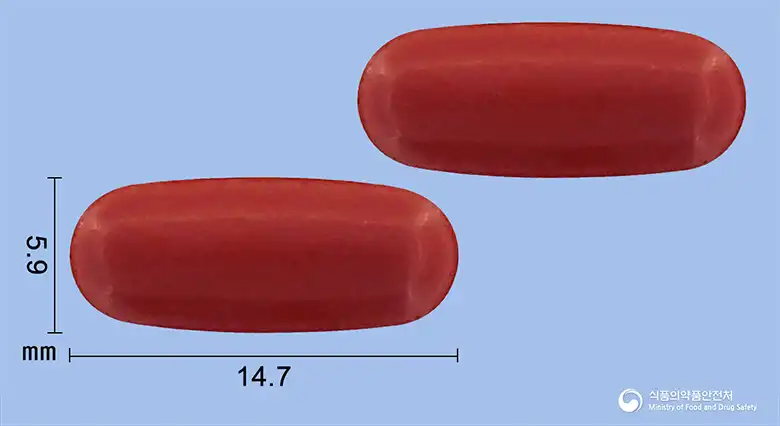
Mesalazine 400mg
Tablet · Prescription medication
Daewoong Pharmaceutical Co., Ltd.
Mesalazine 1g
Prescription medication
Korea Ferring Pharmaceuticals Co., Ltd.
Mesalazine 2g
Prescription medication
Korea Ferring Pharmaceuticals Co., Ltd.
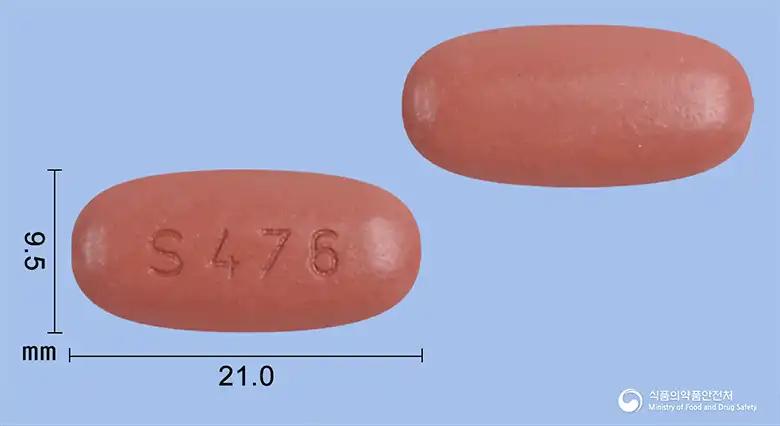
Mesalazine 1200mg
Tablet · Prescription medication
Takeda Pharmaceuticals Korea Co., Ltd.
Even with the same ingredient, the dose and directions can differ by strength and dosage form. Talk to a doctor or pharmacist before switching from a medication you are already taking.
No questions yet.
For anything that needs medical judgment, consult a doctor or pharmacist.
This drug information is based on data provided by the Korea Ministry of Food and Drug Safety.
Consult a doctor or pharmacist for accurate dosage, administration, and usage instructions.