
 한국어
한국어 English
 日本語
日本語 中文(简体)
 Viewing now
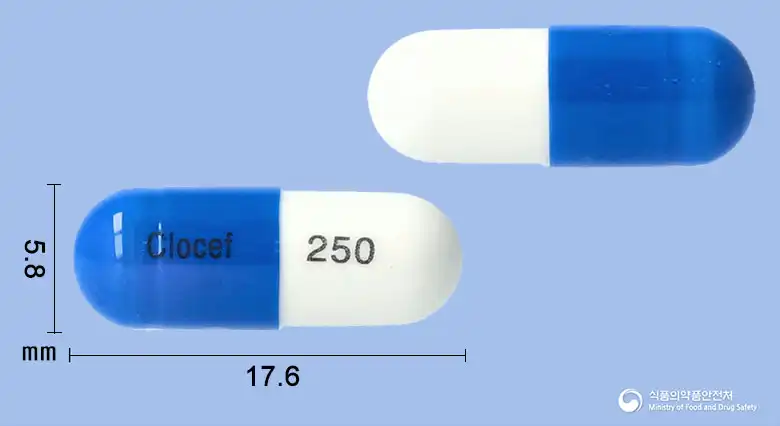
Cephar Cap Capsule (Cefaclor Hydrate)
Cefaclor Hydrate 250mg
Hard capsule · Prescription medication
Daehan New Pharm Co., Ltd.
MFDS item code 199603358 · Notified 1996.08.01 · Insurance code 669902150
Treatment of otitis media, respiratory infections (pneumonia, pharyngitis, etc.), and urinary tract infections (pyelonephritis, cystitis, etc.)
This medication is effective against various bacteria including Streptococcus pneumoniae, Haemophilus influenzae, and Staphylococcus aureus. It is used to treat respiratory infections such as otitis media, pneumonia, pharyngitis, tonsillitis, and bronchitis, and is also effective against urogenital infections such as pyelonephritis, cystitis, and gonococcal urethritis. Additionally, it treats skin and soft tissue infections such as abscesses, boils, folliculitis, cellulitis, and wound infections. This medication is widely used for treating bacterial infections of various infectious diseases.
As cefaclor hydrate, 250mg (potency) should be administered orally every 8 hours. In cases of severe infections (such as pneumonia) and low-sensitivity infections, the dose can be doubled. For acute gonococcal urethritis, administer this medication at 3g combined with 1g of probenecid as a single dose.
Administer 20mg (potency) per Kg body weight once a day, divided every 8 hours. In cases of severe infections, otitis media and low-sensitivity infections, 40mg (potency) per Kg body weight can be given daily, with a maximum dose of
This medication should not be used in patients who have previously experienced severe allergic reactions or shock due to this drug. Patients with allergies to this drug or to cephalosporin antibiotics should also not receive it. Patients with allergies to penicillin antibiotics, bronchial asthma, or skin allergy symptoms should use this medication cautiously. Patients with severely impaired renal function, elderly patients, and patients with poor nutritional status also require caution. Patients with gastrointestinal diseases, particularly those with a history of colitis, should be careful. This medication can rarely cause serious allergic reactions such as shock, thus symptoms should be closely monitored during administration. Symptoms such as rash, urticaria, itching, and fever may occur, and if such symptoms appear, the administration should be stopped immediately and treatment should be sought. Severe skin reactions can occur, and if symptoms of Stevens-Johnson syndrome or toxic epidermal necrolysis occur, the medication should be discontinued immediately. Abnormalities may appear in blood tests, so symptoms like anemia or leukopenia should be closely monitored, and if necessary, administration should be stopped. Hepatic impairment or renal dysfunction can also occur rarely, necessitating regular check-ups. Patients with very poor renal function may require dose adjustments and should be monitored for seizure risks. Gastrointestinal side effects may include nausea, vomiting, diarrhea, and abdominal pain; particularly, if severe colitis symptoms with bloody stools appear, the medication should be stopped immediately. Respiratory side effects such as interstitial pneumonia or eosinophilic pneumonia can occur rarely, and treatment should be sought if symptoms like dyspnea arise. Central nervous system symptoms such as anxiety, restlessness, dizziness, hallucinations, and drowsiness may rarely appear, so caution is advised. The use of this medication may lead to imbalances such as oral candidiasis or opportunistic infections. There may also be a bleeding tendency due to vitamin K deficiency, so symptoms should be closely monitored. To prevent antibiotic resistance, it is recommended to perform susceptibility testing and to use this medication for only the minimum required duration. Prior to administration, it is essential to thoroughly check for allergy history and take precautions against side effects such as shock. Drug interactions may occur, and caution is needed when using this medication in combination with probenecid, drugs affecting the kidneys, anticoagulants, oral contraceptives, etc. Patients taking anticoagulants should regularly check their blood coagulation status. Women who are pregnant or nursing should only use this medication when the benefits outweigh the risks, as its safety has not been fully established, and care should be taken during nursing. Safety and efficacy in newborns under one month of age have not been established; therefore, it is preferable not to use this medication in this age group. Elderly patients, due to decreased bodily function, have a higher risk of side effects and should have their dosage and administration intervals adjusted and be carefully monitored. This medication works by interfering with cell wall synthesis to kill bacteria, so it is important to adhere to the correct usage and duration.
Urticaria, severe swelling, difficulty breathing, shock, anaphylactic symptoms (generalized flushing, edema, difficulty breathing, angioedema, sensation abnormalities, syncope, hypertension, vasodilation), Stevens-Johnson syndrome, toxic epidermal necrolysis, agranulocytosis, granulocytopenia, pancytopenia, anemia, thrombocytopenia, aplastic anemia, hemolytic anemia, reversible neutropenia, jaundice, hepatitis, elevated AST, ALT, ALP, reversible interstitial nephritis
Not everyone experiences these, and they can vary from person to person.
This medication may be sensitive to air or moisture, so it should be stored in a tightly closed container. It is best to maintain room temperature between 1 degree and 30 degrees Celsius for storage. This way of storing can safely maintain the efficacy of the drug.
A hard capsule with a purple upper part and a white lower part containing a light yellow powder.
30 capsules, 500 capsules/bottle
Even with the same ingredient, strength, dosage form and how it is taken can differ.
Viewing nowCefaclor Hydrate 250mg
Hard capsule · Prescription medication
Daehan New Pharm Co., Ltd.

Cefaclor Hydrate 250mg
Hard capsule · Prescription medication
Ildong Pharmaceutical Co., Ltd.

Cefaclor Hydrate 250mg
Hard capsule · Prescription medication
Kolon Pharmaceutical Co., Ltd.
Cefaclor Hydrate 3.75g
Syrup · Prescription medication
Youngjin Pharmaceutical Co., Ltd.

Cefaclor Hydrate 250mg
Hard capsule · Prescription medication
Shinil Pharmaceutical Co., Ltd.
Cefaclor Hydrate 250mg
Hard capsule · Prescription medication
Hanmi Pharmaceutical Co., Ltd.
Cefaclor Hydrate 2.5g
Syrup · Prescription medication
Hanmi Pharmaceutical Co., Ltd.
Cefaclor Hydrate 3.75g
Syrup · Prescription medication
Shinpoong Pharmaceutical Co., Ltd.
Even with the same ingredient, the dose and directions can differ by strength and dosage form. Talk to a doctor or pharmacist before switching from a medication you are already taking.
No questions yet.
For anything that needs medical judgment, consult a doctor or pharmacist.
This drug information is based on data provided by the Korea Ministry of Food and Drug Safety.
Consult a doctor or pharmacist for accurate dosage, administration, and usage instructions.