
 한국어
 English
 日本語
 中文(简体)
 Viewing now
Besanoyd Soft Capsules 10 mg (Tretinoin)
Tretinoin 10mg
Soft capsule · Prescription medication
D.K.E.S.H. Korea Co., Ltd.
MFDS item code 199504168 · Notified 1995.05.03 · Insurance code 055500060
Treatment of acute promyelocytic leukemia
This medication is used to induce remission in acute promyelocytic leukemia. It can be applied particularly to patients who do not respond to anthracycline drugs or those who have relapsed, as well as patients for whom anthracycline drugs are contraindicated. It is also important to note that additional intensified chemotherapy is needed once complete remission is achieved. This treatment helps to enhance the effectiveness of leukemia treatment and improve the patient's condition.
For all ages, including children and older adults, administration of a total daily dose of 45 mg/㎡ (body surface area) orally in 2 equal divided doses is recommended. Treatment should continue for 30~90 days until complete remission is achieved. After complete remission, standard consolidation chemotherapy should be started immediately. Reduce the dose to 25 mg/㎡ in patients with renal or hepatic failure (experience is limited). For example, a 7-day regimen of daunomycin and cytosine arabinoside may be given 3 times at intervals of 5~6 weeks; this regimen should be modified according to the patient's response.
Administer a total of 45 mg/㎡ (body surface area) orally divided into two equal doses per day. Treatment should continue for 30 to 90 days until complete remission is achieved.
This medication should not be used in patients with hypersensitivity to the components or other retinoids. Women who are pregnant, may become pregnant, or are breastfeeding should not take this medication. Careful monitoring should be conducted, as various symptoms related to vitamin A excess might appear during treatment with this medication. When used in patients with acute promyelocytic leukemia, a severe side effect known as differentiation syndrome may occur, hence administration should be conducted under strict medical supervision. Various adverse reactions such as skin rash, itching, hair loss, nausea, vomiting, difficulty breathing, dizziness, and headaches can occur, and immediate consultation with healthcare professionals is required if symptoms arise. This medication should only be used under the management of a specialist experienced in treating blood and tumor diseases, and attention is needed due to the risk of thromboembolism during the first month after treatment begins. Regular monitoring of blood calcium levels is necessary during treatment, and it is advisable to refrain from driving or operating machinery in the presence of dizziness or severe headaches. Mental health issues such as depression or anxiety can arise, so patients with a history of these conditions should be monitored closely and receive appropriate treatment if necessary. As this medication may interact with other drugs, care must be taken not to take it in conjunction with drugs affecting liver function, certain antibiotics, antifungals, vitamin A preparations, etc. This medication is recommended to be taken during meals or immediately after meals to enhance absorption. Exceeding the recommended dosage can cause vitamin A excess, so prescribed dosages should be strictly adhered to, and appropriate treatment should be sought in case of overdose.
Not everyone experiences these, and they can vary from person to person.
This medication is sensitive to light and should be stored in a dark place. Store it in a sealed container to prevent air from entering. It is also recommended to keep it at a normal room temperature, avoiding places that are too hot or too cold.
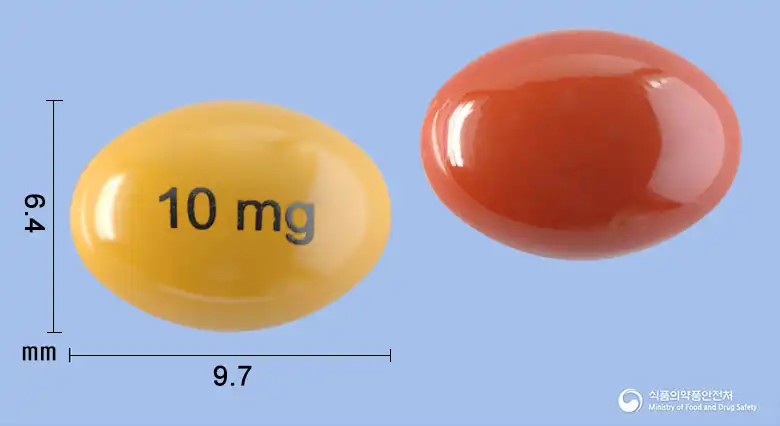
Upper surface of a yellowish liquid: opaque yellow, lower surface: opaque reddish-brown oval soft capsule
100 capsules
Even with the same ingredient, strength, dosage form and how it is taken can differ.
Viewing nowTretinoin 10mg
Soft capsule · Prescription medication
D.K.E.S.H. Korea Co., Ltd.
Tretinoin 0.25mg
Cream · Prescription medication
Nanopharm Co., Ltd.
Tretinoin 0.5mg
Cream · Prescription medication
GlaxoSmithKline Co., Ltd.
Tretinoin 0.1mg
Cream · Prescription medication
GlaxoSmithKline Co., Ltd.
Tretinoin 0.25mg
Cream · Prescription medication
GlaxoSmithKline Co., Ltd.
Tretinoin 0.02g
Solution · Prescription medication
NanoPharm Co., Ltd.
Tretinoin 0.25mg
Cream · Prescription medication
TheU Pharmaceutical Co., Ltd.
Even with the same ingredient, the dose and directions can differ by strength and dosage form. Talk to a doctor or pharmacist before switching from a medication you are already taking.
No questions yet.
For anything that needs medical judgment, consult a doctor or pharmacist.
This drug information is based on data provided by the Korea Ministry of Food and Drug Safety.
Consult a doctor or pharmacist for accurate dosage, administration, and usage instructions.