
 한국어
한국어 English
 日本語
日本語 中文(简体)
 Viewing now
Shinil Atenolol Tablets (Atenolol)
Atenolol 50mg
Tablet · Prescription medication
Shinil Pharmaceutical Co., Ltd.
MFDS item code 199501939 · Notified 1995.08.17 · Insurance code 653801360
Improvement of hypertension and angina pectoris
This medication is used for hypertension and angina pectoris.
1. Hypertension: Adults should take Atenolol 50 mg once daily, either alone or in combination with diuretics (thiazide type) orally. If effects are not seen within 1-2 weeks, increase the dosage to 100 mg once daily, not exceeding 100 mg per day. 2. Angina Pectoris: Take 100 mg once daily, divided into 1-2 doses, not exceeding 100 mg per day. 3. Patients with renal impairment: - Creatinine clearance (mL/min/1.73 m²) Dosage 15-35 50 mg once daily <15 25 mg once daily or 50 mg every 2 days Adjust dosage as needed based on age and symptoms.
This medication should not be used in patients with allergic reactions to the active ingredient or excipients. It may exacerbate symptoms in patients with severe bronchial asthma or chronic obstructive pulmonary disease, and should not be administered to them. It is also not suitable for patients with diabetic ketoacidosis or metabolic acidosis. Patients with very slow heart rates (bradycardia), heart conduction disorders, or cardiogenic shock should not use this medication. Patients with pulmonary hypertension causing right heart failure or congestive heart failure, severe hypotension, or advanced peripheral circulation disorders may also be at risk when taking this medication. It should not be administered to patients with thyroid dysfunction or untreated pheochromocytoma as it may adversely affect them. Patients susceptible to bronchial asthma or bronchospasm should be closely monitored when using this medication alongside bronchodilators. Patients at risk of congestive heart failure should use cautiously while regularly checking heart function. Diabetics or patients with hypoglycemia should monitor blood sugar levels closely, as symptoms of hypoglycemia may be masked. Patients with severely impaired liver or kidney function, pheochromocytoma, and the elderly should start at a lower dosage and be closely observed. This medication may cause allergic reactions such as skin rashes, itching, hives, and angioedema; discontinuation is needed immediately if symptoms appear. Symptoms like reduced tear secretion, vision disturbances, or dry eyes may occur, and consultation with a doctor is advised if any abnormal symptoms appear. Cardiac-related side effects like slow heart rate, hypotension, symptoms of heart failure, and cold extremities should be monitored carefully. Neuropsychiatric side effects such as confusion, dizziness, drowsiness, insomnia, and headaches may occur, so it is advisable to avoid driving or handling dangerous machinery. Gastrointestinal tract symptoms such as nausea, vomiting, diarrhea, and abdominal pain may occur; consultation with a doctor is recommended if symptoms are severe. Respiratory side effects like wheezing or bronchospasm may occur rarely, hence asthmatic patients should take extra care. Regular testing and observation are required since this medication may impact liver and kidney functions. If taken for extended periods, regular monitoring of heart function and blood pressure, pulse, etc., is necessary, and discontinuation should not be abrupt but should occur gradually under medical advice. Patients scheduled for surgery must stop taking this medication 24 hours prior, and it is important to use anesthetics that minimize cardiac suppression during anesthesia. Dizziness may occur at the initial intake of this medication; avoid driving or engaging in risky tasks. Caution is advised when used with other medications, particularly diabetes treatments, calcium channel blockers, sympatholytics, and anesthetics due to many interaction potentials. During pregnancy, it should be used cautiously under a physician's supervision as it may affect the fetus; breastfeeding should be avoided or this medication should be avoided during lactation. Safety in children has not been sufficiently established, so it should be administered carefully in pediatric cases. Elderly patients should start at a lower dose and be closely monitored, as overdose can lead to severe side effects requiring immediate medical attention. This medication should be stored out of reach of children and not kept above 25 degrees Celsius.
Hives, severe swelling (edema), chest tightness, difficulty breathing, cold sweat, pallor, severe allergic reactions, severe rash with high fever, blisters, skin peeling, pain in oral or ocular mucosa, severe dermatological reactions, difficulty breathing or shortness of breath, asthma attacks, respiratory abnormalities accompanied by cough and fever, respiratory problems, yellowing of skin or eyes (jaundice), extreme lethargy, abnormal liver function (jaundice), sudden
Not everyone experiences these, and they can vary from person to person.
This medication should be stored in a sealed container to prevent air ingress and preferably kept at room temperature, away from direct sunlight. Storing it in suitable temperature and environmental conditions can maintain the effectiveness of the drug.
White round film-coated tablet
30 tablets/bottle, 300 tablets/bottle
Even with the same ingredient, strength, dosage form and how it is taken can differ.
Viewing nowAtenolol 50mg
Tablet · Prescription medication
Shinil Pharmaceutical Co., Ltd.

Atenolol 50mg
Tablet · Prescription medication
Hyundai Pharmaceutical Co., Ltd.
Atenolol
Prescription medication
Ildong Pharmaceutical Co., Ltd.
Atenolol 50mg
Prescription medication
Samjin Pharmaceutical Co., Ltd.
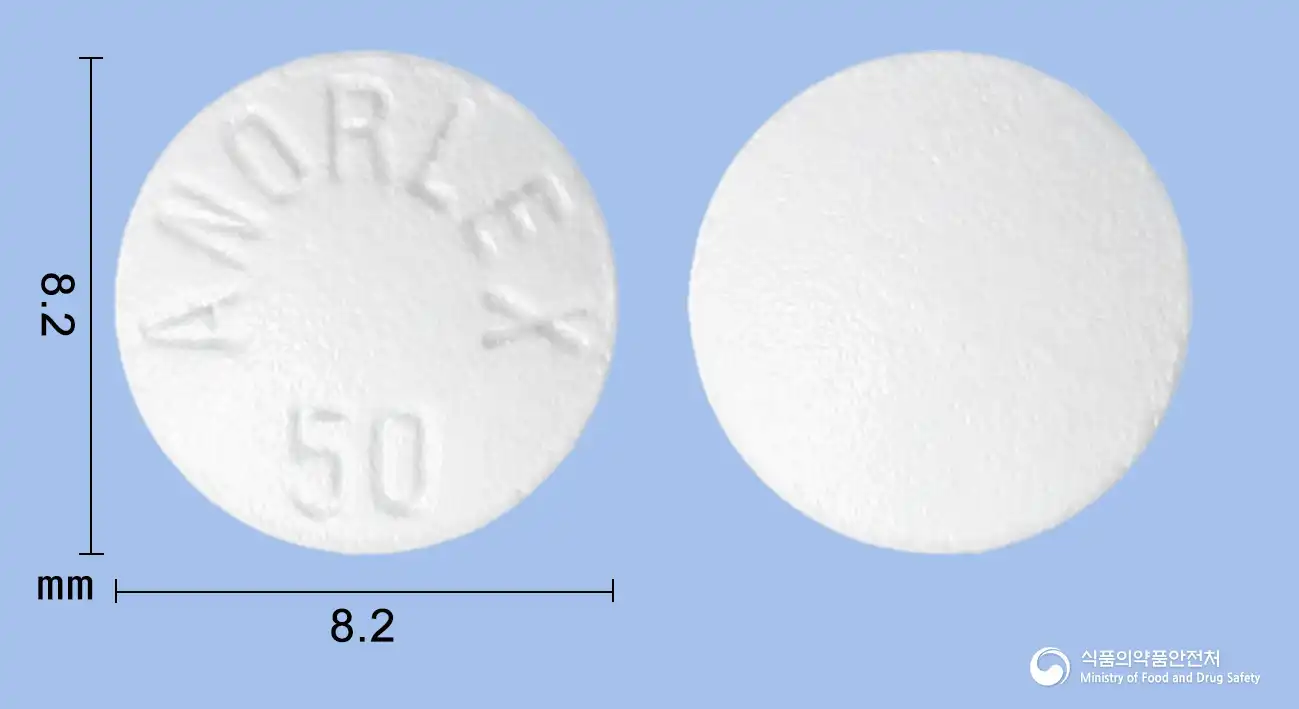
Atenolol 50mg
Tablet · Prescription medication
(CMG Pharmaceutical Co., Ltd.)
Atenolol
Prescription medication
Korea United Pharmaceutical Co., Ltd.
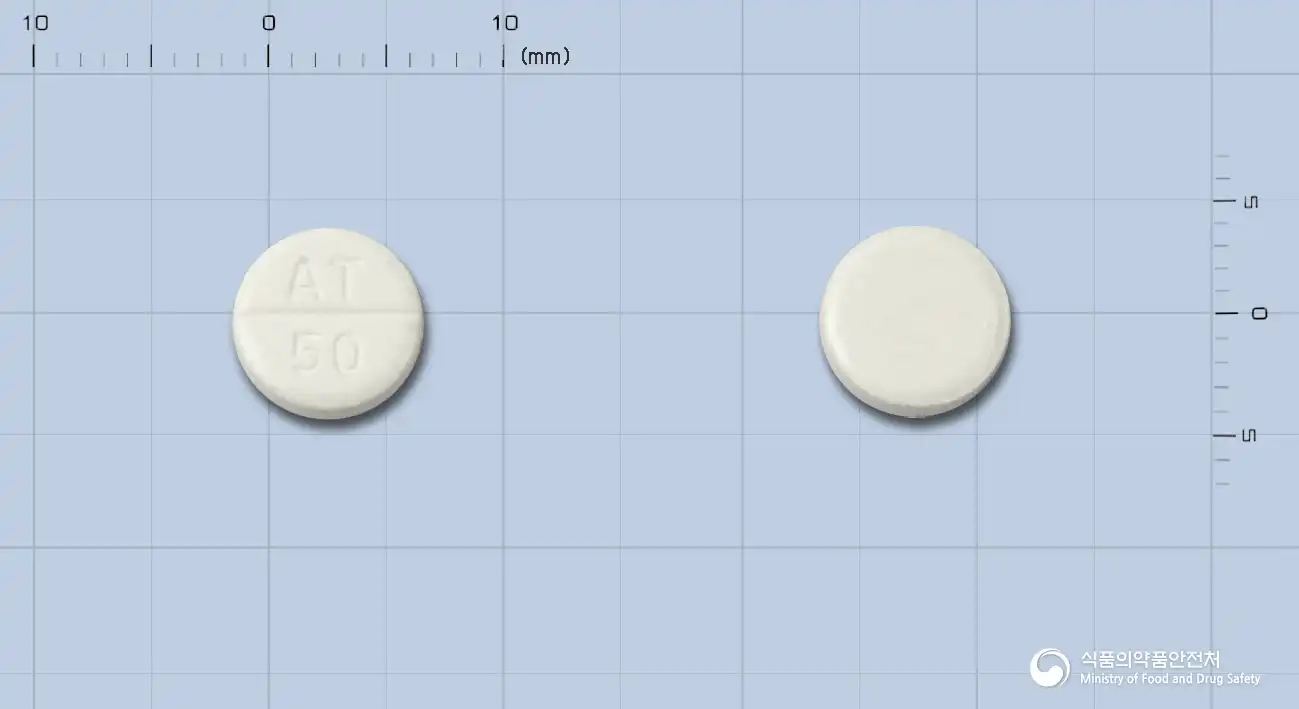
Atenolol 50mg
Tablet · Prescription medication
Daewoo Pharmaceutical Co., Ltd.
Atenolol
Prescription medication
Daewoong Pharmaceutical Co., Ltd.
Even with the same ingredient, the dose and directions can differ by strength and dosage form. Talk to a doctor or pharmacist before switching from a medication you are already taking.
No questions yet.
For anything that needs medical judgment, consult a doctor or pharmacist.
This drug information is based on data provided by the Korea Ministry of Food and Drug Safety.
Consult a doctor or pharmacist for accurate dosage, administration, and usage instructions.