
 한국어
한국어 English
 日本語
日本語 中文(简体)
 Viewing nowCombination
Albis Tablets
Ranitidine Hydrochloride 84mg · Tripotassium Bismuth Dicitrate 100mg +1 more
Tablet · Prescription medication · Combination
Daewoong Pharmaceutical Co., Ltd.
MFDS item code 199300694 · Notified 1993.11.06
This product's status changed to Approval withdrawn on 2024.02.07. It may no longer be sold, so consult a doctor or pharmacist before taking it.
Effectively treats gastric and duodenal ulcers and gastritis (including gastroesophageal reflux disease) and prevents Mendelson's syndrome.
This medicine is used for the treatment of gastrointestinal diseases such as gastric and duodenal ulcers, gastritis, Zollinger-Ellison syndrome, and gastroesophageal reflux disease. It is also administered to prevent Mendelson's syndrome before anesthesia, and it is effective in preventing postoperative ulcers. It helps treat gastric and duodenal ulcers caused by non-steroidal anti-inflammatory drugs (NSAIDs). This medication decreases gastric acid secretion, improving inflammation and ulcers. Therefore, it is widely used for the relief and treatment of symptoms related to gastrointestinal diseases.
Usually, take 2 tablets orally 2 times a day, regardless of meals, in the morning and before bedtime. 1) Gastric and duodenal ulcers: Take 2 tablets 2 times a day or take 4 tablets once before bedtime. Particularly for duodenal ulcer patients, take 4 tablets 2 times a day in the morning and before bedtime. 2) Gastroesophageal reflux disease: Take 2 tablets 2 times a day for 8 weeks, or take 4 tablets once before bedtime.
This medication should not be used in patients undergoing dialysis or with poor kidney function. Additionally, it should not be administered to individuals with allergies to this medication or its components, patients with a history of acute porphyria, those who have undergone upper gastrointestinal surgery, pregnant women or those who may become pregnant, premature infants, newborns, and patients who need to restrict potassium intake. Caution is necessary for patients with liver dysfunction, a history of drug allergies, the elderly, and patients with a history of kidney disease. Elderly patients or those with a history of gastrointestinal ulcers taking NSAIDs should undergo regular testing while using this medication. This medication may conceal symptoms of gastric cancer, so gastric ulcer patients or patients in their middle ages or older with recently new or changed dyspeptic symptoms must confirm malignancy before treatment. Patients with positive Helicobacter pylori infection and gastric/duodenal ulcers require eradication therapy. In critically ill patients, the possibility of gastric stone formation should be considered, and in patients with hypophosphatemia, the aluminum component of this medication may interfere with phosphate absorption. Patients with swallowing difficulties should be aware of the potential respiratory problems after administration of this medication. While taking this medication, rare but severe allergy reactions such as anaphylactic shock can occur, so if any symptoms arise, administration should be stopped immediately, and treatment should be sought. If allergic symptoms such as skin rash, urticaria, angioedema, fever, bronchospasm, hypotension, or chest pain appear, administration should cease. Blood tests may show decreases in white blood cells, platelets, or liver dysfunction, and immediate consultation with a doctor is necessary if any abnormal symptoms occur. Gastrointestinal symptoms may include nausea, vomiting, constipation, diarrhea, and abdominal bloating, and the stool may turn black; however, this can be due to the properties of the medication and does not require treatment. In severe patients or the elderly, neurological symptoms such as dizziness, drowsiness, confusion, seizures, insomnia, headache, anxiety, may develop, necessitating close observation. Muscle pain or joint pain, and rarely severe muscle damage (rhabdomyolysis) may occur; if any abnormal symptoms arise, administration should be stopped. Skin rash, hair loss, itching, or darkened tongue may occur, and if severe skin reactions appear, immediate treatment is required. It is essential to avoid long-term use, and during treatment, regular blood, liver, and kidney functions should be checked, using the minimal effective dose. Elderly patients or those with chronic lung diseases, diabetes, or weakened immune systems are at increased risk of pneumonia when taking this medication and should be cautious. If dizziness or drowsiness occurs during use, driving or hazardous machinery operation should be avoided. This medication may interact with other drugs; if you are taking any other medications, be sure to inform your doctor or pharmacist, and special caution should be taken when using it with anticoagulants or some antibiotics and anticonvulsants. Pregnant or breastfeeding women should not use this medication, and safety in pediatric patients has not been established, so administration is not recommended. This medication may cause false-positive results in urine protein tests, so care should be taken with testing methods. In case of overdose, emergency measures such as vomiting or gastric lavage may be necessary, and in severe cases, removal can be done by hemodialysis. Finally, this medication can reduce gastric acid secretion, which may promote bacterial growth in the stomach; therefore, those on long-term use should consider undergoing ophthalmologic examinations.
Urticaria, severe swelling (angioedema), chest tightness, difficulty breathing, cold sweat, pallor, shock (anaphylactic shock), angioedema, high fever with severe rash, skin peeling, pain in oral/eye mucosa, difficulty breathing or shortness of breath, asthmatic attacks, cough with fever accompanied by respiratory abnormalities, yellowing of skin or eyes (jaundice), extreme lethargy, hepatitis (both jaundice and non-jaundice cases), sudden and severe.
Not everyone experiences these, and they can vary from person to person.
Store this medication in a tightly sealed container to prevent air or moisture ingress. Additionally, avoid excessively hot or cold places, and it is best to store it at normal room temperature.
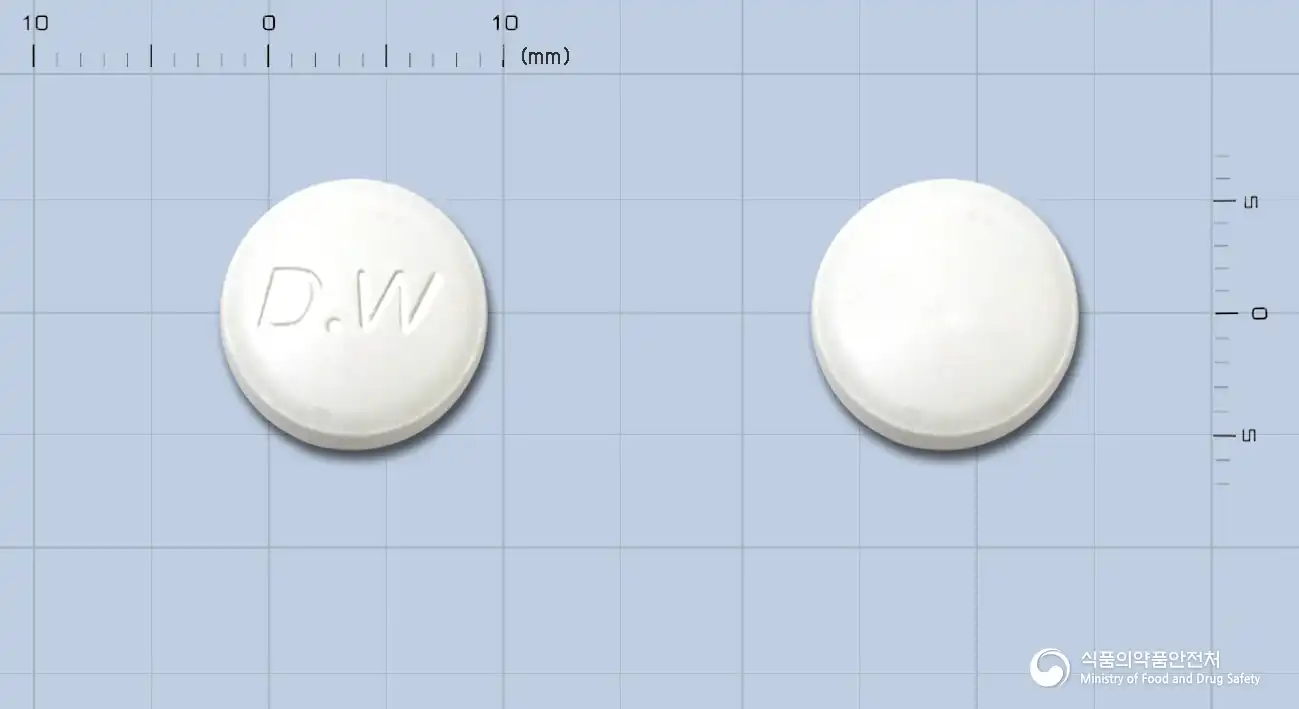
This medication is a round, white film-coated tablet.
30 tablets/bottle. 300 tablets/bottle, [For Export] 30 tablets (10 tablets/PTP) x 3
Even with the same ingredient, strength, dosage form and how it is taken can differ.
Viewing nowCombinationRanitidine Hydrochloride 84mg · Tripotassium Bismuth Dicitrate 100mg +1 more
Tablet · Prescription medication · Combination
Daewoong Pharmaceutical Co., Ltd.
Ranitidine Hydrochloride 84mg · Tripotassium Bismuth Dicitrate 100mg +1 more
Tablet · Prescription medication · Combination
Nexpharm Korea Co., Ltd.
 Combination
Ranitidine Hydrochloride 84mg · Tripotassium Bismuth Dicitrate 100mg +1 more
Tablet · Prescription medication · Combination
HUONS BioScience Co., Ltd.
 Combination
Ranitidine Hydrochloride 84mg · Tripotassium Bismuth Dicitrate 100mg +1 more
Tablet · Prescription medication · Combination
Daewoong Bio Co., Ltd.
 Combination
Ranitidine Hydrochloride 84mg · Tripotassium Bismuth Dicitrate 100mg +1 more
Tablet · Prescription medication · Combination
Teragen Etex Co., Ltd.
Ranitidine Hydrochloride 84mg · Sucralfate Hydrate 300mg +1 more
Tablet · Prescription medication · Combination
Korea Pavise Pharmaceutical Co., Ltd.
Ranitidine Hydrochloride 84mg · Sucralfate Hydrate 300mg +1 more
Tablet · Prescription medication · Combination
Kwangdong Pharmaceutical Co., Ltd.
Ranitidine Hydrochloride · Tripotassium Bismuth Dicitrate +1 more
Prescription medication · Combination
Hankook Hyutex Pharmaceutical Co., Ltd.
Even with the same ingredient, the dose and directions can differ by strength and dosage form. Talk to a doctor or pharmacist before switching from a medication you are already taking.
No questions yet.
For anything that needs medical judgment, consult a doctor or pharmacist.
This drug information is based on data provided by the Korea Ministry of Food and Drug Safety.
Consult a doctor or pharmacist for accurate dosage, administration, and usage instructions.