
 한국어
 English
 日本語
 中文(简体)
Dosage form image
Viewing nowShinpoong Atenolol Tablets
Atenolol
Prescription medication
Shinpoong Pharmaceutical Co., Ltd.
MFDS item code 199300097 · Notified 1993.09.21
This product's status changed to Approval withdrawn on 2023.09.11. It may no longer be sold, so consult a doctor or pharmacist before taking it.
Treatment of angina and hypertension
This medication is used for hypertension and angina.
1. Hypertension: The initial dose for adults is 50㎎ of atenolol once daily, taken orally alone or in combination with a diuretic (thiazide type). If the effect does not occur within 1-2 weeks, increase the dose to 100㎎ once daily. Do not exceed 100㎎ per day. 2. Angina pectoris: Take 100㎎ of this medicine per day in 1-2 divided doses. Do not exceed 100㎎ per day. 3. Patients with renal impairment Creatinine clearance (㎖/min/1.73㎡) 15-35: 50㎎ per day Creatinine clearance (㎖/min/1.73㎡) <15: 25㎎ per day or 50㎎ every 2 days Adjust the dose as appropriate according to age and symptoms.
This drug should not be used in patients with allergies to the active ingredients or excipients. This drug should not be administered to patients with severe bronchial asthma or chronic obstructive pulmonary disease as it may worsen symptoms. Patients with diabetic ketoacidosis or metabolic acidosis should be cautious as this drug may exacerbate their condition. Patients with very slow heart rate or cardiac conduction disorders should not take this drug as it may further impair cardiac function. This drug may be dangerous for patients with severe cardiogenic shock or right heart failure due to pulmonary hypertension or congestive heart failure, and should not be used. It is also not suitable for patients with severe hypotension or peripheral circulation disorders. Patients with hyperthyroidism who may develop thyroid storm due to this drug should not be treated with it. The use of this drug may be dangerous for untreated pheochromocytoma patients. Patients who may experience bronchial asthma or bronchospasm should be closely monitored and administered this drug together with a bronchodilator. Patients who may be at risk for congestive heart failure should have their cardiac status carefully monitored while taking this drug. Patients who frequently experience hypoglycemia or have difficult-to-control diabetes should manage their blood sugar well, as this drug may mask hypoglycemic symptoms. Patients with severely impaired liver or kidney function may require dosage adjustment as the metabolism of this drug may slow down. Elderly patients should begin with a lower dose when using this drug for the first time and must be closely monitored. If this drug is used for a prolonged period, regular monitoring of cardiac function, blood pressure, and electrocardiogram is necessary, and dosage should be reduced or discontinued if abnormal symptoms appear. Sudden discontinuation of this drug may worsen cardiac symptoms, so dosage should be gradually reduced, and it should not be stopped without medical advice. Patients scheduled for surgery should discontinue this drug 24 hours prior to the procedure and should use anesthetics that carry little risk of cardiac suppression. Dizziness may occur while taking this drug, so caution is advised when driving or operating hazardous machinery. This drug may mask some symptoms of hypoglycemia, such as tachycardia, hence diabetic patients should pay special attention to blood sugar management. This drug may affect the fetus during pregnancy, so women who are pregnant or may become pregnant should use it with caution and after consulting a physician. Breastfeeding women should either discontinue breastfeeding or avoid taking this drug since it can be transmitted through breast milk. The safety of this drug in children has not been fully established, so it should be used cautiously in pediatric patients. In case of overdose, symptoms such as reduced heart rate, hypotension, acute heart failure, bronchospasm, and hypoglycemia may occur, and immediate medical treatment is required. This drug should be kept out of the reach of children and should not be stored at temperatures above 25 degrees Celsius. Care should be taken as transferring to other containers can lead to quality degradation or accidents.
Not everyone experiences these, and they can vary from person to person.
This medication may be sensitive to air or moisture, so it should be stored in a tightly sealed container. It is important to maintain the storage temperature between 1 to 30 degrees Celsius to ensure the drug's efficacy and safety over a long period.
White round film-coated tablets
30 tablets/bottle, 500 tablets/bottle
Even with the same ingredient, strength, dosage form and how it is taken can differ.
Atenolol
Prescription medication
Shinpoong Pharmaceutical Co., Ltd.
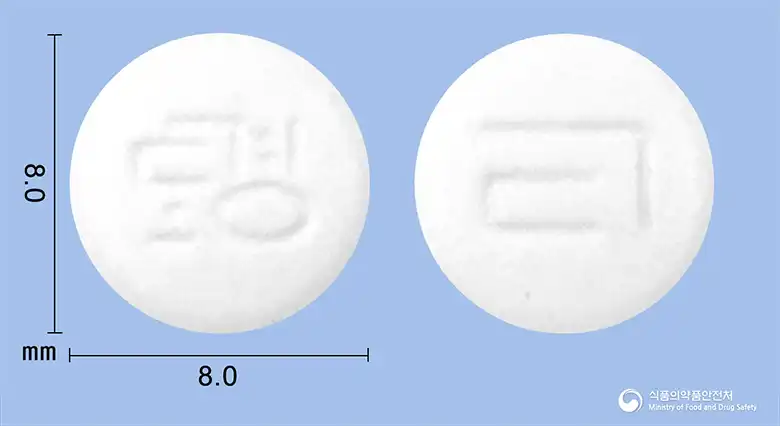
Atenolol 50mg
Tablet · Prescription medication
Kyungdong Pharm. Co., Ltd.
Atenolol
Prescription medication
Youngjin Pharmaceutical Co., Ltd.
Atenolol
Prescription medication
Hanmi Pharmaceutical Co., Ltd.
Atenolol
Prescription medication
Celix Co., Ltd.
Even with the same ingredient, the dose and directions can differ by strength and dosage form. Talk to a doctor or pharmacist before switching from a medication you are already taking.
No questions yet.
For anything that needs medical judgment, consult a doctor or pharmacist.
This drug information is based on data provided by the Korea Ministry of Food and Drug Safety.
Consult a doctor or pharmacist for accurate dosage, administration, and usage instructions.