
 한국어
한국어 English
 日本語
日本語 中文(简体)
 Viewing now
Lamezol Capsule 20 mg (Omeprazole)
Omeprazole 20mg
Hard capsule · Prescription medication
Hanmi Pharmaceutical Co., Ltd.
MFDS item code 199202074 · Notified 1992.09.01
Treatment for improvement of symptoms of gastric ulcers and gastroesophageal reflux disease and prevention of ulcer recurrence.
This medication is used for short-term treatment of gastric and duodenal ulcers, and also helps relieve symptoms of gastroesophageal reflux disease and gastroesophageal reflux. Additionally, it is effective for maintenance therapy of severe gastroesophageal reflux disease and peptic ulcers that do not respond well to treatment. It is utilized in treating Zollinger-Ellison syndrome and in antibiotic combination therapy to prevent recurrence of duodenal ulcers caused by Helicobacter pylori infection. It is also important in the treatment of gastric and duodenal ulcers or erosions caused by nonsteroidal anti-inflammatory drugs (NSAIDs) and in preventing further damage in patients with a history of these conditions. Lastly, it is effective for preventing recurrence of gastroesophageal reflux disease. This drug is used for the treatment and prevention of various gastrointestinal disorders.
1) Gastric ulcer: Administer orally 20 mg of omeprazole once a day. If not cured after the initial 4 weeks of treatment, continue for another 4 weeks. If ineffective, a dose of 40 mg once daily may be administered, typically leading to healing within 8 weeks. 2) Short-term treatment of duodenal ulcer: Administer 20 mg orally once a day. If not cured after the initial 2 weeks of treatment, continue for another 2 weeks. If ineffective, a dose of 40 mg may be given.
This medication should not be used in certain patients. First, it should not be administered to patients with an allergy to any ingredient in this medication. Additionally, this medication should not be used in patients with suspected malignant gastric ulcers, as it may mask malignant symptoms or delay diagnosis. It is prohibited to use this drug concurrently with the medication atazanavir, and patients taking pharmaceuticals containing rilpivirine should also refrain from using this drug. Patients with a history of myocardial infarction or those suffering from myocardial infarction should avoid this medication. Patients with liver function impairment should use this drug cautiously. This medication can remain in the body longer if liver function is impaired, so the dosage should be reduced, and particularly those with severe liver damage should not exceed a dose of 20 mg per day. Elderly patients should also use this drug carefully. When taking this medication, various side effects may occur. Neurological symptoms such as headaches, drowsiness, dizziness, and insomnia may frequently appear. Liver function abnormalities can occur, so liver enzyme levels should be checked periodically, and in severe cases, symptoms of hepatitis or liver failure may arise. It may cause kidney problems, and, rarely, nephritis leading to renal failure. In the gastrointestinal tract, symptoms such as diarrhea, constipation, nausea, vomiting, and abdominal pain are common. Severe skin reactions, such as rashes or pruritus, and in severe cases, Stevens-Johnson syndrome may occur, requiring immediate discontinuation of the medication if such symptoms develop. Allergic reactions such as angioedema or anaphylactic shock have been reported infrequently. Cardiac symptoms such as chest pain or rapid heartbeat may also appear. There may be a decrease in blood cell counts, requiring caution. Symptoms such as myalgia or arthralgia, and gynecomastia have also been reported. This medication requires periodic examination during long-term use. Special attention should be paid to patients on long-term medication (more than one year) as the risk of fractures may increase. Additionally, prolonged use may lower blood magnesium levels, necessitating magnesium supplementation and monitoring of blood levels. Caution is advised when combining this drug with certain medications like methotrexate due to an increased risk of toxicity. This medication can suppress gastric acid secretion, potentially increasing the number of bacteria in the gastrointestinal tract, thereby slightly raising the risk of diarrhea caused by Clostridium difficile. If diarrhea persists, it should be reported to a physician. Pregnant women should carefully consider the risks to the fetus when using this medication, and nursing mothers are advised to discontinue breastfeeding while taking this medication. The safety of this drug in children has not been adequately established, so it is preferable not to use it in pediatrics. In the event of overdose, symptoms such as vomiting, diarrhea, headaches, dizziness may occur, and in severe cases, mental confusion may arise, though these effects are generally temporary. This medication should be kept out of reach of children and should not be transferred to other containers, but rather stored in the original container. After use, the lid of the container should be tightly closed.
Hives, angioedema, anaphylactic shock, bronchospasm, jaundice, acute interstitial nephritis (TIN) that can progress to renal failure, Stevens-Johnson syndrome, toxic epidermal necrolysis (TEN), erythema multiforme, toxic epidermal necrolysis, severe skin adverse reactions, fever, sudden and severe headache, seizures, altered consciousness, visual disturbances, paralysis, marked decrease in urine output, severe generalized edema.
Not everyone experiences these, and they can vary from person to person.
This medication may be sensitive to air or moisture, so it should be stored in a sealed container. Also, it is advisable to store it at room temperature that is neither excessively hot nor cold.
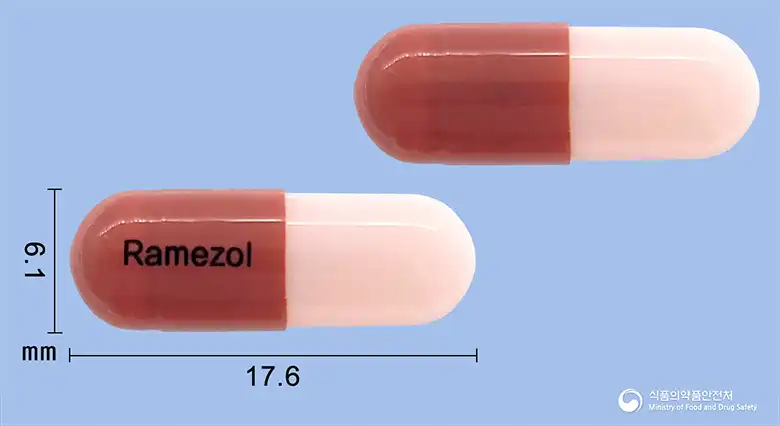
A hard capsule with an upper red-brown and a lower pink color filled with white to light brown enteric-coated granules.
30 capsules/bottle, 100 capsules/bottle
Even with the same ingredient, strength, dosage form and how it is taken can differ.
Viewing nowOmeprazole 20mg
Hard capsule · Prescription medication
Hanmi Pharmaceutical Co., Ltd.

Omeprazole 20mg
Tablet · Prescription medication
(Stock Company) Chongkundang

Omeprazole 20mg
Tablet · Prescription medication
SK Chemicals Co., Ltd.

Omeprazole 40mg
Tablet · Prescription medication
Jongkundang Co., Ltd.

Omeprazole 10mg
Tablet · Prescription medication
SK Chemicals Co., Ltd.
Even with the same ingredient, the dose and directions can differ by strength and dosage form. Talk to a doctor or pharmacist before switching from a medication you are already taking.
No questions yet.
For anything that needs medical judgment, consult a doctor or pharmacist.
This drug information is based on data provided by the Korea Ministry of Food and Drug Safety.
Consult a doctor or pharmacist for accurate dosage, administration, and usage instructions.