
 한국어
 English
 日本語
 中文(简体)
Dosage form image
Viewing nowCadex Elixir (Digoxin)
Digoxin 5mg
Prescription medication
Hallym Pharmaceuticals Co., Ltd.
MFDS item code 199102792 · Notified 1991.10.22 · Insurance code 645300911
Prevention and treatment of heart failure and tachycardia; treatment of other heart diseases and thyroid dysfunction
This medication is used to treat heart-related conditions such as congestive heart failure, tachycardia due to atrial fibrillation or flutter, and paroxysmal atrial tachycardia. It also alleviates symptoms of heart failure due to valvular disease, hypertension, ischemic heart disease, congenital heart disease, and cor pulmonale. It is effective for other heart diseases like pericarditis or myocardial disease and heart issues due to thyroid dysfunction. This drug helps to prevent and treat heart failure and various types of tachycardia, overall improving heart function and relieving associated symptoms.
(Oral: tablets, elixir) Rapid digitalization (loading dose: 1.0-4.0㎎): Administer an initial dose of 0.5-1.0㎎ of digoxin orally, followed by 0.5㎎ every 6-8 hours until an adequate effect is achieved. A gradual digitalization regimen may also be used. Maintenance therapy: Administer 0.25-0.5㎎ orally per day. (Injection) Rapid digitalization (loading dose: 1.0-2.0㎎): Administer 0.25-0.5㎎ of digoxin intravenously every 2-4 hours until an adequate effect is achieved. A gradual digitalization regimen may also be used. Maintenance therapy: Administer 0.25㎎ intravenously per day.
(Oral: tablets, elixir) Under 2 years: Administer 0.06-0.08㎎ per kg of body weight per day in 3-4 divided doses. 2 years and older: Administer 0.04-0.06㎎ per kg of body weight per day in 3-4 divided doses. Maintenance therapy: Administer 1/5-1/3 of the loading dose. (Injection) Neonates and premature infants: Administer 0.03-0.05㎎ per kg of body weight per day intravenously or intramuscularly in 3-4 divided doses. Under 2 years: Administer 0.04-0.06㎎ per kg of body weight per day intravenously or intramuscularly in 3-4 divided doses. 2 years and older: Administer 0.02-0.04㎎ per kg of body weight per day intravenously or intramuscularly in 3-4 divided doses. Maintenance therapy: Administer 1/15-1/10 of the loading dose intravenously or intramuscularly. Adjust the dose appropriately according to age and symptoms.
This medication should not be used in patients with certain heart conditions. For instance, it should not be administered to patients with atrioventricular block or sinoatrial block, and those with carotid sinus syndrome. It should also not be used in patients with digitalis toxicity, obstructive cardiomyopathy, ventricular tachycardia, or Wolff-Parkinson-White syndrome. Patients who have an allergic reaction to this medication should avoid its use. This medication must be used very carefully in patients with acute myocardial infarction, ventricular ectopy, endocarditis, cor pulmonale, thyroid dysfunction, and renal impairment. Such patients may exhibit toxic symptoms even at lower doses and may risk overdose due to inadequate response to the drug. Patients undergoing hemodialysis or those with electrolyte imbalances, dysfunctional syndromes, or severe respiratory diseases should also be cautious when using this medication. This drug may cause gastrointestinal side effects such as loss of appetite, nausea, vomiting, and diarrhea. Additionally, cardiovascular symptoms like arrhythmia, changes in heart rate, vision impairment, dizziness, headaches, confusion, fatigue, and depression may occur. If allergic reactions manifest as skin rash, hives, or edema, the medication should be discontinued immediately. Rarely, symptoms like gynecomastia or muscle weakness have also been reported. When administering this medication, it is essential to check if the patient has previously used this medication or similar drugs and to closely monitor the patient's condition. Patients with gastrointestinal problems may require higher doses due to poor drug absorption. Care should be taken when using this medication with other drugs, especially potassium-excreting diuretics, amiodarone, calcium medications, and beta-blockers, as it increases the risk of toxicity, necessitating enhanced monitoring. Furthermore, certain medications may interfere with the absorption of this drug, making it advisable to adjust dosing intervals accordingly. Pregnant or breastfeeding women should only use this drug if the benefits outweigh the risks, as its safety is not fully established. In breastfeeding, caution is required as the drug may pass into breast milk. When administering to children and the elderly, it is important to carefully determine the dose as side effects may be more pronounced, and patients should be closely monitored. When administered intravenously, rapid injection may lead to vasoconstriction and increased blood pressure, decreasing coronary blood flow, so slow infusion is important. Extra caution is needed for patients with hypertensive heart failure or acute myocardial infarction.
Not everyone experiences these, and they can vary from person to person.
This medication may be sensitive to light and should be stored in a light-resistant container. Additionally, it should be kept in a well-closed container to maintain the drug's quality for a longer period.
Light yellow elixir
100mL/bottle
Even with the same ingredient, strength, dosage form and how it is taken can differ.
Digoxin 5mg
Prescription medication
Hallym Pharmaceuticals Co., Ltd.
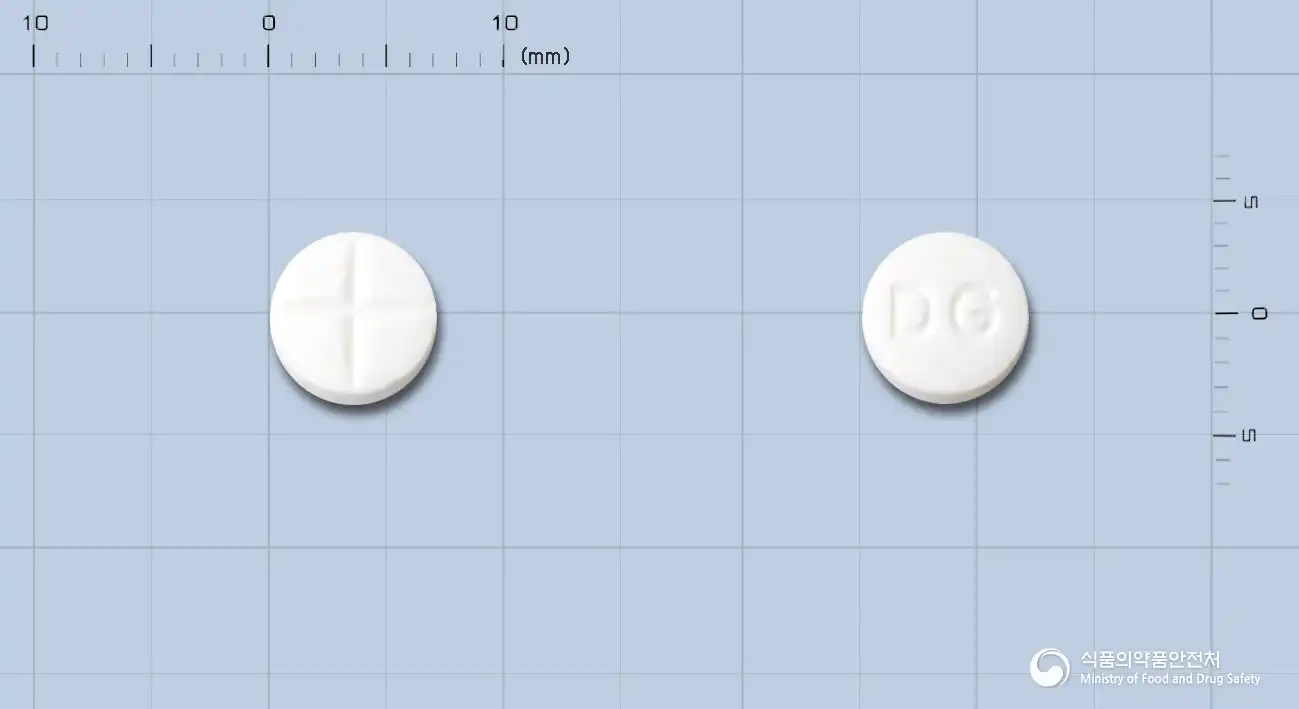
Digoxin 0.25mg
Tablet · Prescription medication
HKEINoEn Co., Ltd.
Digoxin 0.25mg
Prescription medication
Ajou Pharmaceutical Co., Ltd.
Even with the same ingredient, the dose and directions can differ by strength and dosage form. Talk to a doctor or pharmacist before switching from a medication you are already taking.
No questions yet.
For anything that needs medical judgment, consult a doctor or pharmacist.
This drug information is based on data provided by the Korea Ministry of Food and Drug Safety.
Consult a doctor or pharmacist for accurate dosage, administration, and usage instructions.