
 한국어
한국어 English
 日本語
日本語 中文(简体)
 Viewing now
Hyundai Minoxidil Tablet
Minoxidil 5mg
Tablet · Prescription medication
Hyundai Pharmaceutical Co., Ltd.
MFDS item code 198501401 · Notified 1985.07.11 · Insurance code 642001290
Treatment of hypertension (symptomatic, resistant)
This medication is used for patients with symptomatic hypertension or hypertension due to specific organ damage. It is also effective in treating resistant hypertension that is uncontrolled even after taking diuretics and two types of antihypertensive agents at maximum doses. Therefore, this medication is used for the treatment of various forms of difficult hypertension.
Adult (12 years and older): As minoxidil, administer an initial dose of 5mg orally once daily, and maintenance dose of 10-40mg divided into 1-3 doses per day. The maximum dose can be up to 100mg daily. The frequency of administration varies according to the reduction in blood pressure; if the reduction in coiled pressure is less than 30mmHg, administer once daily, and if 30mmHg or more, divide into two doses daily. The dosage should be adjusted according to the patient's response.
Pediatric (under 12 years): Administer an initial dose of 0.2mg per kg of body weight once daily, which can be increased by 50-100% until blood pressure is optimally adjusted. Maintenance dose is 0.25mg
This medication should not be used in certain patients. For example, in patients with pheochromocytoma, this medication can lower blood pressure while promoting catecholamine secretion from tumors, so it should not be administered. Also, patients with pulmonary hypertension due to mitral stenosis, acute myocardial infarction, and those allergic to this medication should avoid usage. In patients with chronic congestive heart failure, severe renal failure, and angina, this medication should be administered cautiously, always considering the possibility of side effects. Using this medication may cause hirsutism, which typically starts on the face and body, and it gradually returns to the original state upon stopping the medication. An allergic reaction may cause rashes or blisters on the skin, so attention to skin changes is necessary. Blood tests may show a decrease in platelet and white blood cell counts, and certain enzyme levels may rise without liver or bone marrow dysfunction. Changes in T-wave on electrocardiogram are common but usually disappear with continued treatment and do not cause significant heart issues. Rarely, symptoms such as pericardial effusion or fluid accumulation around the heart may occur, so careful observation of the heart condition is essential. Additionally, side effects such as weight gain, peripheral edema, increased heart rate, gastrointestinal disturbances, rashes, and breast pain may occur rarely. When using this medication, diuretics are often used together to prevent fluid retention and heart failure, and regular checks of weight and electrolyte status are necessary. Due to its vasodilatory effect, fast heart rates or angina symptoms may occur, and beta-blockers may be administered concurrently to prevent this. Patients with renal failure or dialysis may require reduced medication doses, so renal function must be managed carefully. Myocardial infarction patients should only receive this medication after the condition has stabilized, and routine checks of urinalysis, renal function tests, electrocardiograms, and chest X-rays should be performed regularly at the initial administration. This medication can interact with other drugs; taking it with guanethidine may cause severe hypotension, so co-administration should be avoided or initiated under hospitalization. Antidepressants or antipsychotics may increase the risk of hypotension with this medication, and caution is needed when used with corticosteroids or certain anti-inflammatory analgesics, as they may affect fluid retention or blood pressure control. Safety has not been established during pregnancy, so use should be avoided, and during breastfeeding, it is advisable to either discontinue breastfeeding or avoid administration as it may be transmitted into breast milk. Experience in children, especially newborns, is limited, so it should be administered with caution. In case of overdose, there may be severe hypotension, so immediately consult medical personnel and receive appropriate treatment, and sympathomimetics should be avoided.
Not everyone experiences these, and they can vary from person to person.
This medication may be sensitive to air or moisture, so it should be stored in a tightly sealed container. It is also advisable to keep it away from direct sunlight and store it at room temperature.
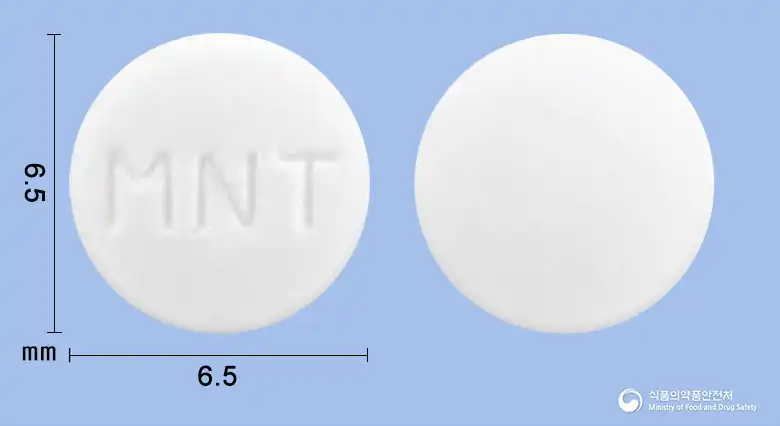
It is a white round tablet.
30 tablets/bottle, 90 tablets/bottle, 100 tablets/bottle, 300 tablets/bottle
Even with the same ingredient, strength, dosage form and how it is taken can differ.
Viewing nowMinoxidil 5mg
Tablet · Prescription medication
Hyundai Pharmaceutical Co., Ltd.
Minoxidil 3g
OTC medication
Hyundai Pharmaceutical Co., Ltd.
Minoxidil 5g
OTC medication
Hyundai Pharmaceutical Co., Ltd.
Minoxidil 5g
OTC medication
Hanmi Pharmaceutical Co., Ltd.
Minoxidil 5g
Solution · OTC medication
JW Pharmaceutical Corp.
Minoxidil 3g
Solution · OTC medication
Haitai HTB Co., Ltd.
Minoxidil 5g
Solution · OTC medication
Ilhwa Co., Ltd.
Minoxidil 2g
OTC medication
NanoPharm Co., Ltd.
Even with the same ingredient, the dose and directions can differ by strength and dosage form. Talk to a doctor or pharmacist before switching from a medication you are already taking.
No questions yet.
For anything that needs medical judgment, consult a doctor or pharmacist.
This drug information is based on data provided by the Korea Ministry of Food and Drug Safety.
Consult a doctor or pharmacist for accurate dosage, administration, and usage instructions.