
 한국어
한국어 English
 日本語
日本語 中文(简体)
 Viewing now
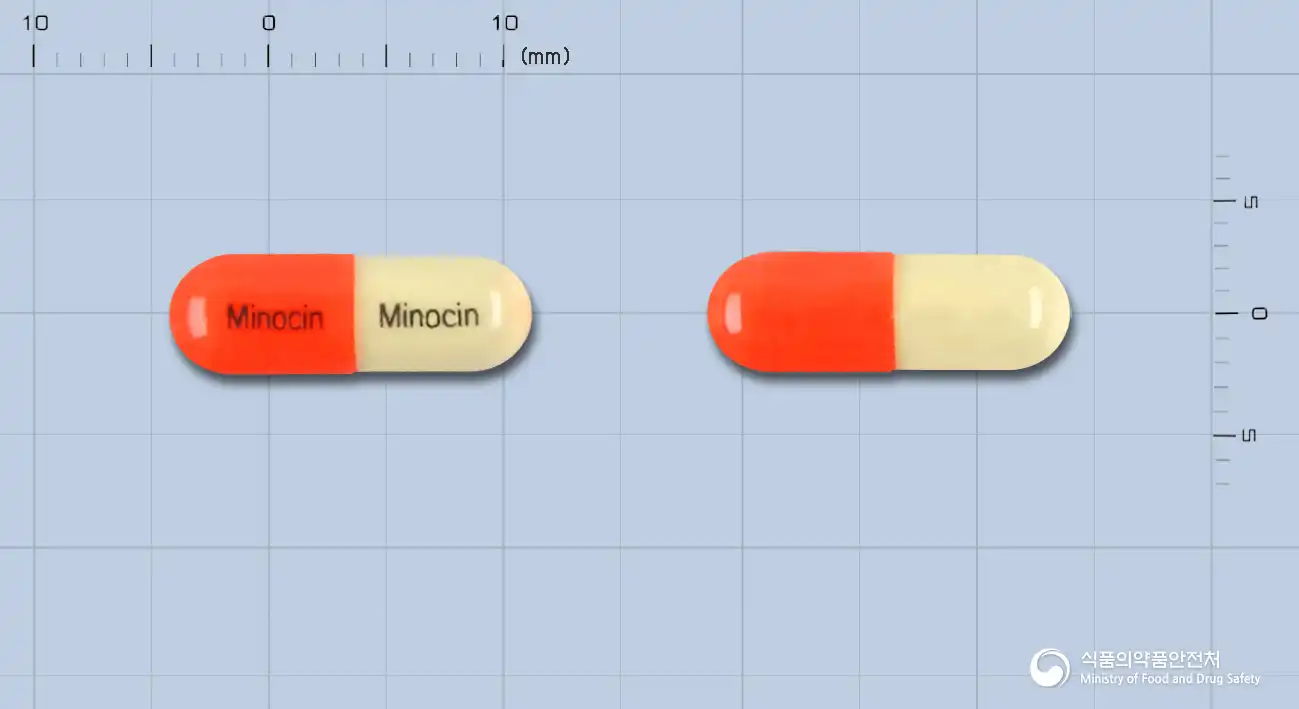
Minocin Capsule 50 mg (Minocycline Hydrochloride)
Minocycline Hydrochloride 50mg
Hard capsule · Prescription medication
SK Chemicals Co., Ltd.
MFDS item code 198501028 · Notified 1985.06.15 · Insurance code 644700590
Improvement of symptoms of infections such as Rickettsia and chronic periodontitis
This medication is effective against various bacteria, such as Rickettsia, Mycoplasma pneumoniae, and Chlamydia, and is used to treat various infectious diseases including epidemic typhus, scrub typhus, mycoplasma pneumonia, lymphogranuloma venereum, cholera, plague, syphilis, and anthrax. It is also effective for various infections, including tonsillitis, bronchitis, pneumonia, mastitis, otitis media, gonorrhea, pyelonephritis, and meningitis. It is widely utilized in the treatment of various diseases in internal medicine, infectious diseases, sexually transmitted diseases, and dermatological conditions. The ointment helps improve symptoms related to periodontal disease. This drug is available in various formulations such as oral, injection, and ointment, used according to the site of infection to aid in the treatment of infectious diseases. Overall, this medication is used for the treatment of various bacterial infections and improvement of symptoms of periodontal disease.
For capsules and granules, as minocycline, initially administer 200 mg, followed by 100 mg orally every 12 hours. For injections, initially administer 200 mg, followed by 100 mg intravenously every 12 hours. Do not exceed 400 mg in a day.
For capsules and granules, for children over 12 years, initially administer 4 mg per kg of body weight, followed by 2 mg per kg of body weight orally every 12 hours. For injection, for children over 12 years, the initial dose is.
This medication should not be administered to certain patients. For example, individuals who are allergic to this medication or its components, or to tetracycline-class antibiotics should not use it. Women who are pregnant or nursing, and children under 12 years old should avoid this medication, as it may cause tooth discoloration or abnormalities in enamel formation. Patients with impaired kidney function or severely reduced liver function, or those with certain autoimmune diseases should consult a physician before using this medication. While taking this medication, patients may exhibit hypersensitivity to light, so it is important to avoid exposure to direct sunlight or ultraviolet light. If rash or erythema develops on the skin, the medication should be discontinued immediately. Additionally, the drug may linger in the esophagus and cause esophagitis or ulcers; therefore, it is important to take it with plenty of water while sitting or standing. This medication may affect the liver and kidneys, so long-term use requires regular blood tests to monitor liver and kidney function. Dizziness, drowsiness, and fatigue can occur, making it advisable to avoid driving or operating dangerous machinery. Interactions with other medications may occur, so it is essential to inform healthcare providers of any current medications. Pregnant or breastfeeding women should consult a physician before use, as it may affect the fetus or newborn. It is safer not to use in children due to the risk of tooth discoloration and affecting bone growth. Elderly individuals may experience more pronounced side effects due to decreased kidney function, so careful adjustment of dosage and intervals is necessary. In cases of overdose, symptoms such as vomiting, nausea, liver and kidney damage may occur, requiring immediate medical attention. This medication should be stored out of reach of children and not transferred to other containers.
Hives, severe swelling (edema), chest tightness, difficulty breathing, cold sweat, pallor, high fever with severe rash, blisters, skin peeling, painful mucous membranes of mouth/eyes, shortness of breath or difficulty breathing, asthmatic attacks, respiratory abnormalities accompanied by cough and fever, jaundice (yellowing of the skin or eyes), profound fatigue, sudden and severe headache, thunderclap headache, seizures, altered consciousness, visual disturbances, paralysis, urine retention.
Not everyone experiences these, and they can vary from person to person.
This medication must be stored in a tightly sealed container to protect it from air and moisture. Keep the storage temperature between 1 to 30 degrees Celsius in a dry place with minimal humidity.
An opaque hard capsule with a red upper part and a yellowish lower part filled with yellow powder.
30 capsules/bottle, 100 capsules/bottle
Even with the same ingredient, strength, dosage form and how it is taken can differ.
Viewing nowMinocycline Hydrochloride 50mg
Hard capsule · Prescription medication
SK Chemicals Co., Ltd.
Minocycline Hydrochloride 20mg
Ointment · Prescription medication
Dongkuk Pharmaceutical Co., Ltd.
Minocycline Hydrochloride 10mg
Ointment · Prescription medication
Vimer
Minocycline Hydrochloride 20mg
Ointment · Prescription medication
Nybex Co., Ltd.
Minocycline Hydrochloride 20mg
Ointment · Prescription medication
Genewon Science Co., Ltd.
Minocycline Hydrochloride 20mg
Ointment · Prescription medication
Ostem Pharma Co., Ltd.
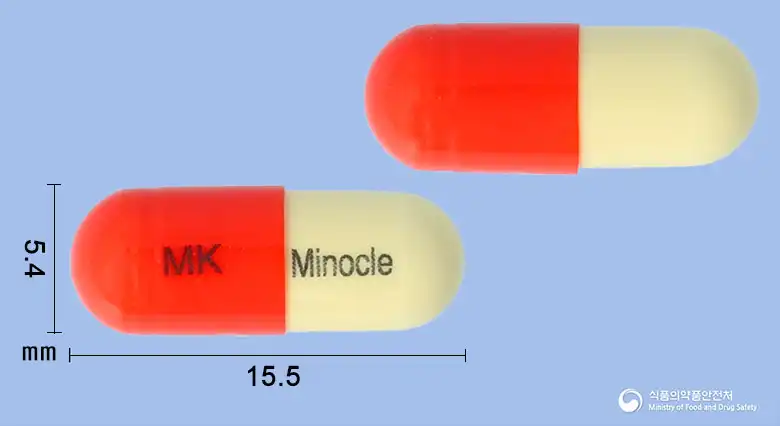
Minocycline Hydrochloride 50mg
Hard capsule · Prescription medication
(Korea Medica Co., Ltd.)
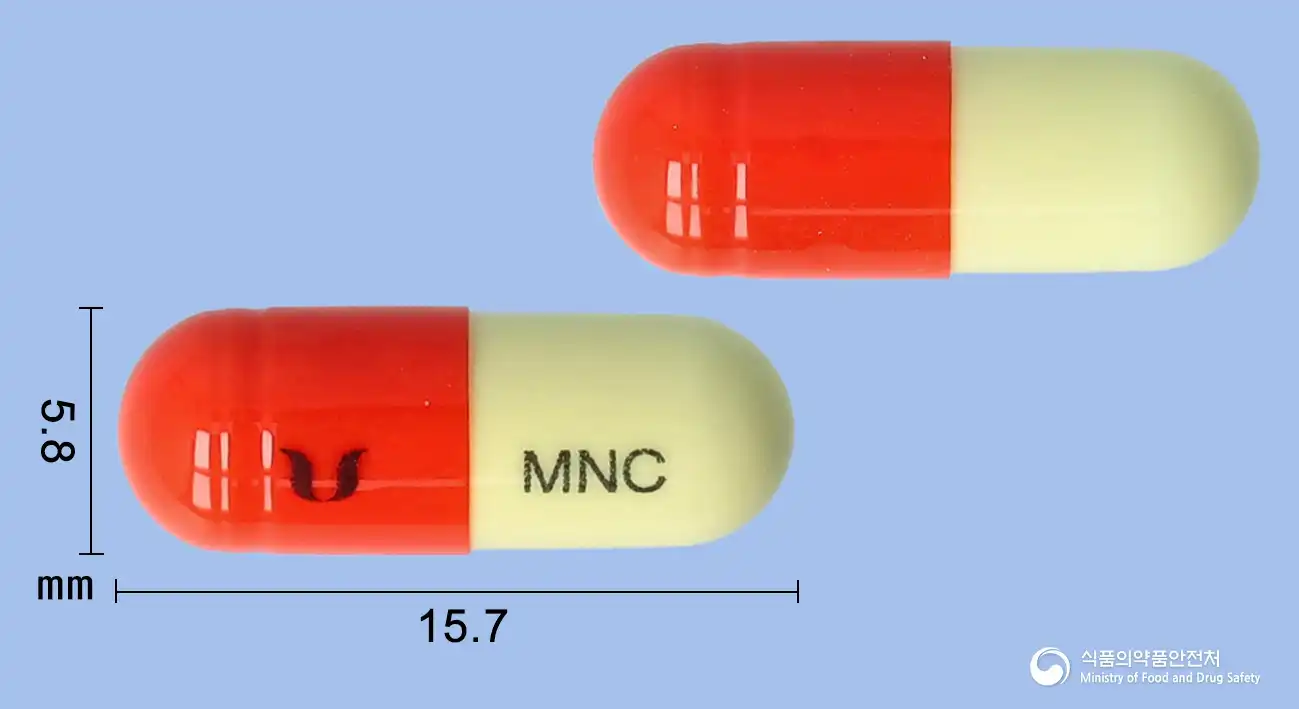
Minocycline Hydrochloride 50mg
Hard capsule · Prescription medication
TheU Pharmaceutical Co., Ltd.
Even with the same ingredient, the dose and directions can differ by strength and dosage form. Talk to a doctor or pharmacist before switching from a medication you are already taking.
No questions yet.
For anything that needs medical judgment, consult a doctor or pharmacist.
This drug information is based on data provided by the Korea Ministry of Food and Drug Safety.
Consult a doctor or pharmacist for accurate dosage, administration, and usage instructions.