한국어
 English
 日本語
 中文(简体)
 Viewing now
Myungjin Imipramine Hydrochloride
Imipramine Hydrochloride 25mg
Tablet · Prescription medication
Myungjin Pharmaceuticals Co., Ltd.
MFDS item code 198500628 · Notified 1985.09.17 · Insurance code 651900750
Treatment of depression and depressive states, and daytime and nighttime enuresis
Used for the treatment of depression and depressive states, it helps improve mood and assist mental well-being. It is also used to alleviate symptoms of nocturnal enuresis occurring day and night.
Depression, depressive states: The initial dose is 25-75㎎ of imipramine hydrochloride daily, administered orally in divided doses, with gradual increases up to 200㎎. If needed, the dose may be increased to 300㎎. Adjust the dose as appropriate according to age and symptoms.
Children with enuresis: Administer 25-50㎎ of this drug daily in 1-2 divided doses. Infants with enuresis: Administer 25㎎ once daily.
This medication should be used cautiously in children, adolescents, and young adults with major depression or other psychiatric disorders, as the risk of suicidal thoughts and behaviors may increase. Patients between the ages of 18 and 24 should be under strict observation by a physician, and family or guardians should closely monitor the patient's condition. This medication should not be administered to patients with specific conditions such as glaucoma, recovering from myocardial infarction, prostate diseases, arrhythmias, or mania. Patients with urination difficulties, heart disease, epilepsy, bipolar disorder, a predisposition to schizophrenia, or liver and kidney dysfunction should use this medication cautiously and consult a physician immediately if their condition worsens. This medication can cause various side effects such as neuroleptic malignant syndrome, heart failure, changes in blood pressure, arrhythmias, neurological and psychiatric symptoms, dry mouth due to anticholinergic effects, constipation, etc., so if any abnormal symptoms occur, immediate medical attention is required. Regular blood tests and liver function tests are necessary, and treatment may be discontinued if symptoms worsen or suicidal tendencies appear. This medication has many drug interactions and should be used carefully when taken with MAO inhibitors, alcohol, blood pressure-lowering agents, etc., and should not be taken with other medications without consulting a physician. Women who are pregnant or may become pregnant should avoid this medication, and breastfeeding should be discontinued if nursing. The safety and efficacy of this medication have not been established in children and adolescents, except for patients with nocturnal enuresis, so it is not recommended for them. Elderly patients may easily experience hypotension, dry mouth, or urination difficulties, so dosing should start at a low amount with close monitoring of their condition. In case of overdose, central nervous system symptoms, heart problems, respiratory depression may occur, so immediate emergency treatment is necessary, and since there is no antidote, symptomatic treatment is important. This medication should be kept out of reach of children and should not be transferred to other containers for safety.
Motor paralysis, severe muscle stiffness, dysphagia, tachycardia, blood pressure changes, sweating, fever, leukocytosis, elevated serum CPK, myoglobinuria, renal dysfunction, high fever, altered consciousness, dyspnea, circulatory collapse, dehydration symptoms, acute renal failure, heart failure, orthostatic hypotension, ECG abnormalities, myocardial infarction, stroke, hypotension, hypertension, arrhythmia, heart block, palpitations, increased suicidal tendencies, seizures, tremors, Parkinsonian symptoms, inability to sit still, ataxia, dysarthria, sensory disturbances, hallucinations, delusions, mental confusion, insomnia, nightmares, anxiety, agitation, drowsiness, aggressive responses, excitement, mania, muscle spasms, disorientation, numbness, EEG changes, peripheral neuropathy, thirst, dysuria, elevated intraocular pressure, visual disturbances, mydriasis, constipation, nasal congestion, agranulocytosis, eosinophilia, leukopenia, thrombocytosis, purpura, petechiae, liver dysfunction, jaundice, elevated ALT, elevated AST, intestinal paralysis, loss of appetite, nausea, vomiting, severe constipation, abdominal distension, relaxation, intestinal obstruction, diarrhea, gustatory disturbances, stomatitis, abdominal cramps, blackened tongue, facial swelling, tongue swelling, rash, itching, photosensitivity, edema, hair loss, low-grade fever, hyponatremia, increased urinary sodium excretion, hyperuricemia, convulsions, altered consciousness, syndrome of inappropriate antidiuretic hormone secretion, gynecomastia, galactorrhea, testicular swelling, increased libido, decreased libido, sexual dysfunction, elevated blood glucose, decreased blood glucose, weight gain, weight loss, involuntary movements around the mouth, allergic pneumonia, staggering, dizziness, fatigue, headache, unusual high fever, tinnitus, weakness, heat sensation, vascular spasm, parotid gland swelling, fractures, drowsiness, decreased attention, decreased concentration, reduced reflexes, nausea, nervousness, anxiety, muscle twitching, drowsiness, confusion, ataxia, anxiety, excitement, paradoxical reactions, muscle rigidity, dystonia, convulsions, cyanosis, hypotension, shock, mydriasis, sweating, oliguria, anuria
Not everyone experiences these, and they can vary from person to person.
This medication is sensitive to light and should be stored in a container that shields it from light. Additionally, it should be kept in a sealed container to prevent air infiltration so that the medication's effectiveness does not diminish.
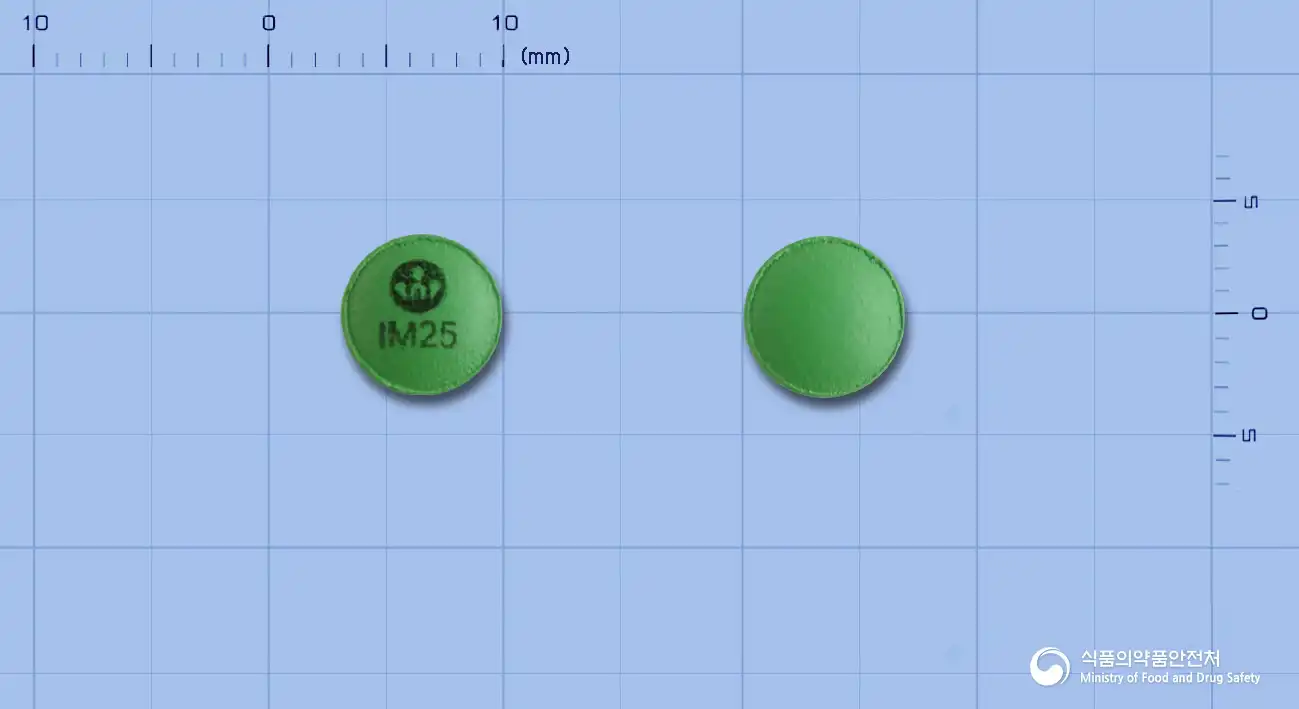
Green round film-coated tablets
500 tablets per bottle
Even with the same ingredient, strength, dosage form and how it is taken can differ.
Even with the same ingredient, the dose and directions can differ by strength and dosage form. Talk to a doctor or pharmacist before switching from a medication you are already taking.
No questions yet.
For anything that needs medical judgment, consult a doctor or pharmacist.
This drug information is based on data provided by the Korea Ministry of Food and Drug Safety.
Consult a doctor or pharmacist for accurate dosage, administration, and usage instructions.