Medication info
Han-in Imipramine Hydrochloride 25 mg

Han-in Imipramine Hydrochloride 25 mg

Prescription medicationTabletOral
Ingredient · strength
Imipramine Hydrochloride›25mg / 1 tablet
Manufacturer / importer
Han-in Pharmaceuticals Co., Ltd.
Appearance
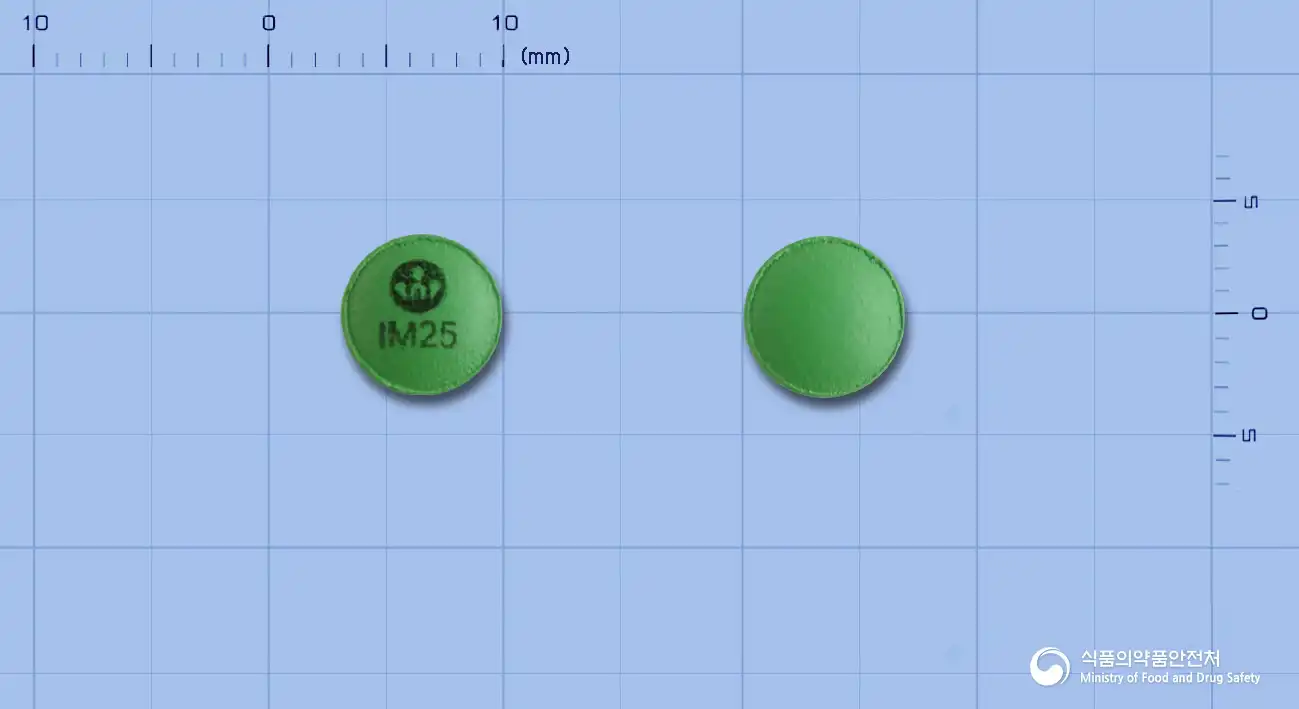
Green round film-coated tablet
Packaging
300 tablets/bottle
Approval status
Active

MFDS item code 198200325 · Notified 1982.12.03 · Insurance code 657201050

Summary

Main use
Treatment of depression and depressive states, and nocturnal and daytime enuresis
Who takes it
Adults · Children
Adult dose
1. Depression, depressive states Adults: The initial dose is 25-75㎎ per day as imipramine hydrochloride, administered orally in divided doses, and gradually increased up to 200㎎. If necessary, the dose may be increased up to 300㎎.
Child dose
2. Enuresis 1) Children: 25-50㎎ per day of this drug, administered in 1-2 divided doses. 2) Infants: 25㎎ once daily.

Ingredients

Manufacturer
Han-in Pharmaceuticals Co., Ltd.

Efficacy & effects

Treatment of depression and depressive states, and nocturnal and daytime enuresis

  • Depression
  • depressive states
  • nocturnal and diurnal enuresis
View approved original text

Used for the treatment of depression and depressive states, and also for the improvement of nocturnal and diurnal enuresis.

How to take

Adult dose

1. Depression, depressive states Adults: The initial dose is 25-75㎎ per day as imipramine hydrochloride, administered orally in divided doses, and gradually increased up to 200㎎. If necessary, the dose may be increased up to 300㎎.

Child dose

2. Enuresis 1) Children: 25-50㎎ per day of this drug, administered in 1-2 divided doses. 2) Infants: 25㎎ once daily.

Precautions

This medication may increase the risk of suicidal thoughts and behaviors in children, adolescents, and young adults with major depressive disorder or other psychiatric disorders, so careful evaluation by a physician is necessary before use. This medication should not be used in patients with certain conditions such as glaucoma, early recovery from myocardial infarction, prostate disease, arrhythmia, acute delirium, and pyloric stenosis. It should be used cautiously in patients with difficulty urinating, heart diseases, epilepsy, bipolar disorder, liver and kidney disorders, hypotension, and chronic constipation, especially starting with a low dose in elderly patients is important. During treatment, there may be side effects such as suicidal tendencies, changes in mental symptoms, cardiovascular issues, dry mouth, constipation, and urinary difficulties due to anticholinergic effects, so careful monitoring is required. Pregnant women or those who may become pregnant are advised not to take this medication, and breastfeeding should be discontinued if the mother is on this medication. In case of overdose, symptoms such as central nervous system effects, heart issues, and respiratory depression may occur, and immediate medical attention is required, as there is no specific antidote; supportive treatment according to symptoms is needed. This medication may interact with other drugs, so if you are taking any other medications, it is essential to inform your physician or pharmacist, particularly not to use it in conjunction with MAO inhibitors. While taking this medication, drowsiness or decreased concentration may occur, so it is advisable to avoid driving or operating dangerous machinery. Abrupt discontinuation of this medication can lead to symptoms such as anxiety and nervousness, so it is necessary to taper off gradually as directed by a physician. Keep out of reach of children and do not transfer to other containers.

Side effects

  • Movement paralysis
  • severe muscle stiffness
  • dysphagia
  • tachycardia
  • changes in blood pressure
  • sweating
  • fever
  • leukocytosis
  • elevated serum CPK
  • myoglobinuria
Show 131 more
  • impaired kidney function
  • high fever
  • altered consciousness
  • dyspnea
  • circulatory collapse
  • dehydration symptoms
  • acute kidney failure
  • heart failure
  • orthostatic hypotension
  • abnormal ECG
  • myocardial infarction
  • stroke
  • hypotension
  • hypertension
  • arrhythmia
  • heart block
  • palpitations
  • increased suicidal tendencies
  • epileptic seizures
  • tremors
  • Parkinson's symptoms
  • inability to sit still
  • ataxia
  • speech disturbance
  • altered perception
  • hallucinations
  • nonsensical speech
  • mental confusion
  • insomnia
  • nightmares
  • anxiety
  • restlessness
  • drowsiness
  • aggressive responses
  • mania
  • manic episodes
  • sensory cramps
  • loss of sense of direction
  • numbness
  • EEG changes
  • peripheral neuropathy
  • thirst
  • dysuria
  • increased intracranial pressure
  • accommodation disturbance
  • constipation
  • nasal congestion
  • agranulocytosis
  • eosinophilia
  • leukopenia
  • thrombocytosis
  • purpura
  • petechiae
  • hepatic dysfunction
  • jaundice
  • elevated ALT
  • elevated AST
  • intestinal paralysis
  • loss of appetite
  • nausea
  • vomiting
  • severe constipation
  • abdominal distension
  • intestinal content retention
  • diarrhea
  • taste disturbance
  • stomatitis
  • abdominal cramps
  • black tongue
  • facial swelling
  • tongue swelling
  • rash
  • itching
  • photosensitivity
  • edema
  • hair loss
  • low-grade fever
  • hyponatremia
  • increased urinary sodium excretion
  • high urinary output
  • convulsions
  • altered consciousness
  • gynecomastia
  • galactorrhea
  • scrotal swelling
  • increased libido
  • decreased libido
  • sexual dysfunction
  • increased blood glucose
  • decreased blood glucose
  • weight gain
  • weight loss
  • involuntary movements around the mouth
  • dental caries
  • allergic pneumonia
  • staggering
  • dizziness
  • malaise
  • headache
  • abnormal high fever
  • tinnitus
  • weakness
  • heat sensation
  • vasospasm
  • parotid gland swelling
  • fractures
  • drowsiness
  • decreased attention
  • decreased concentration
  • reduced reflex motor ability
  • nausea
  • hyperexcitability
  • anxiety
  • muscle twitching
  • drowsiness
  • confusion
  • ataxia
  • anxiety
  • mania
  • reciprocal excitability
  • muscle rigidity
  • akinetic rigid syndrome
  • convulsions
  • respiratory depression
  • cyanosis
  • hypotension
  • shock
  • mydriasis
  • sweating
  • oliguria
  • anuria

Not everyone experiences these, and they can vary from person to person.

Storage

This medication should be stored in a tightly sealed container to prevent air exposure, and it is best kept at room temperature. Keeping it at a typical indoor temperature that is neither too warm nor too cold will help maintain the efficacy of the medication.

Appearance and packaging

Appearance

Green round film-coated tablet

Package unit

300 tablets/bottle

Same-ingredient medicines

Even with the same ingredient, strength, dosage form and how it is taken can differ.

Even with the same ingredient, the dose and directions can differ by strength and dosage form. Talk to a doctor or pharmacist before switching from a medication you are already taking.

Questions about this medicine

No questions yet.

For anything that needs medical judgment, consult a doctor or pharmacist.

Related searches

Search tags

Suggested searches

This drug information is based on data provided by the Korea Ministry of Food and Drug Safety.
Consult a doctor or pharmacist for accurate dosage, administration, and usage instructions.