
 한국어
한국어 English
 日本語
日本語 中文(简体)
 Viewing nowCombination
Daewoong Ursa Soft Capsules
Ursodeoxycholic Acid 50mg · Thiamine Nitrate 10mg +1 more
Soft capsule · OTC medication · Combination
DAEWOONG PHARMACEUTICAL CO., LTD.
MFDS item code 197000040 · Notified 1970.05.14
Improvement of chronic liver disease and liver function disorders (physical fatigue, general weakness, etc.)
This medication helps improve liver function impairment caused by chronic liver disease. Additionally, it alleviates symptoms such as physical fatigue and general malaise associated with liver dysfunction. Therefore, it is used to improve symptoms of chronic liver disease and related liver dysfunction.
For capsules: take 1 capsule 3 times a day. For tablets: take 1 tablet 3 times a day. For gels: take 1 pouch 3 times a day. For liquids: take 1 bottle 3 times a day.
This medication should not be taken by patients with severe bile duct obstruction or fulminant hepatitis. Additionally, it is safe not to use this medication in individuals allergic to this medication or its components, pregnant or potentially pregnant women, nursing mothers, and children. Patients with inflammatory bowel diseases such as Crohn's disease, patients with radiolucent calcified gallstones, patients with non-functioning gallbladders, patients with acute cholecystitis, patients with kidney diseases, and patients with peptic ulcers should also refrain from taking this medication. Individuals allergic to soybean oil, soy, or peanuts should exercise caution when taking this medication. During the use of this medication, it is advisable not to take oral antidiabetic agents, certain antacids, cholestyramine, colestipol, or medicinal charcoal concurrently. Furthermore, it is recommended to avoid combining this medication with substances that increase cholesterol secretion from the liver or that may cause liver damage. Individuals with severe pancreatic disease or cholelithiasis, lipid metabolism disorders, or allergies to the dye contained in this medication must consult a healthcare professional before taking it. If gastrointestinal symptoms such as diarrhea, nausea, vomiting, abdominal pain, constipation, heartburn, or allergic reactions such as itching and rash appear during medication, immediately stop taking it and consult a healthcare professional. Additionally, if symptoms such as general malaise, dizziness, liver function abnormalities, leukopenia, or interstitial pneumonia appear, it is necessary to consult medical personnel immediately. This medication must be taken according to the prescribed dosage and administration, and if adverse reactions occur, use should be stopped and a consultation with a professional should be sought. Patients at risk of fat overload should periodically monitor blood lipid levels and adjust the dosage as needed.
Interstitial pneumonia (interstitial pneumonia accompanied by fever, cough, respiratory distress, and abnormal chest X-ray findings) → respiratory issues
Not everyone experiences these, and they can vary from person to person.
This medication may interact with oral antidiabetic agents (tolbutamide), cholestyramine, colestipol, medicinal charcoal, magnesium, and antacids containing aluminum hydroxide. Additionally, it should not be taken concurrently with drugs that increase cholesterol secretion in the liver (e.g., estrogen-containing oral contraceptives, lipid-lowering medications such as cloFibrate) and agents that can damage the liver.
This medication should be stored in a tightly sealed container to prevent air or moisture from entering. This way, the medication's components will not change, and its effectiveness will be maintained.
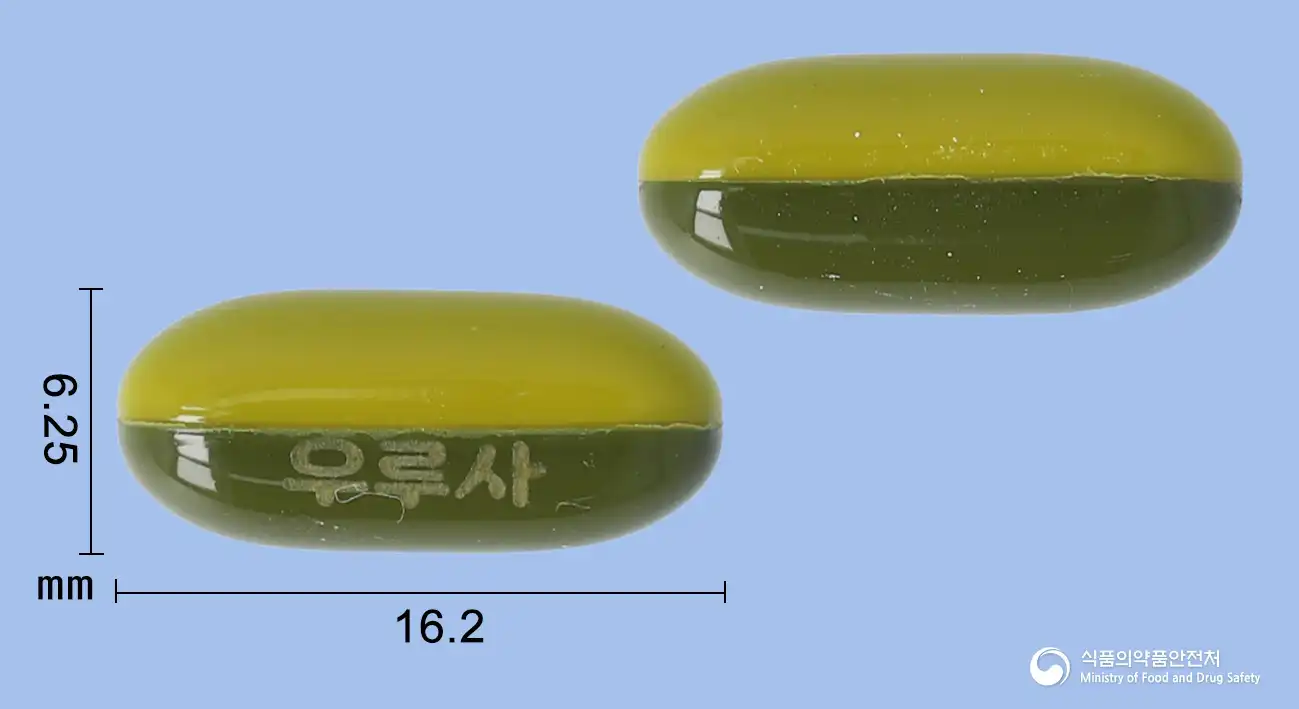
This medication is a rectangular soft capsule with a front side that is yellow-green and a back side that is dark green; the contents are yellow.
Bottle packaging - 30 capsules/bottle, bottle packaging - 120 capsules/bottle, bottle packaging - 330 capsules/bottle, box packaging - 360 capsules[(30 capsules/bottle)+(330 capsules/bottle)], PTP packaging - 10 capsules/box[(10 capsules/PTP)], PTP packaging - 60 capsules/box[(10 capsules/PTP)x6], PTP packaging - 200 capsules/set[(10 capsules/PTP)x20]
Even with the same ingredient, strength, dosage form and how it is taken can differ.
Viewing nowCombinationUrsodeoxycholic Acid 50mg · Thiamine Nitrate 10mg +1 more
Soft capsule · OTC medication · Combination
DAEWOONG PHARMACEUTICAL CO., LTD.
 Combination
Ursodeoxycholic Acid 50mg · Thiamine Nitrate 10mg +1 more
Soft capsule · OTC medication · Combination
Samsung Pharmaceutical Co., Ltd.
Ursodeoxycholic Acid 50mg · Thiamine Nitrate 10mg +1 more
OTC medication · Combination
Samsung Pharmaceutical Co., Ltd.
 Combination
Ursodeoxycholic Acid 50mg · Thiamine Nitrate 10mg +1 more
Soft capsule · OTC medication · Combination
Youngpyung Pharmaceutical Co., Ltd.
 Combination
Ursodeoxycholic Acid 50mg · Thiamine Nitrate 10mg +1 more
Soft capsule · OTC medication · Combination
Daewoong Bio Co., Ltd.
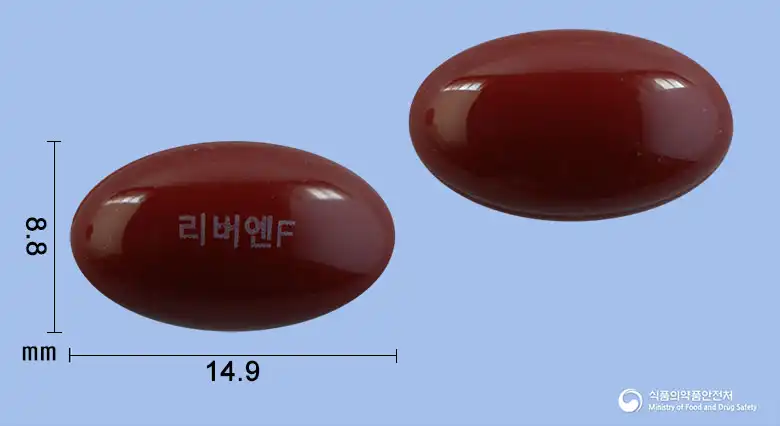 Combination
Ursodeoxycholic Acid 50mg · Thiamine Nitrate 10mg +1 more
Soft capsule · OTC medication · Combination
Seohung Co., Ltd.
Ursodeoxycholic Acid 50mg · Thiamine Nitrate 10mg +1 more
Soft capsule · OTC medication · Combination
Yuhan Corporation
Ursodeoxycholic Acid 50mg · Thiamine Nitrate 10mg +1 more
Solution · OTC medication · Combination
Dongwha Pharmaceutical Co., Ltd.
Even with the same ingredient, the dose and directions can differ by strength and dosage form. Talk to a doctor or pharmacist before switching from a medication you are already taking.
QDo I have to take it three times a day? Is it okay to take it only twice?
Answers 1 · 2026.09.14
QMy liver enzymes are elevated; will this help lower them?
Answers 1 · 2026.09.14
QI'm preparing for pregnancy; can I continue taking this?
Answers 1 · 2026.09.14
For anything that needs medical judgment, consult a doctor or pharmacist.
This drug information is based on data provided by the Korea Ministry of Food and Drug Safety.
Consult a doctor or pharmacist for accurate dosage, administration, and usage instructions.