
 한국어
 English
 日本語
 中文(简体)
 Viewing now
Digoxin Tablet (Digoxin)
Digoxin 0.25mg
Tablet · Prescription medication
HKEINoEn Co., Ltd.
MFDS item code 196300001 · Notified 1963.05.16 · Insurance code 640000090
Prevention and treatment of heart failure and tachycardia; treatment of other heart diseases and thyroid dysfunction
This medication is effectively used for heart dysfunction associated with valvular diseases, congestive heart failure, hypertension, ischemic heart disease, congenital heart disease, and cor pulmonale. It also helps in controlling rapid heart rate due to atrial fibrillation and flutter and in the treatment of paroxysmal atrial tachycardia. Additionally, it can treat other cardiac disorders such as pericarditis, cardiomyopathy, and heart problems caused by thyroid dysfunction. This medication is widely used for the prevention and treatment of heart failure and various types of tachycardia, improving heart health.
(Oral: tablets, elixir) 1. Adults 1) Rapid digitalization (digitalizing dose: 1.0-4.0㎎): Administer an initial dose of 0.5-1.0㎎ of digoxin, followed by 0.5㎎ orally every 6-8 hours, continuing until an adequate effect is achieved. 2) Slow digitalization may also be used. 3) Maintenance therapy: Administer 0.25-0.5㎎ orally per day. (Injection) 1. Adults 1) Rapid digitalization (digitalizing dose: 1.0-2.0㎎): Inject 0.25-0.5㎎ of digoxin intravenously per dose every 2-4 hours, continuing until an adequate effect is achieved. 2) Slow digitalization may also be used. 3) Maintenance therapy: Inject 0.25㎎ intravenously per day.
(Oral: tablets, elixir) 1. Children 1) Rapid digitalization Under 2 years: Administer 0.06-0.08㎎/㎏ of body weight per day in 3-4 divided doses. 2 years and older: Administer 0.04-0.06㎎/㎏ of body weight per day in 3-4 divided doses. 2) Maintenance therapy Administer 1/5-1/3 of the digitalizing dose. Adjust the dose as appropriate according to age and symptoms. (Injection) 1. Children 1) Rapid digitalization ① Neonates and premature infants: Inject 0.03-0.05㎎/㎏ of body weight per day intravenously or intramuscularly in 3-4 divided doses. ② Under 2 years: Inject 0.04-0.06㎎/㎏ of body weight per day intravenously or intramuscularly in 3-4 divided doses. ③ 2 years and older: Inject 0.02-0.04㎎/㎏ of body weight per day intravenously or intramuscularly in 3-4 divided doses. 2) Maintenance therapy Inject 1/15-1/10 of the digitalizing dose intravenously or intramuscularly. Adjust the dose as appropriate according to age and symptoms.
This medication should not be used in patients with specific heart conditions. For example, patients with problems with the electrical conduction of the heart, those with ventricular tachycardia, and individuals allergic to this medication should not receive it. Additionally, patients with acute myocardial infarction or poor kidney function, as well as those with electrolyte imbalances, should be extremely cautious when using this medication due to a high risk of drug toxicity. While taking this medication, various side effects such as gastrointestinal disturbances, arrhythmias, visual disturbances, dizziness, and headaches may occur, so patients should closely monitor their symptoms. If any of these symptoms appear, medical consultation should be sought immediately. This medication can interact with other drugs, so if diuretics or heart-related medications are taken simultaneously, it is essential to inform the physician or pharmacist. Drug interactions can exacerbate side effects. Women who are pregnant or breastfeeding should use this medication cautiously, as its safety has not been firmly established. When administering to children or the elderly, the dosage should be adjusted, and conditions should be closely monitored due to a higher likelihood of side effects.
Not everyone experiences these, and they can vary from person to person.
This medication is sensitive to light and should be stored in a tightly sealed container that blocks light. It is recommended to maintain a storage temperature between 1 and 30 degrees Celsius.
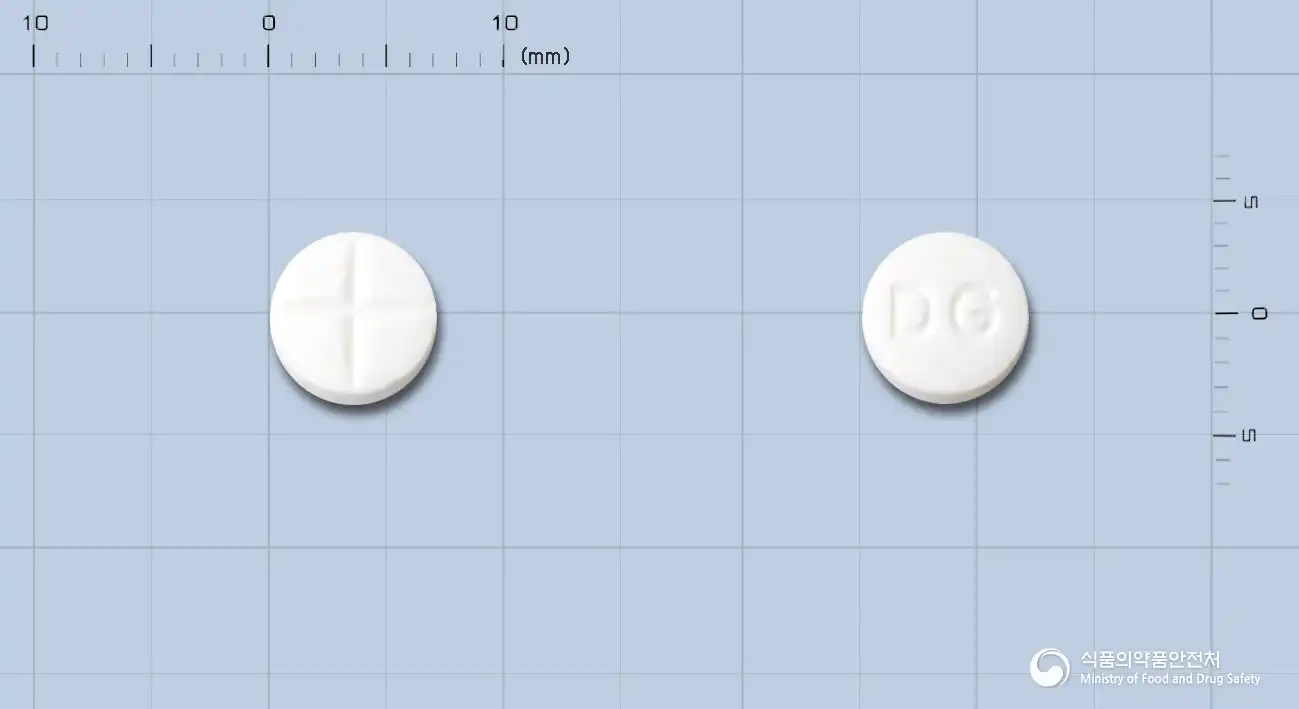
It is a white, round tablet.
1000 tablets/bottle
Even with the same ingredient, strength, dosage form and how it is taken can differ.
Viewing nowDigoxin 0.25mg
Tablet · Prescription medication
HKEINoEn Co., Ltd.
Digoxin 0.25mg
Prescription medication
Ajou Pharmaceutical Co., Ltd.
Digoxin 5mg
Prescription medication
Hallym Pharmaceuticals Co., Ltd.
Even with the same ingredient, the dose and directions can differ by strength and dosage form. Talk to a doctor or pharmacist before switching from a medication you are already taking.
No questions yet.
For anything that needs medical judgment, consult a doctor or pharmacist.
This drug information is based on data provided by the Korea Ministry of Food and Drug Safety.
Consult a doctor or pharmacist for accurate dosage, administration, and usage instructions.