
 한국어
한국어 English
 日本語
日本語 中文(简体)
Dosage form image
Viewing nowAleron Tablet 70 mg (Sodium Alendronate Trihydrate)
Sodium Alendronate Trihydrate 91.37mg
Tablet · Prescription medication
HLB Pharmaceuticals Co., Ltd.
MFDS item code 201901404 · Approved 2019.03.08
This product's status changed to Expired on 2024.03.08. It may no longer be sold, so consult a doctor or pharmacist before taking it.
Treatment of osteoporosis in postmenopausal women and men
This medication is used for the treatment of osteoporosis in both postmenopausal women and men. Osteoporosis is a condition characterized by decreased bone density, leading to an increased risk of fractures. This medication helps strengthen bones and reduce the risk of fractures. It is particularly effective in maintaining and improving bone health in postmenopausal women and men. Therefore, it is used for the treatment of osteoporosis in postmenopausal women and men.
As sodium alendronate, take 70 mg once a week in the morning with a sufficient amount of water at least 30 minutes before consuming food, drinks, or other medications. This medication should be taken immediately upon waking to ensure rapid delivery to the stomach and reduce the possibility of esophageal irritation by swallowing with a sufficient amount of water (170 to 230 mL). After taking it, one must not lie down for at least 30 minutes and until the first intake of food.
This medication can irritate the gastrointestinal mucosa, so caution is required in patients with diseases of the esophagus or stomach. Esophageal adverse reactions such as esophagitis, esophageal ulcers, and esophageal erosion may occur, so if any symptoms arise, discontinue use and consult a doctor. When taking this medication, it should be taken while sitting or standing with a sufficient amount of water, and one should not lie down for at least 30 minutes after taking it. To reduce esophageal irritation, do not chew or suck on the tablet, and do not take it just before bed or upon waking. This medication should not be taken by patients with certain upper gastrointestinal diseases, renal failure, hypocalcemia, pregnant or nursing women, or patients with certain genetic disorders. During use, serum calcium and phosphate levels should be monitored and adequate intake of calcium and vitamin D should be ensured. Bone, joint, and muscle pain may occur during the use of this medication; in severe cases, discontinuation may be necessary. Rarely, osteonecrosis of the jaw, esophageal perforation, and serious skin reactions have been reported, so if any abnormal symptoms occur, consult a doctor immediately. Calcium supplements or antacids may interfere with the absorption of this medication, so a gap of more than 30 minutes should be observed between their intake. Caution should be taken when taken with aspirin, as it may increase the risk of gastrointestinal adverse reactions. Women who are pregnant or may become pregnant, and nursing mothers should not take this medication. The safety and efficacy in children and adolescents under 18 years of age have not been established. Older adults can take this medication, but some older individuals may be more sensitive to it. In case of overdose, do not induce vomiting, and appropriate treatment should be provided for hypocalcemia and gastrointestinal adverse reactions. This medication should be kept out of the reach of children and should not be transferred to another container.
Hives, severe swelling (including angioedema), esophageal erosion, esophageal stricture, esophageal perforation, severe esophageal adverse reactions, symptoms of hypocalcemia, severe skin reactions (Stevens-Johnson syndrome, toxic epidermal necrolysis), severe edema, including localized osteonecrosis of the jaw, stress fractures, severe neurological symptoms (headache, altered consciousness, etc.)
Not everyone experiences these, and they can vary from person to person.
This medication should be stored in a tightly sealed container to prevent exposure to air and moisture. In addition, it should be kept in a cool place at a temperature between 15 and 30 degrees Celsius to maintain its effectiveness.
White oval tablet
4 tablets/PTP [(4 tablets/PTP packaging (AluAlu)x1)]
Even with the same ingredient, strength, dosage form and how it is taken can differ.
Sodium Alendronate Trihydrate 91.37mg
Tablet · Prescription medication
HLB Pharmaceuticals Co., Ltd.
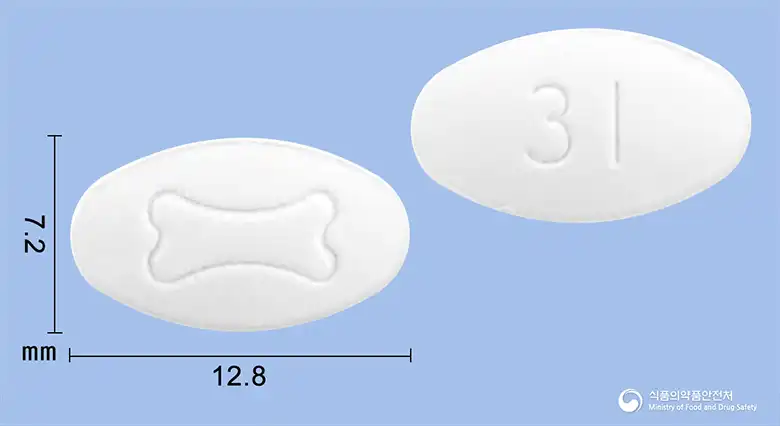
Sodium Alendronate Hydrate 91.37mg
Tablet · Prescription medication
Korea Organon Co., Ltd.
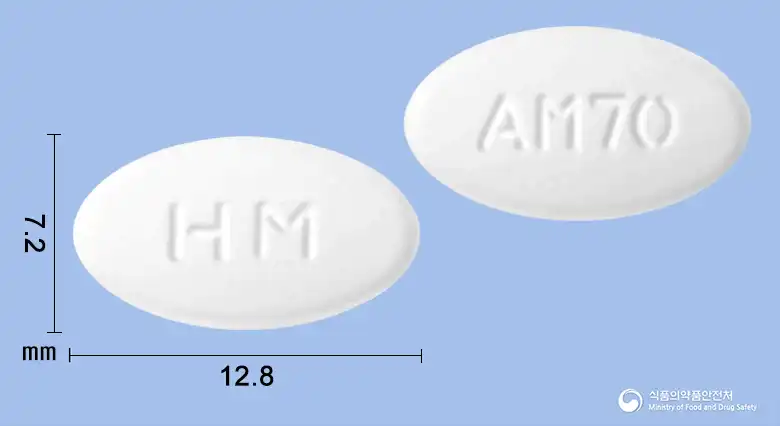
Sodium Alendronate 91.37mg
Tablet · Prescription medication
Hanmi Pharmaceutical Co., Ltd.
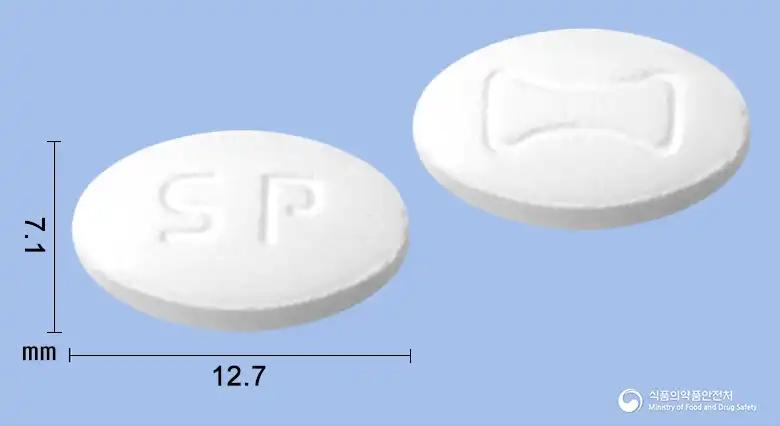
Sodium Alendronate Hydrate 91.37mg
Tablet · Prescription medication
Shinpoong Pharmaceutical Co., Ltd.
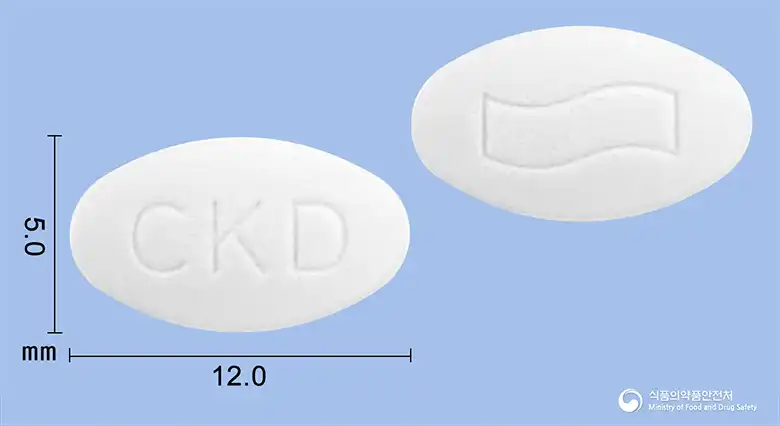
Sodium Alendronate 91.37mg
Tablet · Prescription medication
(Co., Ltd.) Jungkundang
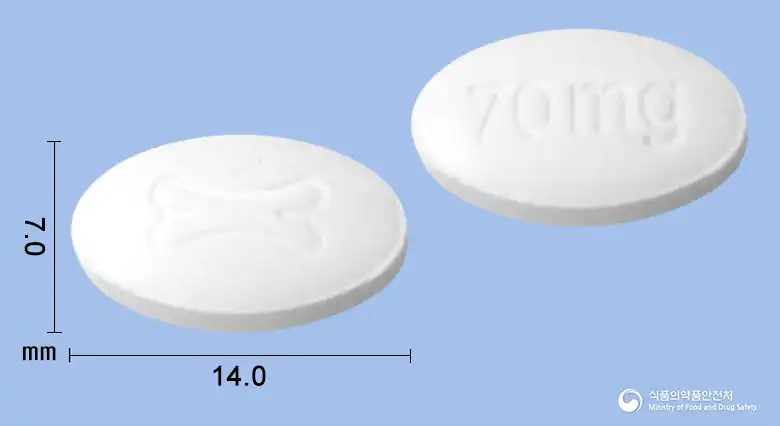
Sodium Alendronate Hydrate 91.37mg
Tablet · Prescription medication
Dongkwang Pharmaceutical Co., Ltd.
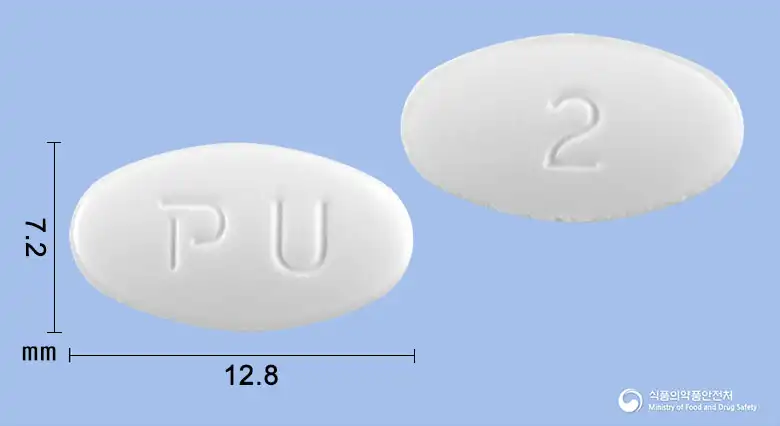
Sodium Alendronate Hydrate 91.37mg
Tablet · Prescription medication
Korea PMG Pharmaceutical Co., Ltd.
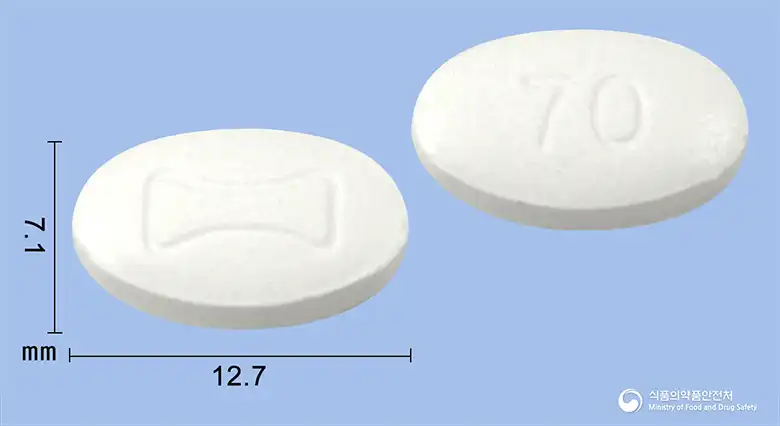
Sodium Alendronate Hydrate 91.37mg
Tablet · Prescription medication
Donggu Bio Pharmaceutical Co., Ltd.
Even with the same ingredient, the dose and directions can differ by strength and dosage form. Talk to a doctor or pharmacist before switching from a medication you are already taking.
No questions yet.
For anything that needs medical judgment, consult a doctor or pharmacist.
This drug information is based on data provided by the Korea Ministry of Food and Drug Safety.
Consult a doctor or pharmacist for accurate dosage, administration, and usage instructions.