
 한국어
한국어 English
 日本語
日本語 中文(简体)
 Viewing now
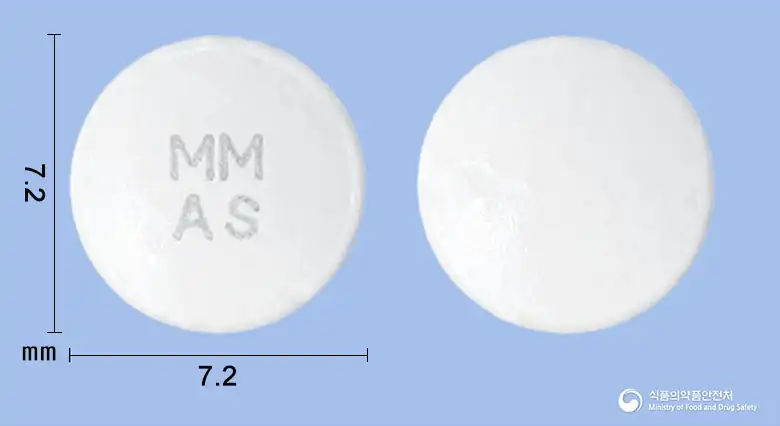
Myeongmun Aspirin Enteric-Coated Tablet 100mg
Aspirin 100mg
Tablet · OTC medication
Myeongmun Pharmaceutical Co., Ltd.
MFDS item code 201310207 · Notified 2013.11.20 · Insurance code 649806380
Inhibition of thrombus formation and reduction of cardiovascular risk in conditions such as myocardial infarction and cerebral infarction
This medication helps to facilitate blood circulation by inhibiting thrombus formation in conditions such as myocardial infarction, cerebral infarction, and unstable angina. It also prevents complications through thrombus formation inhibition after coronary artery bypass surgery or percutaneous coronary intervention. It reduces cardiovascular risk even in high-risk patients, supporting health management. It is used to actively inhibit thrombus formation in a variety of cardiovascular-related diseases and situations for enhanced therapeutic effects.
(Enteric-coated tablet) Adults: 1 tablet once a day, taken before meals with sufficient water. (Enteric-coated capsule) Adults: 1 capsule once a day, taken before meals with sufficient water.
This medication may pose a risk of gastrointestinal bleeding in individuals who regularly consume more than three alcoholic drinks daily, so consultation with a doctor or pharmacist is essential. This medication should not be used in patients with hypersensitivity to salicylates, peptic ulcers, aspirin asthma, hemophilia, severe liver impairment, kidney impairment, heart failure, bleeding tendencies, patients on high-dose methotrexate, and pregnant women in the third trimester. Patients with kidney impairment, liver impairment, heart dysfunction, blood disorders, bronchial asthma, pre-surgical patients, children under three years old, those with allergy history, the elderly, patients on anticoagulants, and those with G6PD deficiency should be administered carefully, with particular caution for the risk of hemolytic anemia. When taking this medication, it is vital to monitor for adverse reactions such as anaphylaxis, hypersensitivity, skin rash, blood abnormalities, gastrointestinal issues, neurological symptoms, liver impairment, and kidney impairment. Should any abnormal symptoms occur, stop the medication immediately and seek medical attention. Particularly in children under 14 with chickenpox or influenza, caution should be exercised due to the risk of Reye's syndrome, and their condition should be closely monitored post-administration. This medication is used for symptom relief; therefore, if underlying cause treatment is necessary, other treatment methods should also be considered. Children with high fever or elderly patients, as well as those with wasting diseases, should be monitored for temperature reduction and collapse symptoms, and careful administration alongside appropriate antibiotics should be ensured in cases of infection. If taken within one week pre-surgery, the risk of bleeding may increase; thus, if surgery is planned, the prescribing physician must be informed, and dosage may need adjustment. Overdose may lead to toxicity and severe side effects, so the recommended dosage must not be exceeded. Consultation with professionals is necessary if using for other purposes like cardiovascular diseases. This medication increases the risk of bleeding due to its antiplatelet aggregation action, so caution is required in patients with bleeding tendencies, and discussions with physicians should occur when co-administering with other NSAIDs, as effects may vary. In early to mid-pregnancy, it should be administered at minimal dosages only when necessary, while in the third trimester, its use is prohibited as it may affect fetal and maternal cardiopulmonary functions. In breastfeeding mothers, it is advisable to avoid this medication, as it can be secreted in breast milk and affect the infant. The elderly are at higher risk for adverse reactions, so treatment should begin at small doses with careful monitoring of their condition. This enteric-coated tablet should be stored away from damage to the enteric coating and should not be taken with alkaline agents. It must be stored away from moisture. Keep out of reach of children and ensure containers are sealed tightly to maintain drug quality and safety.
Hives, angioedema, difficulty breathing, asthma attacks, shock, Reye's syndrome (toxic epidermal necrolysis), DRESS syndrome, Stevens-Johnson syndrome, exfoliative dermatitis, aplastic anemia, anemia, leukopenia, thrombocytopenia, impaired platelet function, hemolysis, hemolytic anemia, gastrointestinal bleeding, peptic ulcer and perforation, liver impairment, acute renal failure, cardiopulmonary disorders, angioedema, severe edema, increased blood pressure, severe allergic reactions
Erythema, itching, nasal congestion, rash, edema, rhinitis-like symptoms, conjunctivitis, loss of appetite, heartburn, gastric pain, nausea, vomiting, tinnitus, ear blockage, dizziness, headache, excitement, transient liver damage due to elevated liver transaminases, hyperventilation, metabolic acidosis
Not everyone experiences these, and they can vary from person to person.
This medication may increase the risk of bleeding and decrease kidney function when combined with other non-steroidal anti-inflammatory drugs and salicylate products. Caution is also needed when used with anticoagulants, ibuprofen, naproxen, certain non-steroidal anti-inflammatory drugs, thrombolytics, other antiplatelet agents, and hemostatic agents. Diabetes medications (insulin preparations, tolbutamide, etc.), uricosuric agents (benzbromarone, probenecid, etc.)
Store this medication in a sealed container to protect it from air and moisture. It is preferable to maintain storage temperature between 1 degree and 30 degrees Celsius at room temperature.
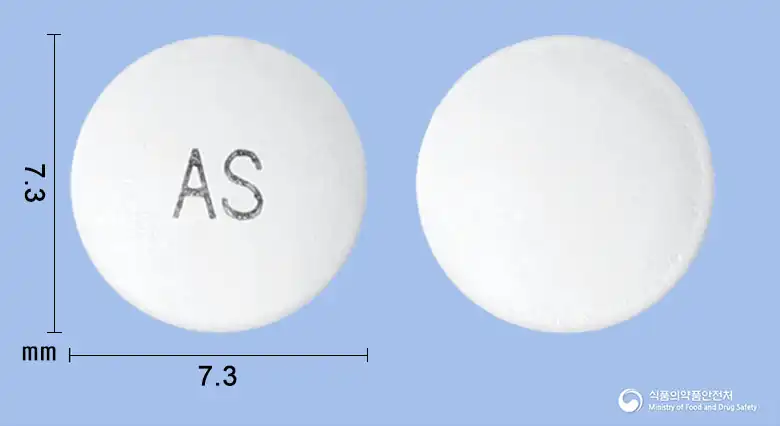
White enteric-coated round tablet
(Domestic) 30 tablets/bottle, 500 tablets/bottle (Export) 30 tablets/PTP
Even with the same ingredient, strength, dosage form and how it is taken can differ.
Viewing nowAspirin 100mg
Tablet · OTC medication
Myeongmun Pharmaceutical Co., Ltd.
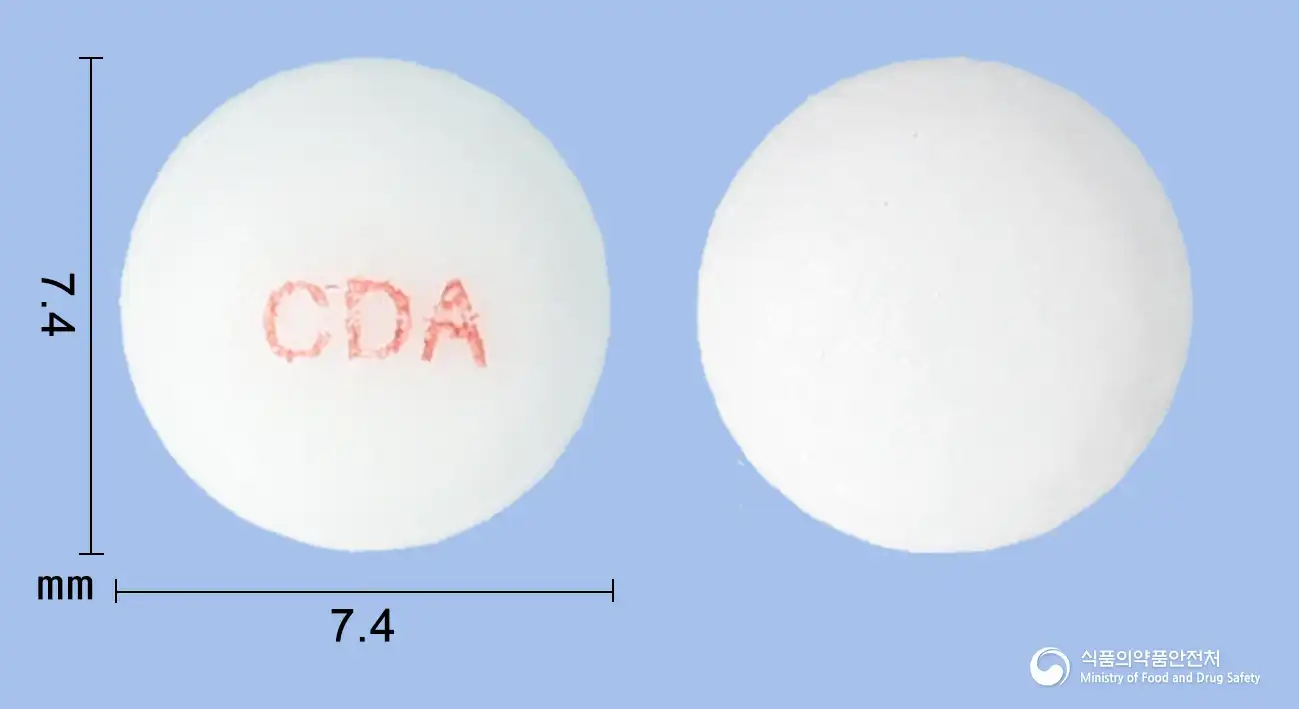
Aspirin 100mg
Tablet · OTC medication
Chodang Pharmaceutical Co., Ltd.
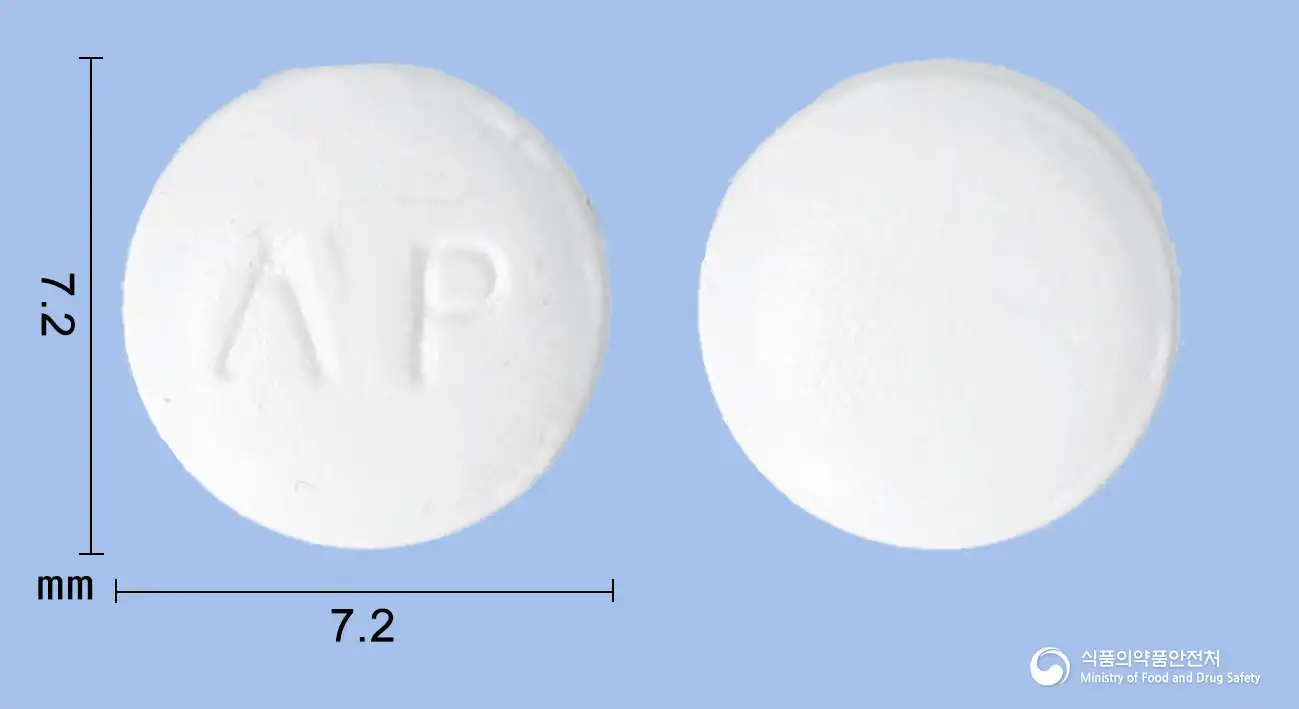
Aspirin 100mg
Tablet · OTC medication
Hanmi Pharmaceutical Co., Ltd.
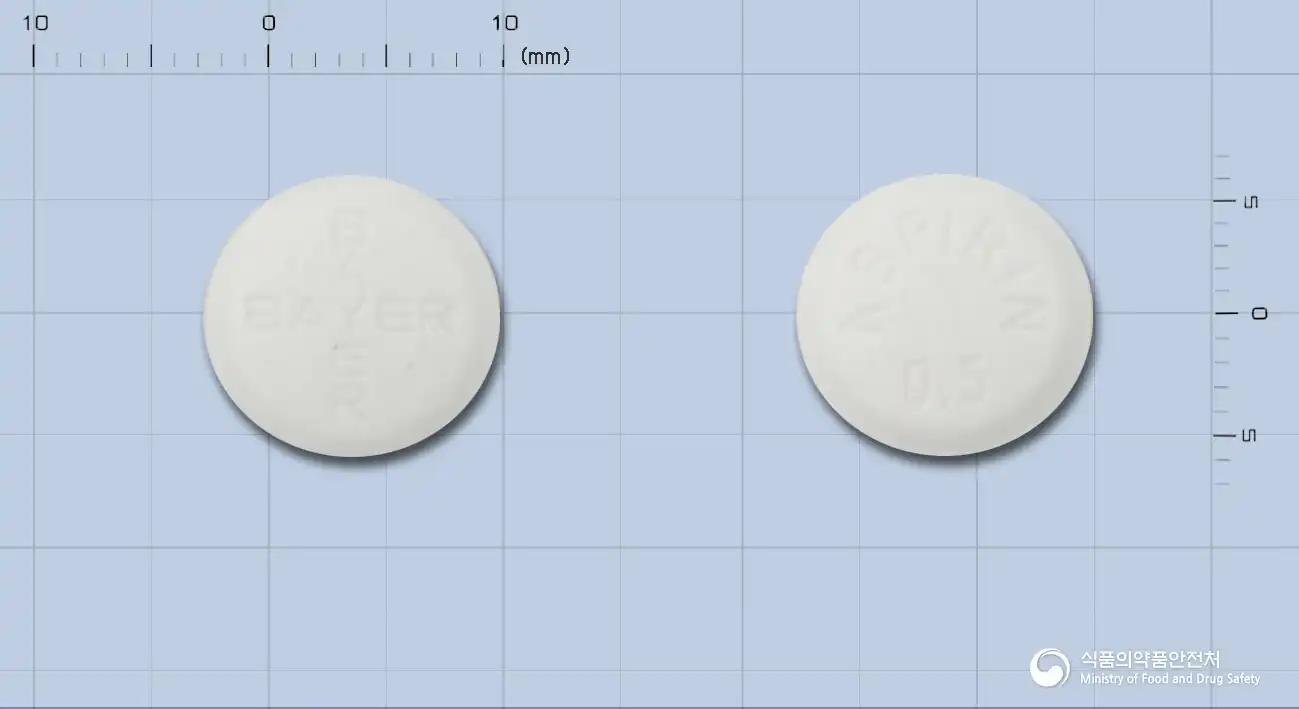
Aspirin 500mg
Tablet · OTC medication
Bayer Korea Co., Ltd.

Aspirin 100mg
Tablet · OTC medication
Bayer Korea Co., Ltd.
Aspirin 100mg
Tablet · OTC medication
Youngjin Pharmaceutical Co., Ltd.
Aspirin 81mg
Tablet · OTC medication
Youngpoong Pharmaceutical Co., Ltd.
Aspirin 75mg
Tablet · OTC medication
IlYang Biopharm Co., Ltd.
Even with the same ingredient, the dose and directions can differ by strength and dosage form. Talk to a doctor or pharmacist before switching from a medication you are already taking.
No questions yet.
For anything that needs medical judgment, consult a doctor or pharmacist.
This drug information is based on data provided by the Korea Ministry of Food and Drug Safety.
Consult a doctor or pharmacist for accurate dosage, administration, and usage instructions.