
 한국어
한국어 English
 日本語
日本語 中文(简体)
 Viewing now
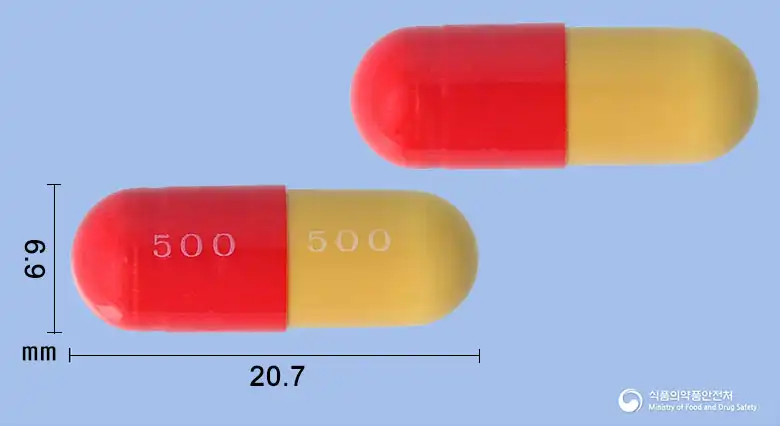
Jongkundang Amoxicillin Capsule 500 mg
Amoxicillin Hydrate 500mg
Hard capsule · Prescription medication
Jongkundang Co., Ltd.
MFDS item code 198300065 · Notified 1983.04.21 · Insurance code 643303130
Treatment of bacterial infections (skin, respiratory, urinary, etc.)
This medication is effective against various bacterial infections. It is used for infections caused by Streptococcus, Pneumococcus, Staphylococcus, Neisseria gonorrhoeae, Haemophilus influenzae, Escherichia coli, Proteus species, etc. It is effective for skin and soft tissue infections such as boils, carbuncles, cellulitis, and impetigo, as well as upper respiratory tract infections like pharyngitis, otitis media, and sinusitis. It is also used for lower respiratory tract infections and treatments for pneumonia, bronchitis, pulmonary abscess, and scarlet fever. Additionally, it aids in treating urogenital infections such as pyelonephritis, cystitis, and gonococcal urethritis, as well as abdominal infections like peritonitis, liver abscess, and typhoid fever. It is also used for treating severe infections like osteomyelitis and intrauterine infections. This medication is widely used for treating various bacterial infections.
For adults, administer amoxicillin 250-500 mg (potency) orally three times a day.
For children weighing over 20 kg, administer amoxicillin 250-500 mg (potency) orally three times a day. For children weighing under 20 kg, 20-40 mg (potency) per kg of body weight is to be taken orally three times daily.
This medication should not be used in certain patients. For example, patients who have experienced severe allergic reactions to this medication or who are hypersensitive to penicillin antibiotics, patients with mononucleosis, and those with lactose intolerance or related genetic disorders should not take this medication. Additionally, patients with a history of hypersensitivity to cephalosporins, those with allergic constitutions, patients with severe renal dysfunction, patients unable to take oral medications, and elderly patients should use this medication cautiously, and may need to adjust the dosing intervals or closely monitor their condition if necessary. This medication can rarely cause severe allergic reactions or shock, so if symptoms such as discomfort, dizziness, rashes, or difficulty breathing appear during use, it should be discontinued immediately and medical professionals should be consulted. Also, various side effects such as gastrointestinal symptoms, blood disorders, central nervous system disorders, skin rashes, liver function abnormalities, and kidney function abnormalities can occur, so careful monitoring is necessary. When using this medication, it is recommended to conduct susceptibility testing to prevent the development of resistant bacteria and to only administer for the minimum necessary duration. Prior skin testing is recommended to prevent allergic reactions, and appropriate treatment equipment and medication should be prepared in case of emergency. Furthermore, secondary infections caused by fungi or other bacteria may occur during the use of this medication, so symptoms should be reported to healthcare professionals immediately. In cases of high-dose administration, sufficient fluid intake should be ensured to prevent kidney damage. This medication may interact with certain drugs, so caution is needed when taken with allopurinol, probenecid, oral contraceptives, some antibiotics, and anti-inflammatory drugs. Women who are pregnant or may become pregnant, as well as nursing mothers, should consult with healthcare professionals about the use of this medication, and particular caution should be taken when administering it to children or the elderly. Finally, taking this medication can affect the results of some clinical tests, so it should be considered when interpreting test results; caution is needed as overdose can lead to serious side effects like renal failure.
Not everyone experiences these, and they can vary from person to person.
This medication should be stored in a tightly sealed container to protect it from air and moisture. It is best to maintain a storage temperature between 1 and 30 degrees Celsius.
Capsules containing a white to pale yellow crystalline powder, with an upper part in crimson and a lower part in dark yellow.
30 capsules/bottle, 500 capsules/bottle
Even with the same ingredient, strength, dosage form and how it is taken can differ.
Viewing nowAmoxicillin Hydrate 500mg
Hard capsule · Prescription medication
Jongkundang Co., Ltd.

Amoxicillin Hydrate 250mg
Hard capsule · Prescription medication
Yuhan Corporation

Amoxicillin Hydrate 250mg
Hard capsule · Prescription medication
Dongwha Pharmaceutical Co., Ltd.

Amoxicillin Hydrate
Hard capsule · Prescription medication
(Company) Boryung

Amoxicillin Hydrate
Hard capsule · Prescription medication
(Boryung Pharmaceutical Co., Ltd.)
Amoxicillin Hydrate 3.23g
Syrup · Prescription medication
Donghwa Pharmaceutical Co., Ltd.
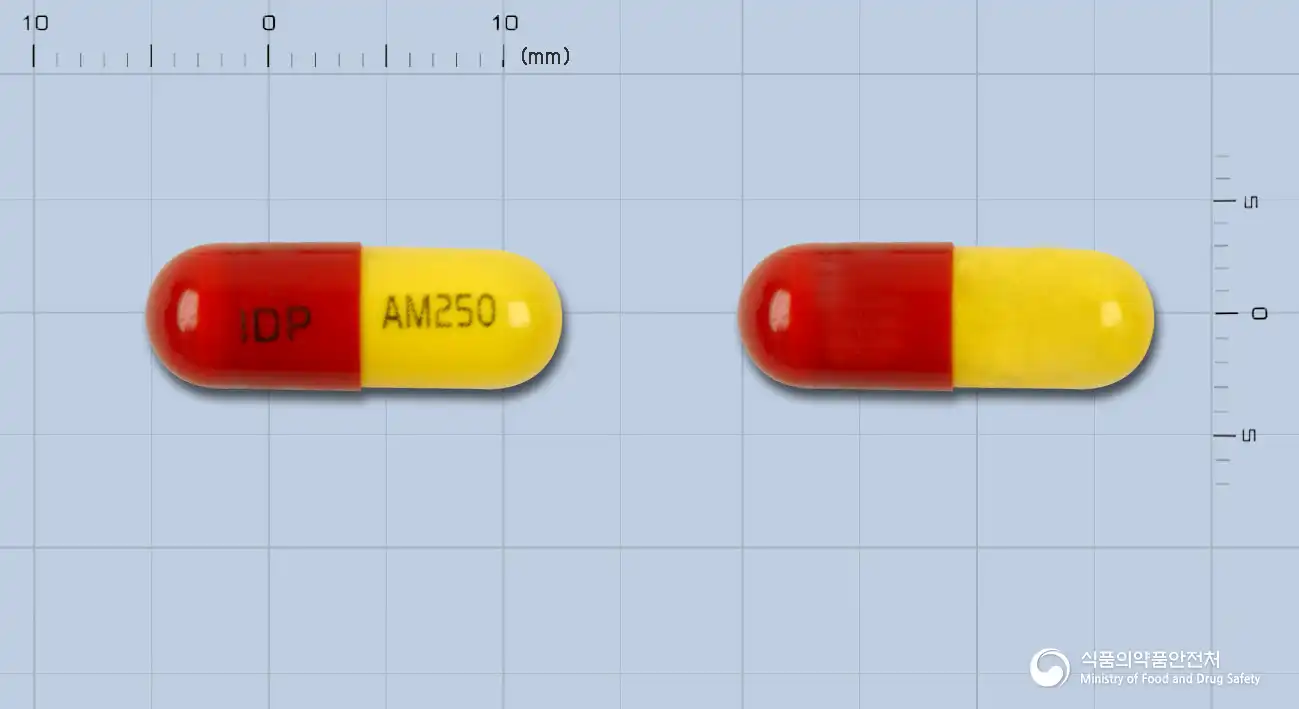
Amoxicillin Hydrate 250mg
Hard capsule · Prescription medication
Ildong Pharmaceutical Co., Ltd.
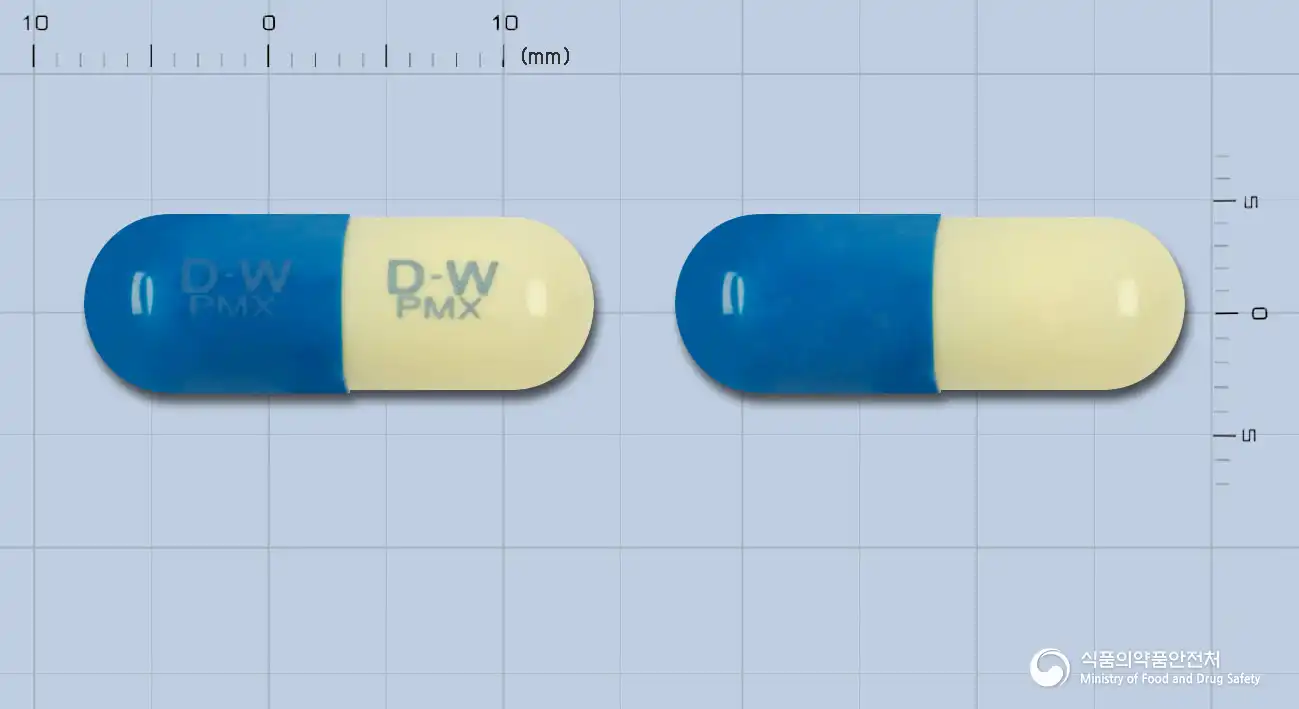
Amoxicillin Hydrate 500mg
Hard capsule · Prescription medication
Dongwha Pharmaceutical Co., Ltd.
Even with the same ingredient, the dose and directions can differ by strength and dosage form. Talk to a doctor or pharmacist before switching from a medication you are already taking.
No questions yet.
For anything that needs medical judgment, consult a doctor or pharmacist.
This drug information is based on data provided by the Korea Ministry of Food and Drug Safety.
Consult a doctor or pharmacist for accurate dosage, administration, and usage instructions.