




써니

🌈🌈🌈🌈🌈
It's a day with a perceived temperature of minus 16 degrees Celsius 😱😱
Please be well aware of health guidelines to prevent extreme cold wave conditions.
I hope you respond healthily and wisely♡
1. Live indoors like this!
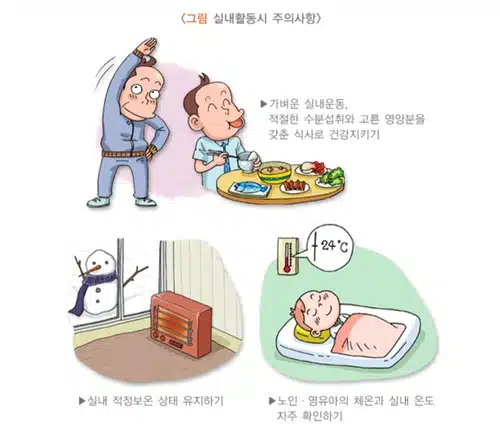
Precautions for indoor activities
1) Maintaining health through light indoor exercise, proper hydration, and balanced nutrition.
Monitor your health condition and engage in light indoor exercises to ensure you do not lack physical activity.
Develop a habit of thoroughly practicing personal hygiene, such as washing hands, after going out.
Elderly individuals, children, and patients with cardiovascular or cerebrovascular diseases are advised to refrain from unnecessary outings whenever possible.
- When going out involuntarily, go with a guardian, and the elderly use a cane.
When it gets cold, drinking adequate fluids and having a balanced meal with proper nutrients help maintain body temperature.
Drinking warm water or sweet beverages helps maintain body temperature.
- Do not consume alcohol or caffeinated beverages, as they can cause a rapid loss of body temperature.
2) Frequently check the body temperature of the elderly and infants, as well as indoor temperature
If there are elderly or young children at home, frequently check their body temperature and indoor temperature to keep them sufficiently warm. Additionally, if there are elderly or young children in the family of relatives or neighbors, regularly ensure that their living spaces are well heated.
Infants under one year old should never be put to sleep in a cold room. Unlike adults, they can easily lose body heat and cannot generate enough warmth through shivering or other means.
Elderly individuals aged 65 and older have lower metabolic rates and activity levels, making it difficult for them to generate heat effectively.
If you cannot keep the indoor temperature warm, you should move to another residence where the indoor temperature is warm.
If there are elderly or young children at home, even if the indoor temperature is around 22-24°C, caution is needed as body temperature may drop.
- During the winter season, it is recommended to attach a clearly visible thermometer in a prominent indoor location and frequently check the indoor temperature.
3) Maintain a comfortable indoor temperature
During sudden cold weather, maintain a safe indoor temperature (18-20°C) with proper heating, and ventilate appropriately by opening windows three times a day for at least 10 to 30 minutes at intervals of 2 to 3 hours.
Seal gaps in windows and doors to prevent indoor warmth from escaping outside.
Refrain from unnecessary ventilation to maintain indoor warmth as much as possible.
Indoor ventilation is most effective when both windows, which allow cross-ventilation, are opened together. It is recommended to ventilate after 10 a.m. and before 7 p.m. to avoid periods when contaminated air settles on the floor.
Especially in winter, indoor air tends to become very dry due to a lack of moisture in the air and heating, so maintaining an appropriate indoor humidity level (40-50%) and proper ventilation are very important. When the indoor environment is dry, the mucous membranes of the nose and bronchi dry out, and the skin and eyes become dry, which can lead to respiratory diseases or allergic conditions.
Indoor humidity maintenance tips: hanging wet laundry (towels), placing water containers, placing water-soaked charcoal, growing potted plants or aquatic plants, using topiary (decorations made with moss), or using fish tanks, etc.
2. Outdoor activities, do it like this!
1) Dress warmly
Wear several layers of slightly loose, lightweight clothing and be careful not to get wet.
Wears a hat, gloves, mask, and scarf.
Most of the body heat is lost through the head, so prepare a hat, and mittens with separate fingers provide better insulation. To protect the lungs from cold air, wrap your neck with a mask and a scarf.
Wear a long-sleeved top that extends down to the wrists to prevent your skin from being directly exposed to the cold.
Wear winter gear such as waterproof coats and hiking boots with wide, slip-resistant soles.
The outermost coat should be securely fastened to prevent losing body heat due to the wind.
Cloth lining, such as silk or synthetic fibers, helps maintain body temperature better than just the outer fabric.
Even if you sweat a lot, you can lose body heat, so when it feels too hot, it is good to take off one layer of clothing.
Avoid excessive exercise
Sudden cold weather puts additional strain on the heart and brain due to the low temperatures, so avoid strenuous exercise. If you need to engage in outdoor activities, dress warmly and move slowly.
If you have hypertension or cardiovascular and cerebrovascular diseases, avoid activities such as eye cleaning, and if you do engage in them, be sure to consult your doctor and follow their instructions.
3) Check the perceived temperature before going out
We check the actual perceived temperature (Wind Chill) that our body feels through the weather forecast.
When the perceived temperature we feel is low, frostbite can easily occur even with short-term exposure to the cold.
The perceived temperature is calculated by combining air temperature and wind speed, reflecting the rate at which body heat is lost from exposed skin due to wind and cold. On days with high wind speeds, even if the temperature is not very low, it can cause serious health effects.
4) Refrain from outdoor activities as much as possible
In sudden cold weather, outdoor activities should be avoided as much as possible, but when engaging in activities, the following precautions should be kept in mind.
You should not go outdoors with your skin exposed to the cold.
- Winter clothing. Prepare a thermos for hot water, hot packs, spare clothes for changing, and other necessary items.
Clothes soaked with sweat or other moisture can cause a rapid loss of body heat, so immediately change into a spare dry set of clothes prepared in advance.
Before outdoor activities such as outdoor exercise, hiking, or skiing, warm up your body with jogging in place or walking exercises, then do light stretching that does not strain your joints or eyes as a warm-up.
Chills during outdoor activities are the first warning sign that the body is losing heat, so if chills persist, you should immediately go indoors.
Remember that your body is doing a lot just by maintaining its temperature, and be careful not to overexert yourself.
Walking on ice is very dangerous, so avoid it. If you must walk in such conditions, bend your waist to lower your center of gravity, reduce your walking speed and stride length by 10-20%, or wear waterproof, slip-resistant shoes with a wide sole.
- During winter walking, never put your hands in your pockets. When hands are in the pockets, your sense of balance becomes dull, making it easier to fall, and if you fall and use your hands to break the fall, the impact (about three times your body weight) is absorbed, which can prevent serious injuries.
Winter slip-and-fall accidents often occur when walking on icy roads or stairs, so walk slowly with small steps, and especially when using stairs, hold onto the safety railing.
In addition to accidents on icy roads, there is also a high risk of slipping on thin ice formed from accumulated water freezing at building stairs or entrances (marble, granite flooring), so extra caution should be exercised in daily life.
If there is snow or ice on the front of your house, please use salt, sand, or related chemical products to ensure the safety of neighbors passing by.
When going outdoor activities such as winter hiking, camping, or skiing, you should inform your family or friends of your destination in advance.
- If you are delayed returning beyond the original schedule, please request to report to the police.
When hiking in winter, wear moisture-wicking shirts and insulated outerwear, and prepare spare clothes, warm drinks, and high-calorie snacks such as chocolate to ensure a safe hike.
- Cotton pants or jeans absorb sweat well but do not release it easily, so they remain wet, making them unsuitable as hiking clothing.
- When hiking, you should refrain from consuming alcohol or beverages with high caffeine content.
Check the emergency shelters in outdoor activity areas in advance, and be sure to prepare dry spare clothes, a radio, insect repellent, and a mobile phone (check the battery and prepare extra batteries).
When engaging in outdoor activities, avoid beverages containing alcohol and caffeine, which can affect consciousness.
Drinking warm water or sweet beverages helps maintain body temperature.
- Alcohol and caffeinated beverages can cause a rapid loss of body heat, so avoid consuming them.
During outdoor activities, carefully monitor your condition to prevent health issues caused by the cold.
5) Precautions during travel
Please keep the following precautions in mind when traveling during the winter season.
Before and during the trip, you should regularly check the weather forecast through radio or other means.
- If cold waves, heavy snowfall, or other weather alerts are expected in the travel area, you should not go.
Inform your family or relatives about the destination and the expected return time before traveling.
If you are delayed in returning beyond the original schedule, please request to report to the police or others.
In the case of a car trip, keep the following basic rules in mind and prepare thoroughly.
- Before departure, check and load emergency equipment in preparation for winter.
- Equipped with tire chains.
- Since vehicle heating alone has limitations in maintaining warmth, be sure to bring extra warm clothing and other necessary items.
If your vision is poor or if there are icy or snow-covered roads and bridges, try to avoid passing through them if possible.
- Carry a mobile phone at all times for contact and emergency situations.
Check your mobile phone battery and prepare an extra battery before departure.
When frostbite occurs, remove tight shoes or clothing, soak the affected area in warm water, and go to the hospital immediately while maintaining warmth.
Soak the suspected area of frostbite in warm water (enough to submerge the elbow), but do not rub or massage the area during this process.
When visiting the hospital, wear loose clothing and shoes, and remove tight shoes or clothes.
3. What to do in case of winter isolation!
1) When stranded in a cold wave area with poor visibility and icy roads, staying inside the vehicle may often be the safest course of action.
2) The following methods are ways to ensure safety during isolation.
Using a car antenna or tying together a piece of light-colored cloth to send a signal, and if it doesn't snow, opening the car hood is also an option.
Bring all necessary items from the car trunk into the passenger area of the vehicle.
Wrap all parts of the body, including the head, with available items such as clothing, blankets, newspapers, etc.
You must stay awake. Staying awake helps maintain a state less vulnerable to health problems caused by the cold.
Run the engine and heater for about 10 minutes every hour. Slightly open one window to allow fresh air to enter the room.
You should keep moving your arms and legs inside the car to improve blood circulation and keep your body warm.
Unmelted snow should not be eaten. It can lower body temperature.
Hugging each other to maintain body temperature is also helpful.

