

깐데또까
 같은재료로~ 다양하게 요리해서
 가족의 건강을위해 신경 써야 겠어요


Install the Cashdoc app
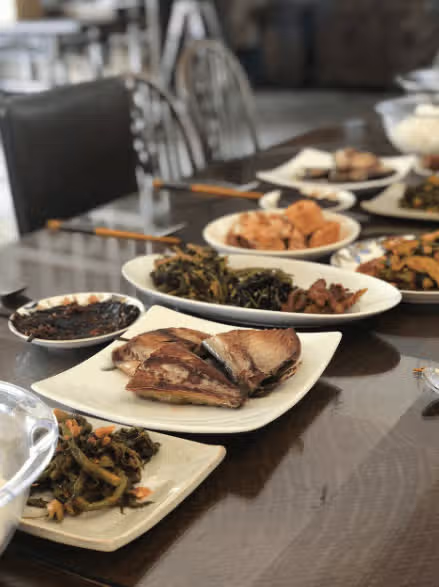
Always cook the same food
Eating the same food all the time isn't good for your physical and mental health. Try new foods and recipes. You can't know what you like unless you try it yourself. It's not healthy to dislike a food without even trying it or to simply declare your dislike without trying a different way of preparing it. If you don't like raw carrots, you can roast them with olive oil and fresh herbs. Exploring new foods and recipes can broaden your palate and add a variety of nutrients to your diet.
Thawing frozen food
Frozen food should not be thawed at room temperature. Once thawed, bacteria can easily grow, significantly increasing the risk of food poisoning. It's safer to thaw frozen food in a microwave or slowly in the refrigerator. Thawing frozen food under running cold water is also a good option.
Cooking various things with the same oil
It's important to strike a balance between fat and oil. Especially when cooking at high temperatures, you need to be mindful of the type of oil you use. Olive oil smokes at relatively low temperatures. When oil smokes, it loses flavor and some nutrients. To prevent burning, use safflower oil or avocado oil when cooking at high temperatures.
Cooking with too much or too little fat
Even eating too much oil or healthy fats (unsaturated fats) can be unhealthy. This is because they only provide a lot of calories and lack beneficial nutrients. Conversely, eating too little can have no health benefits. "If not used in moderation, oil can be detrimental to your health," says Chris Solid, a registered dietitian and senior director of nutrition communications at the International Food Information Council Foundation. A little oil may be good for flavor, but it may not be so good for your health. Olive, canola, and soybean oils are excellent sources of healthy fats, but they are also quite high in calories. Of course, you don't have to completely avoid all oils. Fat is an essential nutrient that helps with the absorption of fat-soluble vitamins.
Adding salt without tasting the food
Put down the salt shaker, pick up a spoon, and taste your food first. Don't just add salt without even tasting it. While salt is a great seasoning, some dishes require little or no salt at all. It's best to adjust your sodium intake by increasing or decreasing the amount of salt according to the advice of a professional chef.
Avoiding even fruit because of sugar
Avoiding fruit just because it's high in sugar (sugar) is a bad habit. Unlike refined and processed sugar, fruit contains fiber. Fructose, a type of sugar found in fruit, helps slow the absorption of food into the bloodstream. Fiber also benefits the beneficial bacteria in your gut, improving gut health and keeping you feeling fuller longer. It can also help reduce calorie intake and manage weight. Nutritionally, the benefits of fruit outweigh the drawbacks. Unless you have diabetes or a doctor has warned you to be cautious about fruit consumption, it's best to consume plenty of fruit.
Cooking with egg whites only
If you use only egg whites in a dish instead of the whole egg, you're missing out on a lot of nutrients. Some people even eat only egg whites to cut down on calories. While egg whites are a great source of protein, they're not as healthy as whole eggs. Eating the yolk can also help you feel fuller for longer.
Cooking Everything Gluten-Free
People with celiac disease or a gluten allergy should limit or eliminate gluten from their diet. "There is no clear evidence that a gluten-free lifestyle is healthy or helpful for weight loss," says Malina Malkani, a registered dietitian in New York City and a spokesperson for the Academy of Nutrition and Dietetics. While a gluten-free diet can be healthy and complete, gluten-containing grains are rich in micronutrients. Eliminating gluten unnecessarily can make it difficult to get enough fiber, vitamins, and minerals your body needs to thrive.
Throwing away food because it's past its expiration date
Throwing away food because of its expiration date is wasteful and bad for the environment. Just follow the "use by" date, which tells you when to consume the food. Any product that has passed this date should be discarded.
Overcooking meat
Lisa Richards, a registered dietitian and founder of TheCandidaDiet.com, a nutrition website, cautions that constantly grilling or cooking meat until it's perfectly done can do more harm than good. She cautions that overcooking meat can create compounds that increase oxidative stress and inflammation, and may even increase the risk of certain cancers. While charcoal-grilling small amounts of meat is fine, it's important to remember that charcoal-grilling can introduce toxicity into the food. Stewed, roasted, and slow-cooked meats are far healthier options than charcoal-grilled meats.
===========
In particular, it is often expressed as cold hair.
Expiration date or,
What's in the fridge
You have to know it well before you go shopping...
Different recipes with the same ingredients
A variety of foods are also effective.