



닥리버스

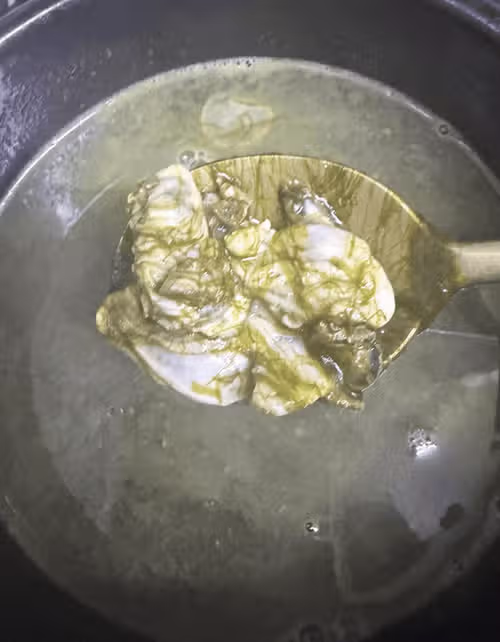
Add fresh seaweed and Korean oysters for a refreshing taste.
I have stopped eating oyster soup.
It feels so refreshing~~
Winter seaweed is like a medicinal food.
Maesaengi is a type of green algae distributed worldwide, and in our country, it is mainly harvested during the winter along the southern coast. It looks similar to seaweed but is thinner and softer than seaweed. In the old Jeong Yak-jeon's "Jasan Eobo," Maesaengi is also described as being very sweet and fragrant.
There are various ways to enjoy seaweed. It is especially popular to eat seaweed oyster rice cake soup, seaweed oyster soup, and seaweed rice cake soup as seaweed soup, and it is also commonly eaten as seasoned seaweed. Alternatively, people make dishes with seaweed, such as seaweed jeon (pancakes), seaweed pasta, and oyster seaweed jeon. In this way, you can deliciously enjoy the health benefits of seaweed through many different methods.
The storage method for seaweed is to keep it frozen between -20°C and 0°C. As for how to wash the seaweed, whether fresh or dried, it is recommended to soak it in water until it softens, then pick it up little by little, shake to wash, and repeat the process to remove dirt.
Let's learn about the nutritional components and calories of Maesaengi. The calorie content of Maesaengi is very low at 13 kcal per 100 grams. The nutrients contained in Maesaengi include abundant minerals such as calcium 56 mg, potassium 159 mg, iron 10.1 mg, phosphorus 41 mg, folate 1364 μg, and zinc 5.1 mg, as well as various vitamins including vitamins A, B, C, and E. In particular, the high content of vitamin C and E provides excellent antioxidant effects. Additionally, it contains 4.1 grams of dietary fiber, which is beneficial for intestinal health.

