


은하수

I usually suffer from severe constipation and tend to have a lot of gas, so I feel discomfort in my abdomen.
I was worried about colon cancer because a meat-loving diet can also have a negative impact on the colon.
So, I would like to share my experience after undergoing a colonoscopy to prevent colon cancer.
These days, you are getting health check-ups quite often.
Among them, colonoscopy for colon cancer prevention seems to be becoming essential.
Colonoscopy is a procedure that involves inserting a scope to observe the colon, allowing for the diagnosis of inflammation, polyps, tumors, and other conditions in the colon.
Colonoscopy is not only used for colon cancer screening but also allows for immediate biopsy of abnormal areas, direct removal of polyps if present, and hemostasis in case of bleeding, so it can also be performed for therapeutic purposes.
Usually, when experiencing gastrointestinal symptoms such as abdominal pain, constipation, diarrhea, or hematochezia, tests are performed to diagnose and treat polyps and colon cancer.
Starting three days before a colonoscopy, avoid seed-containing fruits, hard-to-digest grains, and firm fibrous vegetables.
You need to fast from midnight the day before the test.
To undergo a colonoscopy, it is essential to be prescribed and take the most important laxative to thoroughly cleanse the bowel for an accurate examination.
Colonoscopy is mainly performed as a sedated endoscopy, and it usually takes about 20 to 30 minutes.
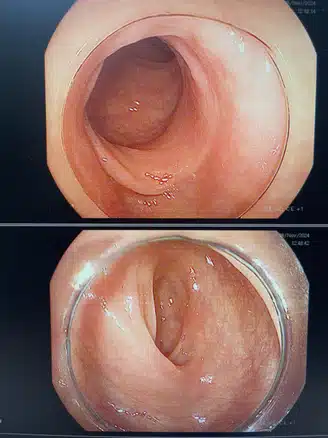
You can review the examination images through the endoscopy, and the biopsy results take about a week to be available.
If you are taking any medication, you must consult with your healthcare provider.
In the case of medications that cause bleeding, such as aspirin or anticoagulants, it is necessary to discontinue them.
Fortunately, I did not have any large polyps or bleeding in my colon.
I was advised that to prevent colon cancer, I need to improve my eating habits by reducing my consumption of red meat.
Adequate hydration, high-fiber foods, and regular, balanced meals are important in preventing colon cancer.
Foods rich in dietary fiber that are good for the intestines and probiotics also help maintain gut health.
I need to prevent colon cancer through healthy eating habits.

33K people are talking about health checkup right now

12K people are talking about enteritis right now


