


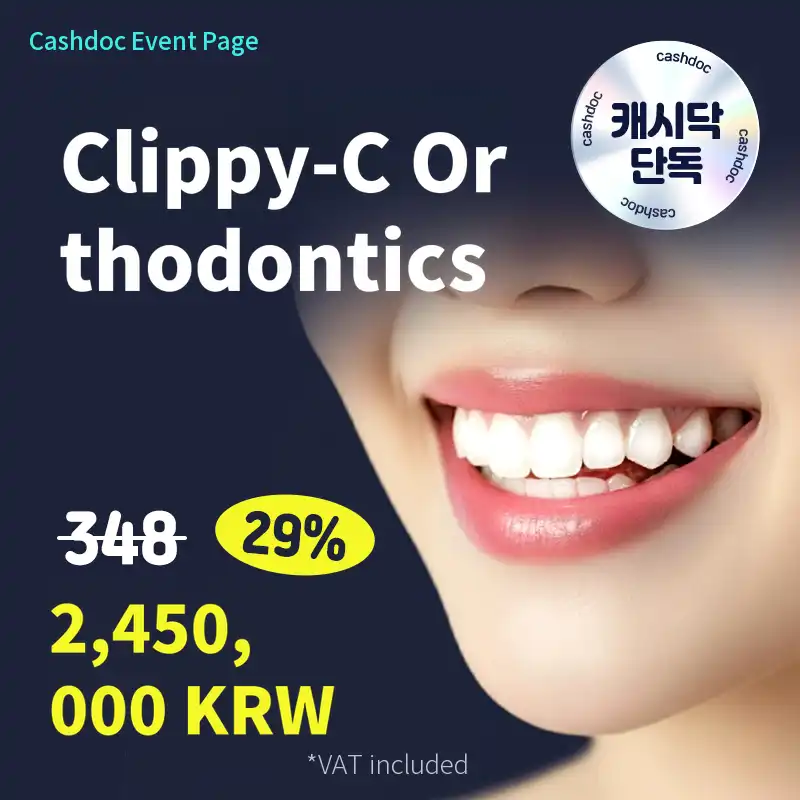
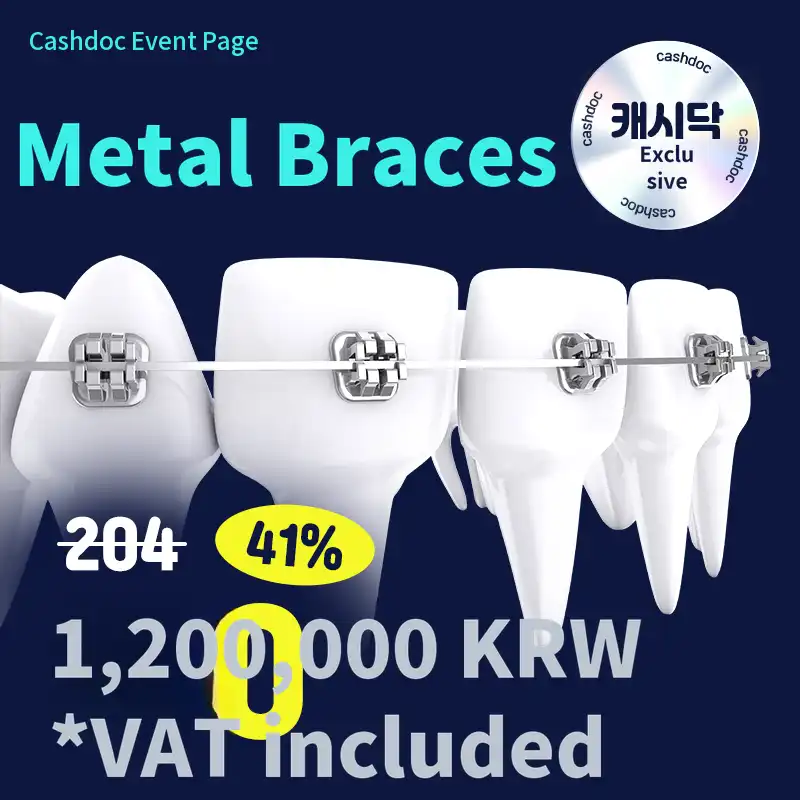
⭐CashDoc Exclusive) Clippy C Teeth Correction⭐
 5493 reviews
 31
31 5493 reviews31
 5493 reviews19
 597 reviews245
 5186 reviews9
I visited the dental clinic for a consultation regarding my child's orthodontic treatment. At first, I was very worried because my child was nervous, but the director kindly explained everything at my child's level, so we quickly felt at ease. They thoroughly checked the current condition of the teeth and explained in detail, step-by-step, why orthodontics was necessary and how the treatment would proceed, which gave me confidence. I was particularly impressed that they didn't just recommend braces but also considered my child's growth stage to explain the most appropriate timing. They provided specific guidance on the types of appliances, treatment duration, and care methods, which helped resolve many of my uncertainties. The explanations were much more systematic and meticulous than at other clinics, making me feel I could trust them completely. The atmosphere was so good that my child even said they wanted to receive treatment here. Overall, it was a very satisfying visit.

I visited because I became interested in orthodontics even after becoming an adult. I heard this place is famous in the neighborhood and has a board-certified orthodontist. I made an appointment, but I still had to wait a long time. It made me realize just how highly regarded this place is. Before the consultation, they took X-rays and many other photos, and after waiting quite a while, I finally had a consultation with the doctor. Since I am getting older, I wanted to think things through carefully, so I asked a lot of questions. I appreciated that they explained everything in detail. I also listened to the nurse explain things again and asked my questions about what I was curious about. I had a good consultation and left planning to visit again after I've thought it over.
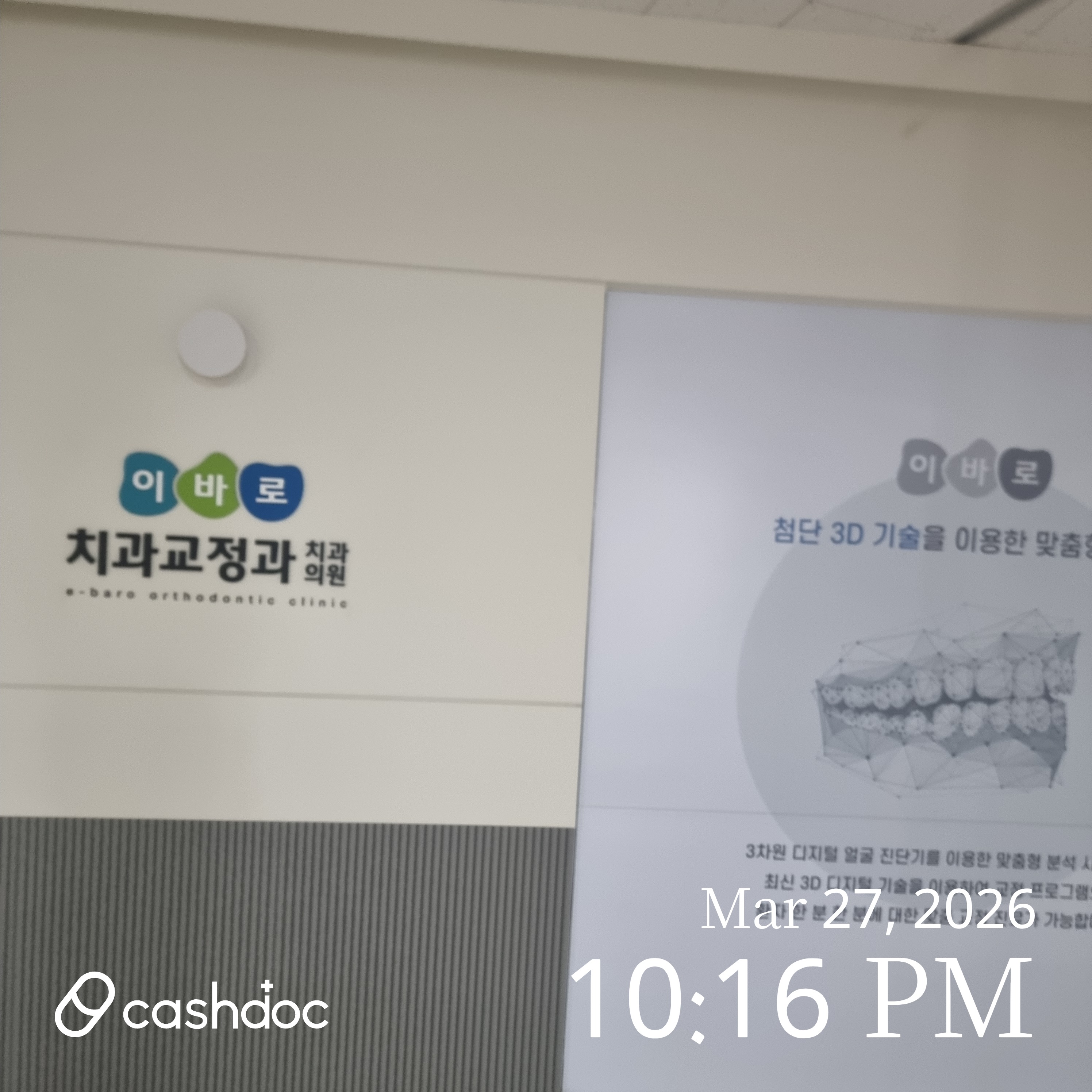
I visited the dentist for a consultation for orthodontic treatment. It was my child's first time, so he was nervous, and I had a lot of questions. However, the overall atmosphere was relaxed and friendly, from the moment he checked in to the treatment. Before the consultation, they thoroughly checked the current condition of my teeth through X-rays and intraoral photographs, and they explained the reasons for orthodontic treatment in a way my child could understand, which gave me confidence. The director didn't just prescribe a single orthodontic treatment method; instead, he compared and explained the available treatment options based on my child's growth stage. He was honest about the treatment period, how each stage would be performed, and any potential discomfort, which eased my stress. He also explained the costs and maintenance methods without reservation, which was even more satisfying. The consultation time was more generous than at other dental clinics, and the patient's level of care was strong, making me feel confident in entrusting my child to this clinic.
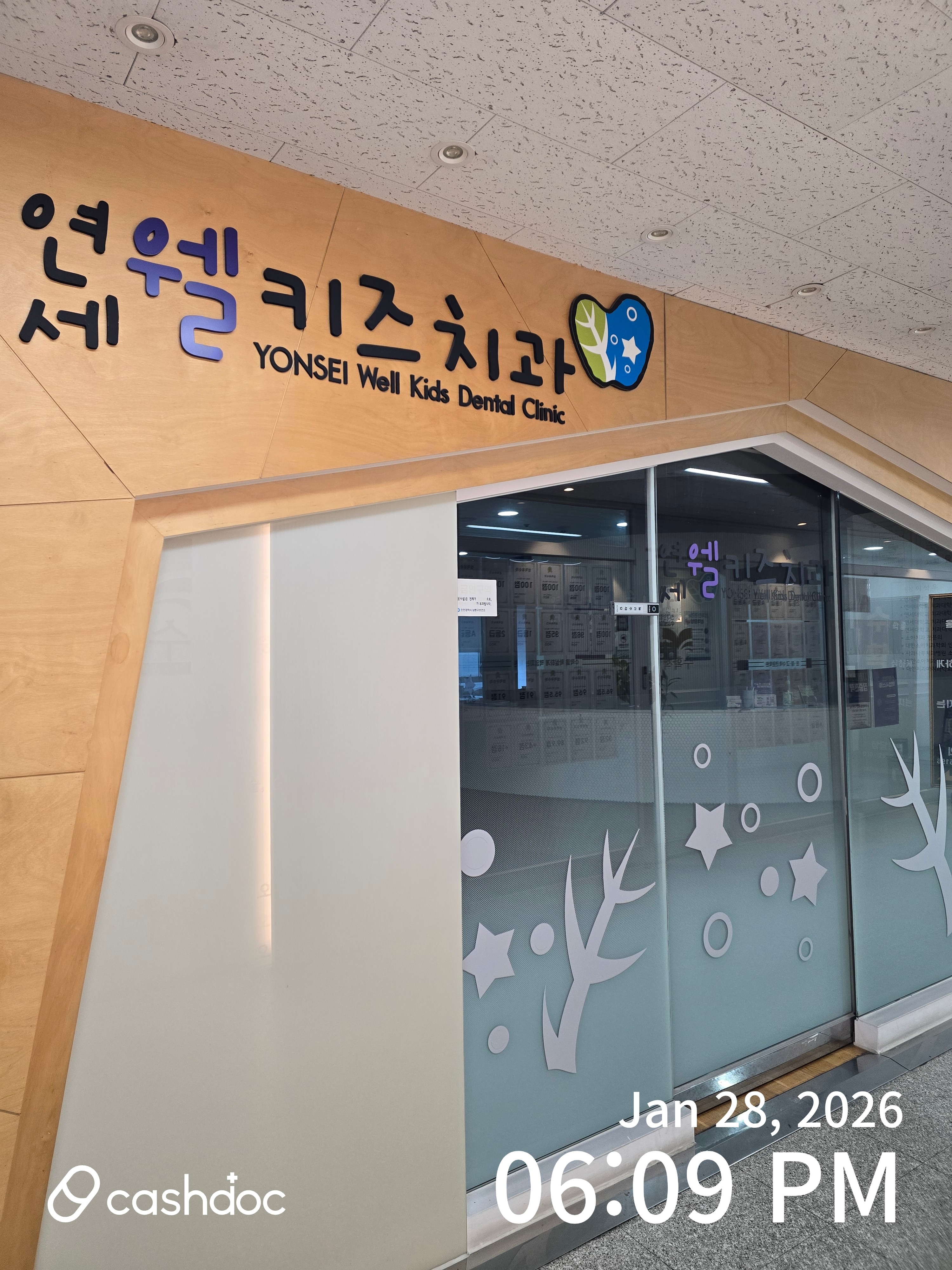
I visited the dentist for my son's orthodontic consultation. It was my son's first time receiving orthodontic treatment, so I was a bit worried, but the overall atmosphere from the reception to the consultation was comfortable and reassuring. The dentist first took X-rays and intraoral photographs, then showed me the alignment of my teeth and the balance of my jaw on a screen and explained it to me. He calmly explained why orthodontic treatment was necessary and the benefits of starting now, at a level my son could relate to. The treatment was very helpful, as they provided detailed information on the differences between different types of orthodontic devices, their duration, and the step-by-step process. I especially trusted them because they didn't just recommend expensive treatments, but suggested practical options tailored to my child's dental condition. They also provided thorough aftercare instructions and precautions, which I felt I could manage at home. Thanks to their attentive care and friendly approach to explaining things from a parent's perspective, I felt like they were much more trustworthy than other dental clinics.

Director Kim Hyun-sun Hello. I am Director Kim Hyun-soon of Ceramic Dental Clinic. One of the most frequently asked questions during orthodontic consultations is, "Do I have to extract teeth during orthodontic treatment?" In this article, I will explain in detail the reasons why tooth extraction may be necessary for orthodontics, clarify misconceptions about side effects, and outline the criteria to consider when choosing an orthodontic clinic. 1. Why is extraction necessary during orthodontic treatment? Orthodontics is not just a treatment to straighten teeth. This is a comprehensive treatment that considers the structure of the jawbone, the overall oral shape, and even the facial profile. Especially in cases where space is limited, some teeth need to be extracted to evenly align the teeth. Conversely, when there is enough space, satisfactory results can be achieved with non-extraction orthodontics. In other words, whether to perform orthodontic extraction depends on the patient's oral structure and tooth condition, and accurate assessment and planning are essential during the initial diagnosis. 2. Side effects of orthodontic extraction, should I be worried? "Is it okay to extract a healthy tooth?" What should I do if my mouth looks too small? This is a common concern for many people before orthodontic extraction. However, in cases where extraction is necessary, proceeding with non-extraction treatment forcefully may result in teeth not fitting into their proper positions, ultimately leading to the need for re-treatment. This can lead to increased time, cost, and psychological burden. Therefore, an accurate diagnosis and professional treatment plan are the best ways to reduce side effects. 3. How long does it take to recover after tooth extraction? Extraction is a surgical procedure, but in the case of a normal healthy extraction, the pain subsides within a few days. It does not significantly interfere with the orthodontic treatment. However, in cases of slower recovery, careful attention to oral hygiene management and dietary regulation is necessary. 4. How should I choose an orthodontic clinic? Orthodontic treatment typically takes more than 2 to 3 years. Therefore, the choice of dentist inevitably greatly influences the satisfaction with the treatment. The considerations when making a choice are as follows. Do you have enough treatment experience with cases similar to mine? Do you have clinical expertise in both extraction and non-extraction orthodontics? Is there a precise diagnostic system equipped for accurate diagnosis? Don't just consider the price or location, It is important to choose a hospital that offers customized treatment tailored to my oral condition. Conclusion: The decision to extract depends on the individual's dental structure. Tooth alignment and extraction are never topics with a single correct answer. It depends on the patient's oral structure, tooth arrangement, and treatment goals. If you are considering whether to extract the tooth, Receive an accurate diagnosis through consultation with a specialist with extensive clinical experience. A careful plan is the first step toward healthy correction. It is a path that leads to a beautiful and natural smile. Director Kim Hyun-sun Graduated from Seoul National University College of Dentistry Visiting Professor of Orthodontics at Catholic University College of Medicine Specialist in Orthodontics (Ministry of Health and Welfare) Korean Orthodontics Recognition (Korean Association of Orthodontists) World Federation of Orthodontists (WFO) Fellowship External Associate Professor at CHA University CHA Bundang Medical Center Current Ceramic Dental Clinic Chief Director -------------------------------- Are you curious about other people's correction stories? 🔗 I'm curious about orthodontic reviews, costs, and precautions. 🔗 🦷Photo Notice) Is it okay to undergo orthodontic treatment twice??
![[Health Column] Tooth Extraction for Orthodontics, Is It Absolutely Necessary? Criteria for Orthodontic Extraction and Tips for Choosing a Dentist](https://media.nudge-community.com/9106766)
hello, Director Jo Byeong-ju of Shine Orthodontics no see. 👋 There are certain questions that people considering orthodontic treatment ask most frequently in the consultation room. These are inquiries mixed with concern, such as, "Do I really have to have teeth extracted?" and "Can a protruding mouth be corrected with non-extraction orthodontics?" There is a lot of information on the internet claiming that non-extraction is always better or that extraction drastically changes one's face, which further confuses patients. However, actual orthodontic treatment is not determined solely by whether or not to extract a tooth, Comprehensive diagnosis of tooth alignment, facial shape, degree of space shortage, etc. You must do it. In this column, I will explain the true differences between extraction and non-extraction orthodontics and provide clear selection criteria in an easy-to-understand manner. I hope this helps you find the right treatment direction for you! ✨ 1️⃣ What is the most important key point regarding tooth extraction versus non-extraction in orthodontic treatment? 📐 The essence that determines the success or failure of orthodontic treatment lies in 'securing space' to move the teeth. For both extraction and non-extraction orthodontics, the key to the treatment outcome is how much space can be secured to properly align the teeth. This is because only when adequate space is secured in our mouth can we use it to push a protruding mouth inward and straighten crookedly overlapping extra teeth. Generally, when performing extraction orthodontics Premolars (small molars) with a width of about 7 to 8 mm You will gain that much extra space by extracting the tooth. On the other hand, with the recent development of various orthodontic devices non-extraction By utilizing every possible means to the fullest extent through orthodontics, it has become possible to create space comparable to that of tooth extraction. Representative techniques for creating space without tooth extraction include Arch expansion (3~4mm) , Interdental reduction/IPR (3~4mm) , Posterior movement of molars (3~4mm) There are methods available, and by combining all of them, it is possible to secure about 9mm of usable space. < Case of Posterior Molar Movement > 📍 Example: If the space for tooth alignment is too narrow, resulting in severe crowding or a situation where a protruding mouth needs to be moved back significantly, securing space through premolar extraction can be a clear solution. However, if conditions allow for the precise application of non-extraction techniques, meaningful space can be achieved without extracting teeth. 📌 "Rather than relying solely on extreme online reviews and insisting on a specific method, it is essential to first undergo a precise dental diagnosis to determine the actual amount of space missing." 2️⃣ Can non-extraction space creation methods be applied equally to all patients? 📐 The three techniques for creating space without tooth extraction must be applied strictly and selectively based on the patient's oral and jawbone structure. The three methods for creating space for tooth movement through non-extraction orthodontics are excellent alternatives, but unfortunately, they cannot be unconditionally applied to all patients. This is because each patient has different anatomical characteristics. ① Expansion of the dental arch : This method is actually Limited use only for patients with a narrow jaw width You must do it. If this procedure is performed excessively on a patient with a normal jaw width solely for the purpose of widening the space, the overall occlusion may collapse or long-term stability after treatment may be significantly compromised. ② Interdental Reduction (IPR) : The side of the tooth Finely trim by 0.2~0.5mm It is a method of gathering the entire gap space. Generally, if the procedure is performed within 0.5mm per area, there are no problems with dental health, and it is advantageous to distribute the work evenly across multiple tooth surfaces rather than grinding down a large portion of a single tooth. If performed to the maximum extent on all areas, approximately 3mm of space can be obtained per side. ③ Posterior movement of molars This is a technique that creates space in the front by pushing the entire dentition backward. The most important thing here is Does there actually exist space within the bone for the molars to move backward? no see. In particular, a precise 3D diagnosis must be performed beforehand to determine if there is available space in the posterior area of the mandible (lower jaw). 📍 Example: If posterior movement is forcibly attempted on a patient who has absolutely no space to push the molars back due to structural limitations of the lower jawbone, the teeth may not move properly or side effects may occur. 📌 It is essential to receive a precise diagnosis from an orthodontist to determine whether arch expansion is necessary, or if the tooth structure allows for the safe application of interproximal reduction or posterior movement. 3️⃣ If you are on the borderline between extraction and non-extraction, what criteria should you use to make a decision? 📐 For borderline patients with a space shortage of 4 to 7 mm, the decision is made by comprehensively considering tooth shape, caries activity, type of appliance, and the patient's pain sensitivity. Based on the results of a precise examination, if the required space is significantly lacking by more than 9mm on each side, extraction is easily determined, while if it is slightly lacking by 4mm or less, non-extraction is recommended. The problem lies with 'borderline patients' who have a space deficiency of 4 to 7 mm. In this case, since both methods are possible, you must use the following five detailed criteria as a guide. ① Shape of the teeth: If the shape is close to a triangle, non-extraction treatment is much more advantageous. do. This is because it is shaped to fully utilize Interproximal Reduction (IPR), and the reduction can naturally reduce the 'black triangle,' the empty space between teeth. ② Number of prosthetics and dental caries (cavity) activity: If you have a lot of dental prosthetics in your mouth or an environment where cavities form easily, extraction orthodontics is actually better. This is because it is difficult to adequately perform interdental reduction, which involves finely grinding the sides of the teeth, in such an oral condition. ③ Type of calibration device used: Invisalign achieves arch expansion much faster, but traditional brackets (wire devices) perform molar posterior movement better. do. Therefore, even for patients who appeared capable of non-extraction posterior movement based on brackets, insisting on using Invisalign may actually lead to a situation where extraction becomes necessary. ④ Anatomical spatial limits: Regardless of whether wisdom teeth are extracted, it is necessary to determine how much bone space remains behind the molars that can actually be moved, and whether the jawbone is capable of accommodating arch expansion. If both non-extraction pathways are structurally blocked, it is advisable to choose extraction for a clean result. ⑤ Discomfort and pain felt by the patient: This is a point that many people misunderstand, In fact, the tooth extraction treatment itself is almost painless. In fact, arch expansion devices or posterior movement devices used in non-extraction orthodontics often cause greater discomfort and pain in the mouth. Therefore, if you prefer a slightly more comfortable and less cumbersome process during the orthodontic treatment period, we recommend tooth extraction. 📍 Example: If a borderline patient with square-shaped teeth and significant traces of cavity treatment finds it difficult to tolerate the pain and foreign body sensation of complex non-extraction devices, choosing to extract premolars rather than forcing a non-extraction procedure may be advantageous in terms of both the treatment process and the outcome. 📌 "When you are teetering on the edge, that is precisely when in-depth communication with medical staff truly shines. Please share your lifestyle and pain tendencies with the medical team in detail." 🔍 FAQ (Frequently Asked Questions) Q1. Doesn't interproximal reduction (IPR) cause significant tooth sensitivity during non-extraction orthodontics? A1. No, you don't need to worry too much. 🙅♂️ Common tooth sensitivity usually occurs when the neck of the tooth (cervical area) is worn down. During interdental reduction, the area that is ground down very finely is the outermost 'proximal enamel' region of the tooth, where sensory nerves are not distributed. Since the amount removed is also very minimal, you do not need to worry about side effects such as sensitivity. However, if not performed precisely, food particles can get trapped between the teeth, creating an environment where cavities (dental caries) are likely to develop, so the procedure must be performed accurately by a skilled specialist. Q2. After having wisdom teeth extracted, will space naturally form to push the molars back? A2. It is half right and half wrong. 💡 When extracting a wisdom tooth that has erupted straight into the mouth, available space is created to push the molars backward by utilizing that opening. However, for impacted wisdom teeth that are completely buried in the gum bone, simply extracting them does not automatically create space for the tooth to move. In this case, the limit of the practically usable posterior space is determined by the anatomical boundary between the soft tissue and bone behind the tooth, rather than the presence or absence of wisdom teeth. 📋 Conclusion Today, we have taken a detailed look at the key criteria for tooth extraction versus non-extraction, which is the biggest concern for those facing orthodontic treatment. Having operated an orthodontic clinic in Nowon for a long time and personally treated countless cases, there are certainly tricky cases where even I, as an expert, agonize deeply over which approach—extraction or non-extraction—will bring the most perfect results to the patient. This is because orthodontic treatment is a precise medical field that must encompass not only visible gaps between teeth but also the condition of the gums, the overall treatment duration, changes in facial shape, and even the anatomical limitations imposed by the appliance. ⚠️ Please make sure to remember this! 📌 Rather than blindly deciding on a treatment method based solely on rumors such as "non-extraction is better" or "extraction is faster," the first step is to thoroughly examine your precise diagnostic condition. 📌 The wise choice at the borderline may vary depending on the shape of your teeth (whether they are triangular), the activity of cavities, and your sensitivity to pain. Above all, the most important key to success is to accurately align your desired aesthetic and functional goals through constant communication with medical professionals, and for the doctor and patient to move forward step by step while looking toward the same goal. As this is a significant journey that determines your smile and dental health for a lifetime, I sincerely hope you find a trustworthy orthodontist to discover the right solution that fits your oral structure perfectly. 🦷 Shine Orthodontics Director Cho Byeong-ju Graduated from Seoul National University Graduate School of Dentistry / Doctor of Dental Surgery Catholic University of Korea Seoul St. Mary's Hospital Department of Orthodontics Intern / Resident Graduated from Catholic University of Korea Graduate School of Medicine with a minor in Plastic Surgery / Master of Medicine Visiting Professor, Department of Orthodontics, Catholic University of Korea Seoul St. Mary's Hospital Visiting Professor at CHA University Gangnam Hospital Invisalign Official Faculty Regular member of the Korean Association of Orthodontists (KAO) Member of the Korean Society of Clinical Orthodontists (KSO) 2019/2020/2021/2022 Awarded the Excellent Case Presentation by the Korean Association of Orthodontists
![[Health Column] Orthodontic Extraction vs. Non-Extraction: Is Extraction Always Necessary? A Summary of Criteria, Pros, and Cons](https://media.nudge-community.com/10376693)
hello! SmileD Dental Clinic, Chief Director Oh Su-hwan It is. 😊 Have you visited three or four dental clinics while considering braces? Some places charge 4 million won, others 7 million won... It just gets more and more confusing. 🤯 "Are you worried about being ripped off?" A practicing doctor will clear up that anxiety for you! 1️⃣ What is the real reason why orthodontic prices vary so widely from dental clinic to dental clinic? ✨ This is because orthodontics is not merely 'shopping,' but a sophisticated 'medical procedure' tailored to the patient's condition. Orthodontic treatment means more than just choosing a device. Just as construction costs vary depending on the ground conditions when building a structure, the difficulty of orthodontic treatment is determined by each patient's unique gum bone condition and tooth root length. 🔸 Key Points ✔️ Intrinsic difficulty of the case: The higher the difficulty of the case, the higher the cost. ⚠️ Risk of re-correction: If you only look for the cheapest option, your teeth may not move properly, and you might end up having to pay more for retreatment! 📌 Orthodontic treatment is not just a simple expense Medical practice The price difference is rooted in the medical staff's expertise and sense of responsibility. 2️⃣ How does the cost vary depending on which orthodontic device is selected? ✨ The price structure varies depending on the degree of exposure of the device, the manufacturing method, and the technical expertise involved. Orthodontic appliances are 'tools' used to move teeth. The type of tool used is a major factor in determining the cost. 🛠️ 🔹 labial correction — Attached to the outer surface of the teeth, the most popular and reasonable option 👍 🔹 Lingual braces — Attached to the inner surface of the tooth; cost 1.5 to 2 times higher due to advanced technology and custom fabrication. 🔹 Clear braces (Invisalign) — Detachable, aesthetically pleasing, includes digital simulation + global license fees 🔹 Why is lingual braces expensive? 🤫 Since the wire must be adjusted in the narrow space inside the tooth High level of proficiency of medical staff And a long treatment time is required. 🔹 Why is Invisalign expensive? 💻 Computer simulations are conducted based on 3D digital scan data, and of state-of-the-art materials Precision manufacturing of transparent molds This is because... ⚠️ Rather than the type of device The doctor's skill level and precision of diagnosis It has a greater impact on the treatment results. 3️⃣ What are the 3 criteria for finding the perfect orthodontic treatment for me? ✨ An expensive device is not necessarily the answer. My situation and the doctor's diagnosis are the most important! Here is a checklist of things to check before the numbers on the price list when choosing a dental clinic. 📝 1. Assessing Your Lifestyle 💼 If you have a job where you meet a lot of people, aesthetic Lingual braces or Invisalign This can help reduce stress. 2. Checking My Willpower to Treat 💪 You must adhere to the wearing time yourself to see results with Invisalign. If you dislike the hassle, the tooth-fixing Bracket correction This is actually a shortcut to shortening the treatment period! 3. Check the most essential 'precision diagnosis' 🔍 The device is merely a means; the result depends on the doctor's plan. 3D X-rays and scanners Make sure to check if it is a place that thoroughly analyzes your face and teeth. 📌 Ask "Why is this device suitable for my case at this dental clinic?", A dental clinic that explains clear evidence Please select . Frequently Asked Questions (FAQ) Q1. Should I avoid dental clinics that offer promotions with excessively low prices? It's not necessarily bad, but caution is required! ⚠️ Operating on a high-volume, low-margin basis makes it difficult for medical staff to focus on a single patient, and The attending physician may change frequently. Aftercare may be unstable. Q2. Can anyone use clear aligners? Although technology has improved and the scope has expanded, In cases of severe skeletal disharmony In this case, traditional wire orthodontics can produce more precise results. 🩺 Q3. What are the additional costs besides the proofreading fee? It varies from dental clinic to clinic, so be sure to check in advance! Monthly treatment fee, precise diagnosis fee, tooth extraction fee, screw implantation fee, retainer fee It is recommended to check whether items such as [etc.] are separate or included. ✅ Conclusion: A thoughtful choice for a smile that lasts a lifetime 🎯 The difference in orthodontic costs is not simply due to differences in material costs. Precisely analyzing the patient's condition The value of medical staff's efforts and sense of responsibility It contains. 💎 Rather than choosing based solely on the price, choose a design that will safely shape my precious smile Orthodontic specialist Please consult with them thoroughly. A careful choice determines your confidence for a lifetime! 😊 🔹 Summary of Management Points ✔️ Rather than price Specialist's proficiency Check ✔️ My Devices suited to lifestyle patterns Select ✔️ Precision diagnostic equipment Choosing a well-equipped dental clinic "Orthodontics is treatment, not shopping. Consult with a specialist to find the optimal plan just for you!" ✨ Smile D Dental Clinic Chief Director Oh Su-hwan Graduated from Yonsei University College of Dentistry Major in Orthodontics, Yonsei University Graduate School of Dentistry Specialist in Orthodontics certified by the Ministry of Health and Welfare Regular member of the Korean Association of Orthodontists Completed internship and residency in Orthodontics at Ewha Womans University Mokdong Hospital International member of the American Association of Orthodontists (AAO) International member of the World Federation of Correctional Organizations (WFO) Regular member of the Korean Association of Orthodontists Certified by the Korean Association of Orthodontists The medical content of this column is general Korean Association of Orthodontists This was written with reference to the Ministry of Health and Welfare's dental orthodontic treatment guidelines. . View more expert columns by Dr. Oh Su-hwan, Director of Smile D Dental Clinic 📎 [Expert Column] Clear Aligners: Wire-Free Orthodontic Treatment—Can It Really Be Unnoticeable? 📎 [Expert Column] No-Prep Dental Laminates: Is It Really 'No Prep'? A Summary of Key Points You Must Know 📎 [Expert Column] How to Restore Gum Health - Confusing Brushing and Mouthwash Usage. Here's How to Do It 📎 [Expert Column] Laminate Procedures: It Effectively Suits Only the Right People! (feat. No-Removal & Minimal-Removal Laminates)
![[Health Column] Why Do Orthodontic Prices Vary by Dental Clinic? The Truth for a Regret-Free Choice 🦷💸](https://media.nudge-community.com/9824042)
hello! Lee Hyun-seop, Chief Director of Seoul Centum Dental Clinic no see. There are many people who expect that once they have implant surgery, they will be able to use them reliably for a lifetime or for a very long time. In fact, if you provide thorough after-sales service, there are many cases where you can use it stably for over 10 years without any issues. However, unfortunately, situations often arise where you face the cost of implant revision surgery due to a lack of aftercare or sudden gum inflammation. "I already spent a lot of money on surgery, do I have to do it again?", "Why is the cost of revision surgery higher than the first time?" My heart feels heavy whenever I receive questions from patients who are upset, saying things like that. So today, I will clearly explain, tailored to the patient's perspective, exactly why implant revision surgery costs arise and in what cases the cost difference is significant! 1. What are the main causes that lead to implant revision surgery? The main reasons for needing to re-implant an implant include peri-implantitis (inflammation of the surrounding gums), fracture of the prosthesis, and failure of initial fixation. 📌 The most common culprit, peri-implantitis The most common reason for deciding on revision surgery is peri-implantitis. Inflammation of the gums and bone surrounding the implant can lead to bone resorption, where the alveolar bone responsible for firmly supporting the implant erodes. Initially, it starts mildly with gum bleeding or slight swelling, but if left untreated, it eventually leads to the implant becoming severely loose. 📌 Damage to prosthetics and structures due to excessive force If you enjoy eating hard and chewy foods or if excessive force is continuously applied to the oral cavity, structural damage such as breakage of the prosthesis or loosening of internal screws may occur. If you visit a dentist early, this problem can be resolved relatively simply, but if you delay and neglect it for a long time, it will eventually lead to implant revision surgery, resulting in much higher costs. 📌 Initial fixation failure due to failure to properly fuse with bone Immediately after implant surgery, the process of 'osseointegration,' in which the gum bone and the implant firmly bond as one unit, is extremely important. However, there are cases where implants fail to properly anchor to the bone due to factors such as excessive smoking or drinking after surgery, failure to control diabetes, or insufficient initial post-operative care. 2. What are some abnormal implant symptoms that absolutely should not be overlooked? If you experience gum bleeding, looseness, food getting stuck, or feel looseness or discomfort when chewing, you should get a check-up promptly without delay. . If you feel any subtle changes or discomfort in your mouth, you must never dismiss it by assuming it will get better on its own. Whether initial response This is because it is the key factor determining the difference in the cost of implant revision surgery. 🔹 My gums keep bleeding every time I brush my teeth. 🔹 I feel like my implant tooth is slightly loose. 🔹 Food keeps getting stuck between my teeth more than before. 🔹 When chewing food with enjoyment, it feels inexplicably uncomfortable and aching. 🔹 I feel a slight looseness that is different from when the prosthesis was first placed. If you experience even one of the symptoms mentioned above, visiting a dentist promptly to check your condition is the wisest way to significantly reduce the difficulty of treatment and the cost of re-surgery. 3. Why is the cost of implant revision surgery more expensive than the initial surgery? This is because revision surgery is not simply about re-implanting the implant, but involves complex recovery treatments simultaneously, such as the removal of the existing implant, treatment of inflammation, and bone grafting. ! Many people ask, "Why is it more expensive than the first time when the dentist is just implanting it exactly the same way?" Implant revision surgery is by no means a simple process of just pulling it out and quickly re-implanting it. This is because the root cause of the problem with the existing implant must be accurately identified, the area damaged by inflammation restored to normal, and the re-implantation process must be repeated from the beginning. When actually performing the surgery Unlike the initial surgery, the following complicated treatment processes are added. 🔸 Removal of existing implants : The problematic existing fixture (artificial tooth root) already embedded in the gums must be cleanly removed. At this point, the difficulty varies widely depending on whether it simply pops out or requires surgical removal that involves cutting away the alveolar bone. 🔸 Treatment of surrounding inflammation : If the implant is filled with peri-implantitis, you must undergo treatment to completely scrape out the surrounding infected tissue and clean the area thoroughly. 🔸 Bone grafting and maxillary sinus lift : If the gum bone has already been severely lost due to inflammation, bone grafting or sinus lift surgery is essential to refill the bone and create a foundation for placing a new implant. 🔸 Re-implantation surgery and prosthetic remanufacturing : We re-implant a new implant into the firmly restored alveolar bone, and completely redesign and fabricate the abutment and crown to suit the patient's current oral condition. 💡 Implant Revision Surgery Cost Formula at a Glance [Surgical removal of existing implant + Treatment for inflammation and gum recovery + Advanced bone grafting + Re-implantation of new implant and fabrication of prosthesis] In the end, all of this Existing treatment + recovery treatment + retreatment Because the process involves complex steps performed simultaneously, the overall cost of the implant revision surgery is inevitably higher than the initial cost. 4. Is it true that the cost of revision surgery varies from person to person and that a complete removal might not be necessary? 🦷 🦷Yes, that is true! The cost varies depending on the extent of inflammation and bone loss, and we can reduce the financial burden by replacing only the upper components instead of extracting the entire bone. ! This is precisely why it is difficult to get a clear, fixed price even if you call a dental clinic out of the blue and ask, "How much does implant revision surgery cost?" The exact cost of revision surgery is as follows: Individual patient's oral environment and precise examination results This is because it varies completely depending on. Extent of inflammation and degree of alveolar bone (gum bone) loss Difficulty of removing existing implants Whether bone grafting and maxillary sinus lift are performed Number of implants requiring re-implantation Fortunately, not all patients necessarily have to undergo the terrifying surgery of digging out the entire thing and replanting it. Depending on the condition, treatment is neatly divided into two main directions. ✔️ Cases where only parts can be modified or replaced (relatively low burden) Fortunately, if the gum bone is very strong and there is a simple problem only with the upper prosthesis, an internal screw has loosened, or it is only slightly damaged, there is absolutely no need to extract the entire tooth. Since only some parts need to be simply repaired or replaced, the pain and cost burden are significantly reduced. ⚠️ Cases where full revision surgery is essential (somewhat high burden) If peri-implantitis has progressed severely, causing significant bone resorption in the surrounding area, or if the fixture itself within the gum bone is completely fractured and damaged, it is necessary to surgically remove the entire existing structure completely before proceeding with re-implantation, which increases both the difficulty and the cost. 5. What is the best management method to definitely reduce the cost of implant revision surgery? The most perfect way to save money is regular checkups every 6 months to 1 year, thorough follow-up care using dental floss and interdental brushes, and quitting smoking. The greatest secret to drastically reducing the cost of implant revision surgery and protecting your wallet is ultimately adhering to the basic principle of 'thorough initial care.' If you meticulously follow just the following three rules in your mouth, you can completely avoid the risk of revision surgery. ✨ Make regular dental checkups every 6 months to 1 year a part of your daily routine! You must never skip the regular check-up schedule provided by the dental clinic. If invisible, microscopic gum inflammation or loosening of dental prosthetics is detected early when they are still very small, you can avoid major re-surgery and prevent extensive treatment with simple measures, allowing you to enjoy a luxurious experience. ✨ Much more meticulous oral hygiene care than natural teeth! Since implant teeth do not have nerves, caring for the surrounding gums is much more important than for natural teeth. Since regular brushing alone cannot remove all the fine debris stuck in the crevices, you must carry a set of dental floss, interdental brushes, and water flossers (oral irrigators) to consistently and thoroughly clean every nook and cranny. ✨ Thoroughly manage smoking that slowly melts away your gum bone! Smoking is a terrifying culprit that drastically increases the frequency of peri-implantitis, which causes inflammation around implants, and explosively raises the risk of bone resorption, where the gum bone collapses. In particular, you must firmly avoid smoking, which is harmful in every way, immediately after implant surgery or during the sensitive initial settling period, in order to safely preserve the foundation of your precious teeth. FAQ Q1. If the gums around the implant bleed, do I absolutely have to have them all extracted and undergo re-surgery? ? A1. No! There is absolutely no need to be scared right from the start. In cases of early-stage periodontal inflammation characterized by bleeding gums, or simply loose screws or minor damage to the upper prosthesis, treatment is possible without the need to extract the entire tooth; only specific parts can be neatly modified or replaced, allowing for burden-free treatment. However, if the bone has already severely eroded, a full re-operation may be necessary, so it is important to undergo a thorough examination immediately upon discovery. Q2. Why does smoking after implant surgery increase the likelihood of re-surgery and cost more money? ? A2. This is because smoking constricts blood vessels in the mouth, fatally interfering with the most critical process of 'osseofusion,' where the gum bone and the implant must adhere tightly as one. This leads to an uncontrollable increase in the risk of peri-implantitis and bone resorption, ultimately resulting in the burden of massive revision surgery costs where the entire implant structure must be removed and bone grafting must be performed again from the beginning due to the failure of initial fixation. conclusion The cost of implant revision surgery is by no means a one-dimensional expense of simply implanting a new artificial tooth component. This is a comprehensive treatment fee that includes a highly specialized recovery process to safely and healthily normalize the gum environment and alveolar bone foundation, which have been severely collapsed and damaged due to inflammation. Therefore, the most certain key point to prevent frightening side effects and massive waste of money is the speed of catching subtle abnormal signals before the problem snowballs. Don't carelessly miss the timing by thinking, "It doesn't hurt yet, so it'll be fine," or "Even if I feel a slight wavering, I'm busy, so I'll go later." The habit of visiting a dental professional without delay to have your condition thoroughly checked when you feel even slight shaking or minor discomfort. This is truly the best wisdom for fully protecting your precious dental health and, consequently, definitely saving the biggest costs. Seoul Centum Dental Clinic Chief Director Lee Hyun-seop Specialist in Integrated Dentistry Graduated from Korea University Master of Dentistry, Kyung Hee University College of Dentistry Regular member of the Korean Academy of Oral and Maxillofacial Implantology Regular member of the Korean Endodontic Society Regular member of the Korean Academy of Integrated Dentistry Member of the American Academy of Aesthetic Dentistry (AACD) Member of the American Academy of Implant Dentistry (AAID) Full member of the International Congress of Implantologists (ICOI) Experience in placing over 17,000 implants Possesses extensive overseas experience visiting over 10 countries Experience with numerous complex implant cases Read other health columns by Director Lee Hyun-seop > [Health Column] Why Are Impacted Wisdom Teeth a Problem? Pain, Inflammation, and Damage at a Glance [Health Column] Curious about implant lifespan? How long can they be used? [Health Column] I heard there are so many types of implant bone grafts… What criteria should I use to choose one?
![[Health Column] Why Is the Cost of Implant Revision Surgery More Expensive Than the Initial One? The Real Reason Explained by a Dental Specialist](https://media.nudge-community.com/9786095)
