 한국어
한국어 English
 日本語
日本語 中文 ( 简体 )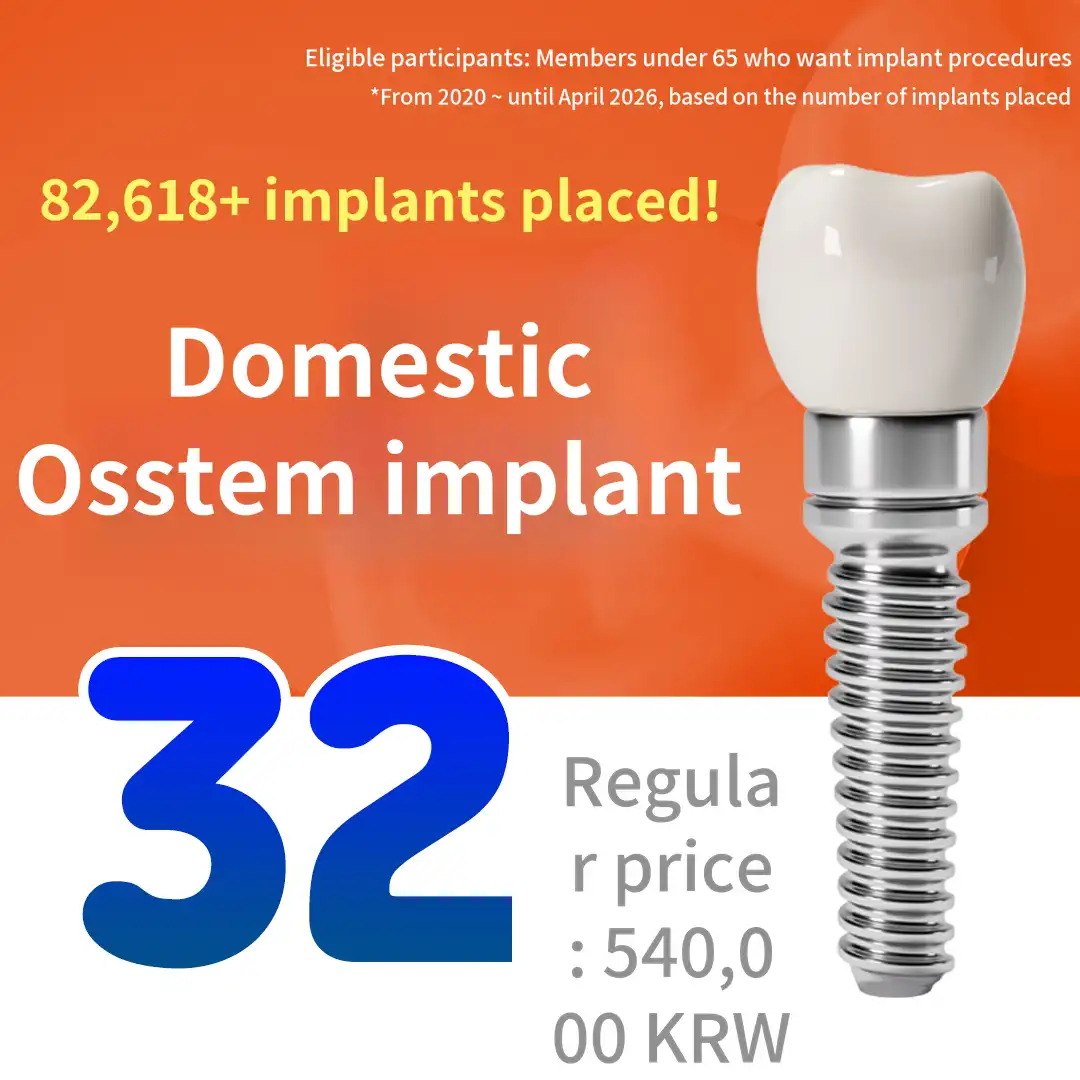
Domestic Osstem Implants 🧡
 5219 reviews
 92
92 5219 reviews92
 5219 reviews999+
 5592 reviews999+
 5109 reviews37
hello. Director Jeong Jae-wook of Gangnam Saero Dental Clinic no see. Implant consultation When I do this, there is a question I hear most often. “Are there any side effects?”, “Is it okay if I have diabetes or high blood pressure?” I am worried about that. To those who have these concerns How to harness your body's healing power What is introduced is PRF autologous blood implant no see. Today, people who are considering implants So that you can make a decision with a little more peace of mind , let me explain about autologous blood implants. 1. What is an autologous blood (PRF) implant? 👋 An implant method that uses growth factors obtained from my blood to help with recovery. Autologous blood implants patient Take a small amount of your own blood After that, PRF (Platelet Rich Fibrin) is obtained through special treatment. This method is used in implant surgery sites. ✔️ PRF contains growth factors concentrated in platelets and white blood cells. ✔️ Helps the gum bone and implants to bond well osseointegration process Assists. Simply put, PRF is You can think of it as “a natural protective film made from my blood.” It's a similar concept to putting a high-quality bandage on a wound to help it heal. Because your own blood is used, before the procedure Check your blood condition This is important. 2. Why do I need autologous blood implants? 👋 It may be helpful for those who have slow recovery or are at high risk for inflammation. If you have diabetes, high blood pressure, or osteoporosis Gum bone regeneration is slow and the risk of infection is high. There may be increased risk with standard implants. At this time, autologous blood implants have the following advantages: 🔸 bone regeneration aid → It promotes bone cell activity and helps recovery after bone transplantation. 🔸 Reduced immune rejection → Use your own blood, not someone else's tissue. 🔸 Hemostasis and pain relief → The PRF membrane covers the surgical site, helping to reduce swelling and pain. 🔸 Possibility of shortening treatment period → Helps speed up the recovery of gums and gum bones. "Resilience Enhancement + Safety-Focused Selection" 3. How does the procedure proceed? 👋 It is simpler than you think and is not much different from the existing implant flow. The process goes like this: 🔹 Blood collection → A small amount of blood is drawn from your arm (as in a routine blood test). 🔹 centrifugation → The collected blood is spun in a special centrifuge for about 10 minutes. 🔹 PRF extraction → Separate PRF in yellow jelly form. 🔹 Transplantation and implantation → PRF is used together with bone grafting material or to cover the surgical site. 🔹 Suture → Finish by suturing the gums. During implant surgery, blood collection and separation are performed simultaneously while waiting for anesthesia. The overall surgical time does not increase significantly. 4. To whom is it recommended and when should caution be exercised? ✔️ Highly recommended People with slow recovery due to systemic diseases such as diabetes or high blood pressure People with weak gum bones due to old age If an implant is needed immediately after tooth extraction When a wide area of bone grafting is required Those who are concerned about pain and swelling after surgery ⚠️ When caution is required Severe blood diseases (thrombocytopenia, hemophilia, etc.) If you have severe anemia If you are taking anticoagulants (such as aspirin) → Prior consultation with a medical professional is required. “Autologous blood implants are safe, but Blood condition as a selection criterion This is it.” ❓ FAQ Q1. Is it dangerous or very painful to have blood drawn? A1. It is performed by drawing a small amount of blood, and is described as a mild pain. Q2. Is it more expensive than regular implants? A2. Additional costs may apply if special equipment and kits are used. In the long term, it may be an option that reduces the risk of reoperation. Q3. Will the treatment time increase significantly? A3. Since blood collection and separation are performed simultaneously, there is no significant difference in the overall surgical time. 📝 conclusion Autologous blood (PRF) implants This is not a method that can be recommended equally to everyone. but Those who were hesitant about implants due to systemic illness If you are concerned about slow recovery or weak gum bones, “There is also a way to utilize the healing power of my body.” It's definitely worth checking out at least once. As implants are an important process that lays the foundation of the gum bone, After checking the current status accurately Consult with a specialist to find the right choice for you. I recommend that you do so. Gangnam Saero Dental Clinic Director Jeong Jae-wook Ministry of Health and Welfare, Dental Prosthodontics Specialist Graduated from Yonsei University College of Dentistry Graduated with a master's degree from Yonsei University School of Dentistry Intern at Yonsei University Sinchon Severance Hospital , Prosthodontics Residency Completion Korean Academy of Prosthodontics, recognized and full member Korean Society of Oral and Maxillofacial Implantology (KAOMI) Premium Member Regular member of the Korean Society of Temporomandibular Joint and Occlusion Full member of the Korean Academy of Aesthetic Dentistry jeon ) Adjunct Professor, Yonsei University College of Dentistry jeon ) Former Director of Yonsei Good Day Dental Clinic Yangjae Branch hyeon ) Korean Academy of Prosthodontics, Board of Review , Expert Committee/Academic Affairs Committee hyeon ) Korean Society of Oral and Maxillofacial Implantology (KAOMI) Director of Academic Planning See more expert columns from Dr. Jae-wook Jeong of Gangnam Saero Dental Clinic > [Health Column] Is Full Implant Safe for Older Adults? [Health Column] AirNate – Why Laminates Can Provide Teeth Reshaping in as Little as a Week with Minimized Tooth Removal [Health Column] A guide to solving bad breath, from its causes to simple and easy management methods, even when you just breathe. [Health Column] All-on-Four: Is it possible to restore full dental function with just four implants?
![[Health Column] Why Autologous Blood (PRF) Implants Are Possible for People Over 65 with Diabetes or High Blood Pressure](https://media.nudge-community.com/9757876)
A few days ago, I got a zirconia crown for my cavity treatment and paid over 500,000 won, which was quite shocking. It only applies to seniors aged 65 and older, unfortunately. Teeth can cost a lot of money once they hurt... but it has improved for the better. The coverage for dental caries examinations will also be expanded to include individuals up to 15 years old. Be sure to get a scaling once a year~ Zirconia has been added to the dental implant prosthetic materials covered by health insurance exclusively for seniors aged 65 and older. ✅Dental caries examination coverage expanded from ages 5 to 12 to include those under 15 (The interval has also been changed from once every six months to once every three months.) Zirconia will be added as a dental implant prosthetic material covered by health insurance for seniors aged 65 and older. The age range for dental caries examination coverage will also be expanded from the existing 5 to 12 years old to include those under 15. On the 27th, the Ministry of Health and Welfare held the 25th Health Insurance Policy Deliberation Committee and announced that they had approved plans to expand coverage in the dental field containing these details. Currently, dental implants are covered by health insurance only when performed as non-metallic ceramic restorations for those aged 65 and older. However, zirconia restorative materials will also be added to the list of covered benefits in the future. The age range for dental caries screening coverage has been expanded from the existing 5 to 12 years old to include those up to 15 years old. The interval for screenings has also been changed from once every six months per oral cavity to once every three months. The Health Insurance Review and Assessment Service (HIRA) reviewed the performance evaluation results and extension plans for 13 pilot projects related to the National Health Insurance (NHI) that are scheduled to end this month. As a result, 12 pilot projects, including the advanced general hospital in-depth consultation fee pilot project and the severe pediatric home medical care pilot project, will be extended for three years. The pilot project supporting continuous treatment for mental health patients, specifically the activation of acute phase treatment, will be transitioned into a full-scale project. The results of the activities of the Medical Cost Analysis Committee under the Health Insurance Review & Assessment Service were also reported. This year, the committee analyzed whether the payment rates for hospitalization, surgery, and treatment were appropriately determined for 77 general hospitals. The government, through the third reorganization of relative value units implemented earlier this year, increased the rates for hospitalization and surgery/treatment, and abolished additional charges for specimen and imaging tests, thereby partially improving the imbalance in payment rates. The Health Insurance Review & Assessment Service has decided to shorten the reorganization cycle from the current 5-7 years to 2 years to enable prompt adjustments to payment rates that reflect clinical practice. The Ministry of Health and Welfare stated, "Through this committee's activities, we have established an infrastructure for adjusting fee-based rates," and added, "We expect to expand the target institutions in the future and continuously improve the cost survey system to establish a regular and systematic rate adjustment framework." <Source: Money Today>
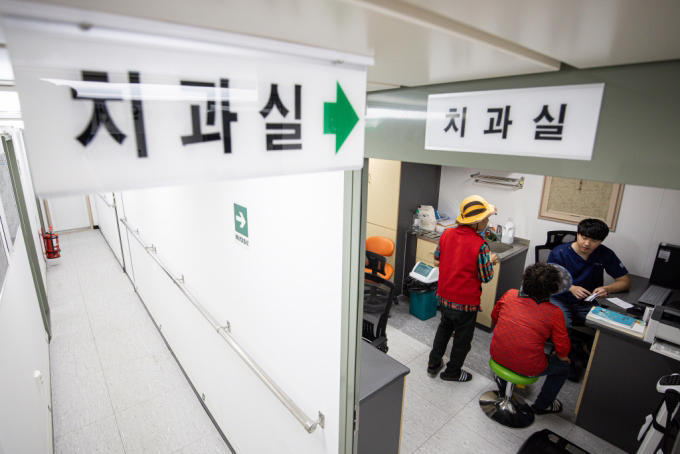
Does anyone know that implants are free? I suddenly remembered my mother's treatment and decided to post. My mother is 73 years old. She had colon cancer surgery three years ago, underwent a year of chemotherapy, and last year she stopped osteoporosis medication and had implant surgery. She had two implants placed, and the three front teeth that had been treated a long time ago were covered with a large restoration, it was a major procedure. I went and paid for it, and since it was covered by health insurance, I think it cost around forty thousand won each. Haha. But my mother and husband thought that for those over 65, two implants are free. It seems the government is giving out a lot of things for free. With our taxes. They seem to think everything is free. I wonder if anyone knows that implant scaling is free, so I posted.
I am looking into implants for 65-year-olds. I'm curious about how to apply for health insurance coverage! They say you can only have up to two for a lifetime. Only partial edentulism is possible; complete edentulism is excluded. The full cost of implants for those aged 65 and older is not fully covered. General health insurance beneficiaries have a 30% co-payment. For implant costs for those aged 65 and older, the abutment and fixture, which are the removable implant materials, are calculated separately. Additionally, in cases where additional procedures such as alveolar bone grafting or sinus elevation are necessary, please note that these are performed as non-covered services! Anyone over 65 who has undergone dental implants?! Please tell me what process you went through~~~ I think it might be difficult to apply health insurance coverage and event pricesㅠㅠㅠ

hello. Director Jeong Jae-wook of Gangnam Saero Dental Clinic no see. Implant consultation When I do this, there is a question I hear most often. “Are there any side effects?”, “Is it okay if I have diabetes or high blood pressure?” I am worried about that. To those who have these concerns How to harness your body's healing power What is introduced is PRF autologous blood implant no see. Today, people who are considering implants So that you can make a decision with a little more peace of mind , let me explain about autologous blood implants. 1. What is an autologous blood (PRF) implant? 👋 An implant method that uses growth factors obtained from my blood to help with recovery. Autologous blood implants patient Take a small amount of your own blood After that, PRF (Platelet Rich Fibrin) is obtained through special treatment. This method is used in implant surgery sites. ✔️ PRF contains growth factors concentrated in platelets and white blood cells. ✔️ Helps the gum bone and implants to bond well osseointegration process Assists. Simply put, PRF is You can think of it as “a natural protective film made from my blood.” It's a similar concept to putting a high-quality bandage on a wound to help it heal. Because your own blood is used, before the procedure Check your blood condition This is important. 2. Why do I need autologous blood implants? 👋 It may be helpful for those who have slow recovery or are at high risk for inflammation. If you have diabetes, high blood pressure, or osteoporosis Gum bone regeneration is slow and the risk of infection is high. There may be increased risk with standard implants. At this time, autologous blood implants have the following advantages: 🔸 bone regeneration aid → It promotes bone cell activity and helps recovery after bone transplantation. 🔸 Reduced immune rejection → Use your own blood, not someone else's tissue. 🔸 Hemostasis and pain relief → The PRF membrane covers the surgical site, helping to reduce swelling and pain. 🔸 Possibility of shortening treatment period → Helps speed up the recovery of gums and gum bones. "Resilience Enhancement + Safety-Focused Selection" 3. How does the procedure proceed? 👋 It is simpler than you think and is not much different from the existing implant flow. The process goes like this: 🔹 Blood collection → A small amount of blood is drawn from your arm (as in a routine blood test). 🔹 centrifugation → The collected blood is spun in a special centrifuge for about 10 minutes. 🔹 PRF extraction → Separate PRF in yellow jelly form. 🔹 Transplantation and implantation → PRF is used together with bone grafting material or to cover the surgical site. 🔹 Suture → Finish by suturing the gums. During implant surgery, blood collection and separation are performed simultaneously while waiting for anesthesia. The overall surgical time does not increase significantly. 4. To whom is it recommended and when should caution be exercised? ✔️ Highly recommended People with slow recovery due to systemic diseases such as diabetes or high blood pressure People with weak gum bones due to old age If an implant is needed immediately after tooth extraction When a wide area of bone grafting is required Those who are concerned about pain and swelling after surgery ⚠️ When caution is required Severe blood diseases (thrombocytopenia, hemophilia, etc.) If you have severe anemia If you are taking anticoagulants (such as aspirin) → Prior consultation with a medical professional is required. “Autologous blood implants are safe, but Blood condition as a selection criterion This is it.” ❓ FAQ Q1. Is it dangerous or very painful to have blood drawn? A1. It is performed by drawing a small amount of blood, and is described as a mild pain. Q2. Is it more expensive than regular implants? A2. Additional costs may apply if special equipment and kits are used. In the long term, it may be an option that reduces the risk of reoperation. Q3. Will the treatment time increase significantly? A3. Since blood collection and separation are performed simultaneously, there is no significant difference in the overall surgical time. 📝 conclusion Autologous blood (PRF) implants This is not a method that can be recommended equally to everyone. but Those who were hesitant about implants due to systemic illness If you are concerned about slow recovery or weak gum bones, “There is also a way to utilize the healing power of my body.” It's definitely worth checking out at least once. As implants are an important process that lays the foundation of the gum bone, After checking the current status accurately Consult with a specialist to find the right choice for you. I recommend that you do so. Gangnam Saero Dental Clinic Director Jeong Jae-wook Ministry of Health and Welfare, Dental Prosthodontics Specialist Graduated from Yonsei University College of Dentistry Graduated with a master's degree from Yonsei University School of Dentistry Intern at Yonsei University Sinchon Severance Hospital , Prosthodontics Residency Completion Korean Academy of Prosthodontics, recognized and full member Korean Society of Oral and Maxillofacial Implantology (KAOMI) Premium Member Regular member of the Korean Society of Temporomandibular Joint and Occlusion Full member of the Korean Academy of Aesthetic Dentistry jeon ) Adjunct Professor, Yonsei University College of Dentistry jeon ) Former Director of Yonsei Good Day Dental Clinic Yangjae Branch hyeon ) Korean Academy of Prosthodontics, Board of Review , Expert Committee/Academic Affairs Committee hyeon ) Korean Society of Oral and Maxillofacial Implantology (KAOMI) Director of Academic Planning See more expert columns from Dr. Jae-wook Jeong of Gangnam Saero Dental Clinic > [Health Column] Is Full Implant Safe for Older Adults? [Health Column] AirNate – Why Laminates Can Provide Teeth Reshaping in as Little as a Week with Minimized Tooth Removal [Health Column] A guide to solving bad breath, from its causes to simple and easy management methods, even when you just breathe. [Health Column] All-on-Four: Is it possible to restore full dental function with just four implants?
Hello! I am Lee Hyun-seop, the Chief Director of Seoul Centum Dental Clinic. If a temporary implant tooth suddenly falls out on a Saturday evening, Sunday, or public holiday, anyone would likely panic and worry, thinking something terrible has happened. However, in most cases, if only the temporary tooth has come off, there is no need to be too alarmed. Today, I will explain step-by-step how to properly handle the situation without panicking if your temporary tooth falls out on a weekend or holiday. For your reference, Seoul Centum Dental Clinic is open every day from Monday to Sunday, except for the day of the holiday, so you can rest assured! (Source: AI Image) 🔹 What should I check first? First, check whether the missing part is the 'temporary tooth' or the 'implant itself'. 💡 Just a moment! > In most cases, only the temporary prosthesis detaches. Please rest assured that the implant body (fixture) inside the gum bone does not come out easily! If the pain is not severe and the metal part inside the gum is clearly visible, it is highly likely that only the temporary tooth has fallen out. 🔹 Why do temporary teeth fall out so easily? This is because a weak adhesive is used so that it can be removed before the final prosthesis is attached. Temporary teeth are not the final prosthetics. In most cases, they are attached with specialized temporary cement so that they can be easily removed later. As a result, it may fall out more easily than expected if subjected to tough or sticky foods, or repeated strong chewing force. In fact, if you attach it too strongly, it can become very difficult to remove later when inserting the final prosthesis. 🔹 What should I do if I miss a weekend or public holiday? Please do not panic and make sure to follow the four safety rules below. 📌 ① Do not throw away temporary teeth! If you gently rinse a fallen temporary tooth with clean water and store it properly in an airtight container before bringing it to the dentist, it can often be reattached. ⚠️ ② Absolutely do not attach it yourself! Occasionally, some patients come in having attached the prosthesis themselves using super glue or regular adhesive, but this is extremely dangerous. Please absolutely avoid this, as it can damage the prosthesis or allow the adhesive to seep into the gums, making treatment much more difficult. 📌 ③ Please eat on the opposite side! It is best to avoid using the treated area as much as possible. Soft foods such as porridge, eggs, tofu, and yogurt are recommended, and please avoid hard or chewy foods. 📌 ④ Please be sure to maintain oral hygiene! You should brush your teeth as usual, but please clean the area where the tooth is missing gently without scrubbing hard to prevent plaque from building up. 🔹 Is it okay to go to the dentist in a few days? If possible, it is best to visit as soon as possible without delaying it. Temporary teeth are not simply worn for aesthetic purposes; they play the following important roles. 🔸 Maintaining gum shape 🔸 Prevents movement of surrounding teeth 🔸 Maintaining space for the final prosthesis 🔸 Authoring Function Assistance If left empty for a long time, the gums may change shape or surrounding teeth may gradually shift, potentially resulting in the final prosthesis, which was carefully prepared, no longer fitting. 🔹 Should I visit the dentist sooner in these cases? It may not be a simple fallout, so you should seek medical attention immediately if you experience any of the following symptoms. ⚠️ We recommend seeking medical attention as soon as possible if you experience the following symptoms. ✔ When you feel like the implant is also loose ✔ When severe pain or bleeding persists ✔ When the gums swell noticeably ✔ When pus comes out or there is a strong odor ✔ When the metal part inside the gum moves along with it 🔹 How should I care for temporary teeth so they don't fall out again? You can prevent temporary teeth from falling out with just small changes to your daily habits. You need to take a little more care of your temporary teeth than usual while using them. ✨ Avoid tough foods ✨ Reduce sticky foods ✨ Do not bite on ice ✨ Do not chew excessively in only one direction ✨ Reduce the habit of clenching your teeth ❔ FAQ (Frequently Asked Questions) Q1. Can I reuse a temporary tooth if I bring it in even if it breaks? A1. If the temporary tooth has come off cleanly, it can be reattached immediately after lightly cleaning and bringing it in. Even if it is damaged, it is recommended to gather the pieces and bring them in, as the dental clinic needs to check the condition and either modify or remake it. Q2. Food keeps getting stuck in the spot where the temporary tooth fell out. Is it okay to poke around? A2. If you forcefully poke at the missing tooth with a toothpick or similar object, it may cause injury to the gums or increase the risk of infection. We recommend brushing your teeth gently, maintaining oral hygiene through light gargling, and visiting a dentist as soon as possible. 📌 Conclusion Losing a temporary implant tooth is a more common occurrence than you might think during the treatment process. The important thing is not to panic and try to solve it yourself with super glue or the like. Please keep the temporary tooth in its container, avoid chewing food on the treated area, and visit the dentist as soon as your schedule allows to have it checked by the medical staff. Seoul Centum Dental Clinic Chief Director Lee Hyun-seop Specialist in Integrated Dentistry Graduated from Korea University Master of Dentistry, Kyung Hee University College of Dentistry Regular member of the Korean Academy of Oral and Maxillofacial Implantology Regular member of the Korean Endodontic Society Regular member of the Korean Academy of Integrated Dentistry Member of the American Academy of Aesthetic Dentistry (AACD) Member of the American Academy of Implant Dentistry (AAID) Full member of the International Congress of Implantologists (ICOI) Experience in placing over 17,000 implants Possesses extensive overseas experience visiting over 10 countries Experience with numerous complex implant cases 📌 Read together 🔗 [Health Column] Why Are Impacted Wisdom Teeth a Problem? Pain, Inflammation, and Damage at a Glance 🔗 [Health Column] Curious about implant lifespan? How long can they be used? 🔗 [Health Column] I heard there are so many types of implant bone grafts… What criteria should I use to choose one?
![[Health Column] What Should You Do If Your Temporary Implant Teeth Fall Out on a Weekend or Holiday?](https://media.nudge-community.com/9786095)
Hello! This is Dr. Lee Jeong-ho, Chief Director of Seoul Dia Dental Clinic. Usually, when people receive a consultation or hear about dental implants at a dental clinic, quite a few of them think to themselves like this. 💬 "Come on, it's just implanting one tooth. Isn't it a simpler surgery than you'd think?" However, it is by no means a simple matter. This is because dental implants are not simply a treatment where a single artificial tooth is placed and finished; rather, it is a precise treatment that requires the perfect alignment of the patient's current physical condition, the state of their gum bone, and their daily lifestyle habits. 📌 Today, the advice I actually give patients the most in the consultation room 5 Key Basic Conditions I will summarize it for you in an easy-to-understand way! 1️⃣ Why should the gum bone be checked before the teeth before implant surgery? The success of an implant depends on a solid and sufficient ' gum bone It is determined based on ' When you look in the mirror, you are bound to see only the empty space and think, "Ah, a tooth is missing in this spot." However, the principle of an implant is to firmly implant an artificial tooth root into the 'gum bone (alveolar bone)' beneath the space where the tooth was missing. It's just like how the soil needs to be firm when planting a tree. 🌱 Therefore, when you visit the dental clinic, the directors will first precisely diagnose the condition of your gum bone. What is important at this time 3 elements It is as follows. 🔸 Bone thickness (Is it wide enough to cover the artificial tooth root?) 🔸 Bone height (Is sufficient length secured?) 🔸 Bone hardness (Is the bone density good enough to provide good fixation?) ⚠️ Even if the gums appear healthy and plump on the outside, a thorough examination reveals that there are surprisingly many cases where the bone underneath has thinned or has already dissolved and been absorbed. If you are planning dental implants, it is essential to first undergo a CT scan to examine the invisible bone structure in three dimensions. 🔍 2️⃣ Why do I need to inform the dentist in advance if I have systemic diseases? Chronic underlying conditions are directly related to bleeding during surgery and recovery, so this is essential information for safety. There are people who cautiously ask, "Doctor, is it okay if I take blood pressure medication?" or "My diabetes is quite severe; is it okay to have surgery?" To start with the conclusion, chronic diseases such as hypertension, diabetes, liver disease, and osteoporosis are all closely linked to implant surgery. ⚠️ This is because implants are a surgical procedure that involves incising the gums and manipulating the bone, so the management of the following three factors is crucial. ✔️ Control of bleeding during and after surgery ✔️ Rapid wound healing ability ✔️ Infection control regarding bacteria 💡 Even if you have systemic diseases ❌, surgery is not impossible. It is to create a customized plan for the safest time to proceed with the surgery and the method to be used. Therefore, please remember that when visiting the dentist, systemic diseases are never a secret to be hidden, but rather valuable data that will ensure the safety of your surgery! 😊 3️⃣ Should I check every single medication you take regularly, even minor treatments? Since the timing of surgery and hemostasis methods vary depending on the type of medication being taken, accurate sharing is necessary. When filling out a dental questionnaire, there is a section to list any medications you are currently taking, right? If you are facing implant surgery, information about your medication is truly more important than anything else. ✨ In particular, the success and safety of the surgery depend significantly on whether the following apply. 📌 blood-related drugs (Aspirin, etc.) 📌 Osteoporosis treatments and injections 📌 anticoagulant component These medications serve as important milestones in determining how to manage hemostasis on the day of surgery or whether to postpone the surgery. 📝 If you cannot remember the name of your medicine, please do not worry. You can simply take a photo of your prescription or medicine bag, or write it down, and we will carefully verify it for you! 4️⃣ How much does your condition the day before surgery affect the implant outcome? Overwork or drinking the day before is the main culprit that significantly increases pain and bleeding on the day. No matter how skilled a doctor is, if the implant is performed with a perfect plan, the difficulty of the surgery increases significantly if the patient's condition is poor on the day of the operation. 😢 It is most advisable to get dental implants when your body is in peak condition. ⚠️ Alcohol consumed late the previous day (drinking) ⚠️ Sleep deprivation caused by tossing and turning ⚠️ Overwork due to accumulated excessive schedule If you lie on the operating table in this state, your blood vessels will expand, causing a noticeable increase in bleeding during surgery compared to usual. Not only will your recovery speed slow down after surgery, but you may also feel much sharper and more severe pain when you wake up from anesthesia. ✔️ Take a complete break from alcohol for just one day 🙅♂️ ✔️ Go to bed early at night and get enough restful sleep 💤 5️⃣ What is a more fundamental question than "Doctor, can I have surgery today?" Finding the 'most correct timing' suited to the patient's periodontal condition is the priority, rather than speed. Perhaps because many people visiting the dental clinic for consultations are impatient, they frequently ask this question. 🙋♂️ "Director, it's hard for me to make time. Since I'm here today, can't you plant it for me right away?" Of course, if examination results show that the bone is very strong and there is absolutely no inflammation, there are cases where treatment involving immediate implantation on the same day is possible. However, from the medical team's perspective, there is a different question that must be asked with much greater weight than whether or not surgery is performed on the same day. ✨ "Would it really be suitable for the patient in the long term to plant it right now in this condition?" If severe inflammation remains at the extraction site, a preliminary step of thoroughly scraping out and cleaning the inflamed tissue may be necessary; additionally, if the bone tissue is weak, it may be much more beneficial to wait until the gum bone recovers and becomes firmer on its own before proceeding. Ultimately, dental implants are not a race against time to see 'how quickly you can get it done,' but a battle of precision to see 'how to install it at the most appropriate timing with the fewest side effects.' This seemingly minor difference in timing will result in a significant difference in outcome a few years later, determining whether you can use your implant properly for a long time. 💡 FAQ (Frequently Asked Questions) Q1. I have been taking osteoporosis medication for a long time. Will this significantly interfere with implant surgery? A1. Certain ingredients commonly used in the treatment of osteoporosis (such as bisphosphonates and denosumab) have the property of inhibiting the bone metabolic process in which bone is absorbed and regenerated. Therefore, it is essential to thoroughly examine the patient's medication history and duration prior to surgery. However, taking medication does not automatically mean that surgery is impossible; the plan will be safely modified after comprehensively reviewing the form of the medication (oral or injectable), the specific duration of use, and the status of underlying diseases. Never stop taking the medication on your own; please be sure to consult closely with your prescribing physician and dentist! ⚠️ Q2. Is it really a problem to have a light drink or two of beer or soju the night before surgery? A2. Yes, the effect is more noticeable than expected. Even a small amount of alcohol instantly dilates blood vessels upon entering the body, which can cause bleeding to be difficult to stop during surgery and may interfere with the effectiveness of the anesthetic. Please let go of the thought that "it will be okay a little" and I recommend taking a full day of rest the day before. 🙅♂️ 🔸 Conclusion When it comes to implant treatment, the top priority is to rationally determine "whether proceeding now is the best course of action given my physical condition," rather than unconditionally focusing on "how quickly the procedure can be finished, like lightning." Make sure to fully absorb what we covered today! 🧠 1️⃣ Thoroughly check the condition of the gum bone inside rather than the exterior 2️⃣ Do not hide your systemic diseases; use them as a compass for surgery. 3️⃣ Share all information about your daily medication, no matter how minor. 4️⃣ Protect your body by maintaining optimal condition the night before surgery 5️⃣ Entering at the optimal time rather than deciding on immediate surgery on the same day 💡 If you follow these commitments step-by-step with the medical team, there is no need to harbor excessive fear about the surgery, nor is there any reason to rush. Sometimes, treatment is like life itself; the more urgent the situation, the slower and more standard the path becomes—the safest and fastest shortcut. 🦷 If you have any questions about your bone condition or medications, feel free to consult with medical professionals at any time! Seoul Dia Dental Clinic Chief Director Lee Jeong-ho Ministry of Health and Welfare Certified Specialist in Integrated Dentistry Seoul National University Graduate School of Dentistry Advanced Dentistry procedure university High-end implants Dentistry procedure Oral Design Uncensored laminate course American Academy of Implant Dentistry (AAID) Regular member Osstem Implant Clinical Research Center Research Advisory Committee 👉 View more of Director Lee Jeong-ho's columns Laminates, how many should I get? How to find the right number for your tooth condition
![[Health Column] 5 Things You Must Check for Safe Results Before Implant Surgery](https://media.nudge-community.com/10425864)
Hello! I am Hyun-seop Lee, the Chief Director of Seoul Centum Dental Clinic. 👋 When I see patients in the clinic, I very frequently receive the question, "I lost a molar, but I can manage my daily life right now. Do I really need an implant?" Since there isn't much discomfort from missing a tooth or two when chewing on the other side, many people tend to put off treatment. However, teeth are not independent entities but a structure that pushes and supports each other to form a single perfect balance. Even if it looks fine for now, leaving the empty space unattended for a long time can trigger unexpected domino effects within the oral cavity. Today, I will explain in an easy-to-understand way what happens when you leave a missing tooth untreated! ✨ 1️⃣ It's just one missing tooth; will it really not be uncomfortable at first? 🦷 For now, you may not feel any inconvenience as you can work on the opposite side. 🔹 It is simply the process of the body adapting to discomfort. Losing a single tooth does not immediately cause extreme changes, such as being unable to eat at all or having your pronunciation twisted. 🙅♂️ Especially when a molar is missing, people naturally chew food using only the healthy teeth on the opposite side and often think, "Oh? Life is better than I thought?" 🔹 Examples of real-life situations Ever since I lost my right molar, I've been unconsciously chewing all my food only on the left side. Since I wasn't in pain right away, I kept putting off my dental appointment until next month. 📌 It is not that you are not uncomfortable; rather, your body may be forcing itself to adapt to adverse conditions. Do not let your guard down! ⚠️ (Source: AI Image) 2️⃣ What happens to the surrounding teeth if the empty space is left for a long time? 🦷 The teeth on both sides tilt into the empty space, and the interlocking teeth shift. 🔹 The balance of teeth collapsing like dominoes The teeth in the oral cavity are closely packed together without gaps to maintain balance. Just as the whole system wobbles when a single gear is missing, when a gap forms, the surrounding teeth begin to move to fill that space. 📉 The teeth on both sides tilt toward the empty space, and the opposing teeth lose their support and sink up or rise up. 🔹 Changes that occur gradually over several months to years This change is not visible overnight. However, over several months to years, the entire set of teeth gradually becomes misaligned. 3️⃣ Does the habit of chewing on only one side affect the jaw joint? 🦷 Repeated unilateral chewing leads to jaw muscle imbalance and strain on the temporomandibular joint. 🔹 Excessive overload applied to only one side of the jaw If 'unilateral chewing,' where you chew food on only one side to avoid the side without teeth, becomes a habit, you end up overusing specific jaw muscles. 🏋️ This becomes the main cause of disrupting the balance of the jaw joint. 🔹 Symptoms actually experienced Among those visiting the dentist, there are some who say, "Strangely, lately only one side of my jaw feels stiff, and I hear a clicking sound every time I open my mouth." 🗣️ Upon examining the cause, it is not uncommon to find that delaying treatment for past tooth loss has snowballed back to haunt them. 4️⃣ How does the invisible gum bone change? 🦷 The area where the tooth is missing does not receive stimulation, so the gum bone gradually shrinks. 🔹 Bone resorption that decreases the longer it is left untreated The alveolar bone maintains its volume and health only when teeth are firmly embedded and receive the force (masticatory pressure) generated when chewing food. However, if a tooth is lost and no further stimulation is transmitted, our body determines that the bone in that area is no longer needed and initiates bone resorption, in which the height and thickness of the bone gradually decrease. 📌 It is like the process of the land (soil) where trees are planted gradually drying out and eroding away. As time passes, this loss accelerates even further! ⚠️ 5️⃣ Will it be more difficult to get implants later? 🦷 If gum bone becomes insufficient, additional treatments such as bone grafting become necessary, placing a heavy burden on the patient. 🔹 Simple treatment turns into high-difficulty surgery Even in cases where implantation was relatively easy immediately after extraction because the gum bone was strong, the difficulty of treatment changes completely if the tooth is left untreated for a long time and the bone has completely dissolved. 🛑 Additional regenerative treatments, such as bone grafting or maxillary sinus lift, may be essential to fill in the lack of bone. 🔹 Increasing treatment duration and financial burden As a result, a process that could have been completed in a single step expands into multiple stages, extending the overall treatment period and significantly increasing the financial burden. This is why it is wisest to seek consultation without missing the appropriate timing. 💰 6️⃣ Is dentures alone sufficient as an alternative? 🦷 Dentures are a good option, but there are differences in terms of stability and chewing sensation. 🔹 You need to make a choice that suits the situation and oral environment. When multiple teeth are lost over a wide range, dentures can be an economical and excellent alternative to prosthetic treatment. However, since it is a detachable structure, there is the inconvenience of having to periodically adjust it to fit the gums while using it. 🔹 Fixation similar to natural teeth On the other hand, since implants directly fix the artificial root to the gum bone, you can expect excellent chewing sensation and stability that are in no way inferior to natural teeth. Rather than assuming that one treatment is unconditionally correct, the decision must be made after carefully considering the condition of the remaining teeth and the overall oral environment. 7️⃣ What is the most important point when you lose a tooth? 🦷 The key is to get an accurate checkup without missing the timing, rather than rushing unconditionally. 🔹 Indefinite neglect is the behavior to be avoided most. It is not necessarily best to get an implant on the same day as tooth extraction. Depending on the individual's gum inflammation, there may be times when you need to wait. However, leaving it untreated indefinitely without a plan is a shortcut to ruining your oral health. The first step is to get an accurate diagnosis of your current bone condition and whether you are causing harm to surrounding teeth, and to determine the right timing. 🔹 FAQ (Frequently Asked Questions) Q1. I have been living with a missing molar for over a year. Would it be too late to go to the dentist now? A1. Now is the best time to visit! 🏃♂️ Since subtle tooth movement or bone resorption may be in progress after about a year, it is important to accurately check the current condition of surrounding teeth and gum bone through X-ray imaging and establish an appropriate prosthetic plan. Q2. Is bone grafting mandatory for everyone during implant surgery? A2. No! If you have recently had a tooth extracted or have naturally abundant and firm gum bone, implant placement is possible without a bone graft. However, as mentioned in the text, if the bone has eroded due to being left untreated for a long period, a bone graft may be required for stabilization. 👋 Q3. The cost of implants is a burden right now. Can I use dentures for now and switch to implants later? A3. Yes, it is possible. However, even while using dentures for a long time, bone resorption gradually occurs as the dentures press against the gums. If the bone structure has become too low when you eventually switch to implants, the difficulty of the surgery may increase, potentially requiring a larger amount of bone graft material. Therefore, we recommend discussing a long-term plan with a specialist. 😊 🔸 Conclusion Neglecting a tooth with the mindset that "it's just one tooth" can lead to changes in tooth alignment, gum bone loss, strain on the jaw joint, and reduced chewing function, ultimately causing overall oral collapse. 📉 Even if you feel fine after tooth extraction, you must be aware that the bone beneath your gums and your alignment are continuously changing invisibly. Every patient has different oral bone volume and dental alignment. The best way to protect your precious dental health without expanding the scope of treatment is to find a trusted medical professional for an accurate examination before it is too late. 🩺 ✨ A little attention now and early check-ups can significantly reduce the duration and cost of future treatment. Don't hesitate to check your oral health first! Seoul Centum Dental Clinic Chief Director Lee Hyun-seop Specialist in Integrated Dentistry Graduated from Korea University Master of Dentistry, Kyung Hee University College of Dentistry Regular member of the Korean Academy of Oral and Maxillofacial Implantology Regular member of the Korean Endodontic Society Regular member of the Korean Academy of Integrated Dentistry Member of the American Academy of Aesthetic Dentistry (AACD) Member of the American Academy of Implant Dentistry (AAID) Full member of the International Congress of Implantologists (ICOI) Experience in placing over 17,000 implants Possesses extensive overseas experience visiting over 10 countries Experience with numerous complex implant cases 📌 Read together 🔗 [Health Column] Why Are Impacted Wisdom Teeth a Problem? Pain, Inflammation, and Damage at a Glance 🔗 [Health Column] Curious about implant lifespan? How long can they be used? 🔗 [Health Column] I heard there are so many types of implant bone grafts… What criteria should I use to choose one?