 한국어
한국어 English
 日本語
日本語 中文 ( 简体 )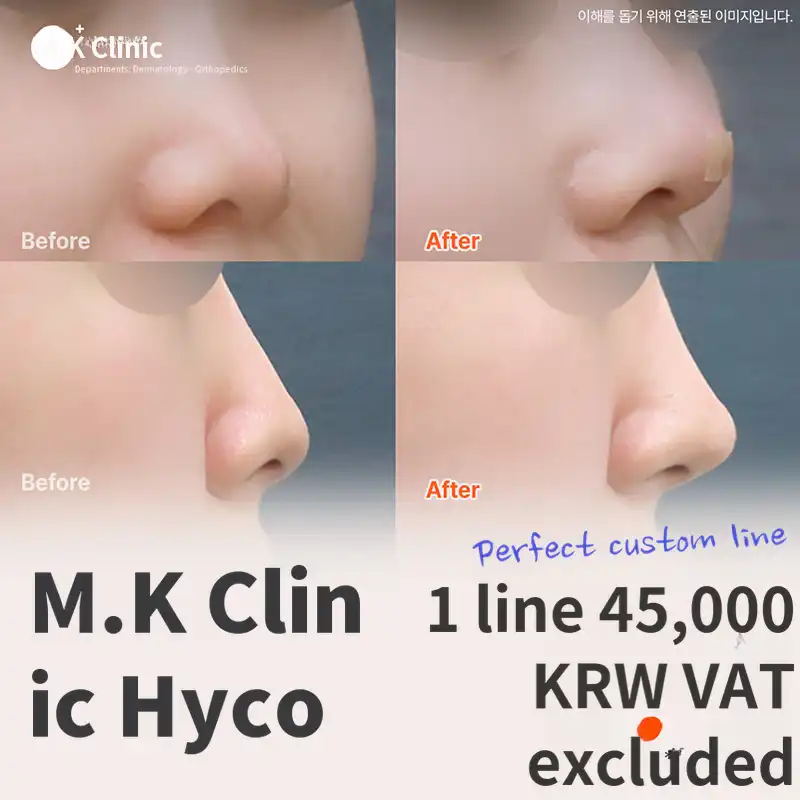
Mikay Confident Nasal Bridge Mint Thread_Haiko
 52076 reviews
 271
271 52076 reviews271
 5467 reviews8
 5
5 4.951 reviews1
I usually suffer from severe allergic rhinitis, so I decided to look into surgery for my rhinitis. I heard that a collaborative surgery is possible with both an ENT specialist and a plastic surgeon, and that it is also possible to observe the surgery. After consulting with the ENT physician and getting a CT scan, we decided to proceed with septoplasty and inferior turbinate reduction. For cosmetic purposes, I opted for a nose job that preserved the bridge while also undergoing tip surgery, bone cutting, and alar base reduction. Two weeks after the surgery, the swelling has significantly decreased and it's looking more natural. Thank you for your meticulous aftercare.
The doctor and manager provided detailed explanations during the consultation, and the clinic was clean, which I appreciated. The surgery went well, and I am satisfied!
I was worried about nostril reduction, but the surgery was easy and it seems to have turned out well.
I was troubled by my round nose and wide nostrils, and when I smiled, my nose looked even larger. Thanks to the nostril reduction surgery, my nose is now slimmer, and I am very satisfied!
I'm considering nose surgery because I have a wide nasal bridge, large nostrils, and thick skin, which makes it a broad and thick nose. I'm wondering if it's okay to just do osteotomy and alar base reduction without implants. It looks okay from the side, but when viewed from the front, my nose appears to be very wide, which is stressful. Has anyone with a similar nose to mine undergone surgery with a septoplasty and alar base reduction? Let me know how effective it was and if you have any hospital recommendations!
I'm worried about my large nostrils and how they widen especially when I smile, so I underwent nostril reduction and rhinoplasty. I'll share my before-and-after photos of how I became prettier through surgery. The time when I realized I had large nostrils I started working with a colleague from work who is also a schoolmate. The children have been working for a long time since they grew up. One day, I went to visit my friend's house and met her daughter. Seeing that friend smile while greeting for the first time, I thought they might be feeling a bit stressed. Feeling that the nostrils are too large The nostrils that appear larger when you smile The wide nostrils make the nose appear particularly blunt. This was my first impression. That was during the winter vacation of my third year of high school, just before graduation. Later, I talked with my friend about plastic surgery, and my friend also had double eyelids on only one eye, while the other looked unnatural. At that time, my friend shared her experience of having plastic surgery in middle school and hearing about her unsuccessful results, she said she wanted to undergo double eyelid surgery again, which naturally led to her talking about her daughter's nose concerns. So I decided to drive with my friend and daughter, and I went to get a consultation. ✅ Nostril reduction surgery diagnosis and method The consultation result was that my nostrils are too large and my nasal bridge is low, so I was diagnosed to have it raised, and my friend approved, and I scheduled the surgery. There are two surgical methods: incision and non-incision. My friend's daughter will proceed with the non-incision method, and she told me to consult with the clinic manager for detailed information or to make an appointment and hear more about the specific situation. I heard from the consultation director about the non-incisional surgical method, which involves inserting a thread below the nostrils (the side of the nose) to simultaneously reduce the nostrils and the width of the nose. They said that nostril reduction is simpler than expected, leaves no scars, and has a quick recovery. And because he has a low nose, I heard an explanation about raising the nasal bridge, including the procedure of removing cartilage from behind the ear and inserting it. The materials commonly used for rhinoplasty include artificial materials such as silicone and Gore-Tex, as well as autologous materials like septal cartilage (nasal septum) and ear cartilage. The reason for using ear cartilage, which is the safest option, was explained, and then I checked the appointment date before leaving the hospital. ✅ Surgery and recovery after reservation You accompanied me again on the scheduled day. He prescribed a three-day supply of painkillers and anti-inflammatory medication from the time of the 2 hour and 30 minute surgery, which lasted about an hour in the recovery room until the stitches were removed a week later. When she came home, her friend's daughter said she almost slept on the sofa for two days because she was worried that her operated nose might go wrong. I didn't go with them when the stitches were removed, but later I did makeup and then came near the company to have tea together and hear their reviews. At first, I couldn't recognize her because her features were so clear that I wondered if she was really my friend's daughter. Actually, I didn't mention that it was a nose wing reduction, but I also had double eyelid surgery on the same day with my friend, haha. According to what I heard from the review, the pain from the surgery was manageable with the prescribed medication. Actually, the pain was greater at the site where the cartilage behind the ear was removed than from the nose surgery at that time, and you could see the surgical scar and a slight indentation at the site where the cartilage was removed. But it was not visible because it was the back of the head and behind the ears. The part where the nostrils were reduced also looked completely natural, as if the original nose had always been like that, with no visible surgical scars. This is a review of rhinoplasty, where I truly came to trust the science and technology, after seeing how beautifully my appearance has transformed.

I'm looking for information on rhinoplasty! I'm just trying to get rid of my nose. The bridge of the nose doesn't seem to be a big problem, I want to reduce only the size of my nose with rhinoplasty! Where would be okay?! I'm looking into plastic surgery. Which one do you think looks better? I looked for a place that holds a rhinoplasty event! I found out about it on Cashdoc. I often check Cashdoc, and it collects information about hospital events. It was easy to figure out haha I'm scared just thinking about spending money. But I can't not do it..ㅎ We have been holding many events for rhinoplasty It's nice to have a variety of hospital options. Wonpick Plastic Surgery Clinic can reduce the size of your nostrils with rhinoplasty. Up to 500,000 won is possible with the event! I was wondering what would happen to the scar if I got rhinoplasty. It is said that the scar is barely visible because the procedure is performed in an inconspicuous area. And then, we correct the asymmetry on both sides, If you get nose tip reduction and also get nose tip botox, They say it's more effective! https://cashdoc.me/hospitalevent/eventdetail/2233 I thought 500,000 won was okay, but I heard that rhinoplasty costs 390,000 won? Of course, you all know that VAT is separate, right? At Dr. Mi Plastic Surgery, it was 390,000 won. They say that each person's nose line is different. To create an ideal nose tip They say you need to create a nose line that suits your face! So when you have rhinoplasty Width of the nostrils - Nostril reduction - Even the outline of the nostrils They say we need to approach. https://cashdoc.me/hospitalevent/eventdetail/930 If you look at the price alone, Doctor Me seems like a good option. Otherwise, I like the original pick better! I will consult with both places and then decide!

I'm looking into rhinoplasty. My mom said that if you keep picking your nose, your nostrils will get bigger... I forgot about that fact and continued to touch my nose out of habit. As a result, the nostrils eventually become longer and you will be surprised when you look at the nostrils from below. After much thought, I decided to look into rhinoplasty. Has anyone ever had rhinoplasty? Even if I get nose reduction surgery, won't it go back? My nostrils are also enlarged due to my enlarged nostrils, and my nose looks swollen. Can I get rid of this stress by getting a nose job? Please....those of you who know about rhinoplasty, please tell me....!!! I looked into hospitals that are holding events on Cashdoc. I looked for a good place with reviews and before and after photos. The first place I visited was D-Day Plastic Surgery Clinic. Here, nose tip reduction surgery costs 500,000 won, excluding VAT. What's surprising is that the nose reduction surgery takes less time than expected? https://cashdoc.me/hospitalevent/eventdetail/1910 Although rhinoplasty is performed under general anesthesia, the surgery time is said to be less than 30 minutes. And you can go about your daily life the same day!!! Because the incision line is less exposed, you can reduce concerns about scars, and because the scars are less visible, you can recover quickly. Nose reduction surgery is divided into incision and non-incision. I think this part needs to be decided after consulting with the director. Actually, I want to do it without incision, but I might end up having an incision..!! Another place is Wonpick Plastic Surgery Clinic. Here too, nose tip reduction surgery costs 500,000 won, excluding VAT! At Wonpick Plastic Surgery, we perform nostril reduction surgery in an area that is not noticeable. Even an asymmetrical nose can be improved to a balanced nose. https://cashdoc.me/hospitalevent/eventdetail/2233 There were several reasons why I wanted to get my nose tip reduction surgery here. First of all, it is a hospital that installs and operates CCTV. I liked it because it was a trustworthy hospital. And we are implementing an intensive care system to ensure a quick recovery. It is said that high frequency, laser, and swelling injections help with cell regeneration and blood circulation. And lastly, I liked the review too!! Because everything from consultation to surgery is handled through a 1:1 dedicated system, I think I can trust the director more. For various reasons, I am considering getting rhinoplasty. I'm already nervous.. haha

hello. Dr. Hyun-woo Cho, Chief Director of 3D Plastic Surgery no see. Every time I look in the mirror Protruding cheekbones Many of you are stressed because of this, aren't you? I want to have surgery to get smaller, but I'm too scared of having my bone shaved. I hear that a lot in the consulting room. Burden of general anesthesia, concerns about pin fixation, long recovery period For those who are hesitating due to this concern, Today, I will explain '230-Degree 3D Cheekbone Reduction Surgery,' which reduces the burden of surgery while creating smooth lines. Why was 230-degree 3D cheekbone reduction surgery developed? 📌 Shift in Trend: From 'Large Bone Cuts' to 'Precise Trimming' past There are many patients with very significantly developed cheekbones, '3D Cheekbone Reduction Surgery' that boldly cuts and moves the bone This was common. However, patients visiting the hospital recently are a little different. Rather than cases where significant bone grafting is required, A 'refining-focused' case where you want to smooth out uneven lines There are many more. Patients' needs have changed, so surgical methods shouldn't remain the same. So I thought about it. ✔️ Is general anesthesia absolutely necessary? ✔️ Is it really necessary to remove a large amount of bone? ✔️ Is it possible to achieve results while reducing the burden? A method to create the slim line you desire while reducing the significant burden of general anesthesia or incisions inside the mouth. What was devised for this purpose is the '230-degree 3D cheekbone reduction surgery'. How exactly is 230-degree 3D cheekbone reduction surgery performed? 📌 Utilizing shaving techniques and the 'elasticity' of the cheekbones, it precisely reduces only the necessary area. Many people wonder what the difference is between 230-degree 3D cheekbone reduction surgery and 'quick cheekbone reduction surgery'. commonly Quick Cheekbone Reduction Surgery It literally means performing surgery quickly, mainly excluding the 45-degree cheekbone. side cheekbones only There are many cases where it is handled. In this case, there are many instances where satisfaction is low because the 45-degree cheekbones are not improved, or where patients eventually consider revision surgery with 3D cheekbone reduction. the other side, 230-degree 3D cheekbone reduction surgery It is as simple as quick cheekbone reduction surgery, yet for those with many concerns Solving up to the 45-degree cheekbones together There is a significant difference in that it does so. 45-degree cheekbone (under the eye): Without cutting the bone completely Partial osteotomy Only perform the procedure. Afterwards, the protruding area Shaving Then, grind it smoothly. . approximately Reduction effect of about 2~3mm You can see this, and in terms of actual visual results, you can expect a slimness comparable to that of authentic 3D cheekbone reduction surgery. Side cheekbones (in front of the ears): After slightly separating the bone, push it deep inside like sliding a drawer to reduce the overall width of the face. {CT images before and after (left and right) 230-degree 3D cheekbone reduction surgery} 💡 Wait! Please be careful if you fall into these categories! if The 45-degree cheekbone itself In the case of very large and thick Since ramen or shaving techniques alone may not be effective, traditional '3D cheekbone reduction surgery' may be more suitable. Therefore Before surgery Accurate diagnosis through CT scan This is essential no see. Is the fixing pin absolutely necessary? What is the difference? 📌 You can select based on the patient's condition and preference. Since the 230-degree 3D cheekbone is not a method that involves cutting the entire bone, there is a wide range of options for bone fixation methods. In fact, the choice rates of my patients are also very diverse. Non-fixed (33%) : We wait for natural adhesion without pins. It is preferred by those sensitive to foreign substances. Titanium pin (33%) : It provides the tightest fixation. (Visible on X-ray) Melting pin (33%) : Over time, it is absorbed into the body and disappears. (Not visible on X-rays) (Pre- and post-operative CT images fixed with titanium pins) (Pre- and post-operative CT scans fixed with dissolvable pins) 👨⚕️ Director Jo Hyun-woo's Tip: Even if the post-operative results are the same, because the bone hardens quickly If you are worried about the bone not healing after surgery , Pin fixation We tend to recommend that slightly more. However, you can choose the method that suits you best through sufficient consultation. FAQ 🙋♀️🙋♂️ Q1. How are 230-degree stereoscopic cheekbone reduction surgery and 3D cheekbone reduction surgery different? A1. 3D cheekbone reduction surgery is A method of osteotomizing both the 45-degree cheekbone and the lateral cheekbone through an intraoral incision. no see. On the other hand, 230-degree 3D cheekbone reduction surgery is Partial osteotomy and shaving of the 45-degree cheekbone via a scalp incision, and repositioning of the lateral cheekbone inward after osteotomy. The way to make orders It proceeds as follows. It is important to select a surgery that suits the individual's bone structure. Q2. Is the effect of 45-degree cheekbone shaving really noticeable? A2. Since the swelling is not significant immediately after surgery, you can feel the changes relatively quickly. However, after a month, the effect may be less noticeable due to residual swelling, and approximately After about 6 months, it is common to clearly feel the difference before and after. Q3. Does hair grow back from the scalp incision site? A3. The hair at the incision site falls out and then... It started growing again after two months. do. The incision itself is often small and becomes inconspicuous over time. conclusion 230-degree 3D cheekbone reduction surgery is Reduce unnecessary burdens and precisely improve only the essential parts This is a surgical method designed to be used. Not everyone experiences the same results, Select the method that suits you through CT verification and consultation with a specialist. Doing so is the most important thing. ✔️ If you are concerned about general anesthesia ✔️ If you need 'precise refining' rather than the entire cheekbone ✔️ If you are very worried about the fixing pin We recommend that you make a decision after thoroughly comparing options through consultation. I hope today's explanation was helpful in your decision. 3D Plastic Surgery Chief Director Cho Hyun-woo Graduated from Yonsei University College of Medicine Master of Medicine, Yonsei University Graduate School Severance Hospital Plastic Surgeon Visiting Professor, Department of Plastic Surgery, Severance Hospital Regular member of the Korean Society of Plastic and Reconstructive Surgeons Korean Society of Aesthetic Plastic Surgery Regular member Korean Society of Craniofacial Plastic Surgery Regular member International Society of Plastic Surgeons (ISAPS) member Regular member of the Korean Society of Surgery on the Hand Korean Association of Plastic Surgeons Regular member Secretary General of the Minimally Invasive Plastic Surgery Research Society Current Chief Director of Ipche Plastic Surgery Clinic Experience specializing in facial contouring 21 year

Hello! This is Dr. Lee Jeong-ho, Chief Director of Seoul Dia Dental Clinic. Usually, when people receive a consultation or hear about dental implants at a dental clinic, quite a few of them think to themselves like this. 💬 "Come on, it's just implanting one tooth. Isn't it a simpler surgery than you'd think?" However, it is by no means a simple matter. This is because dental implants are not simply a treatment where a single artificial tooth is placed and finished; rather, it is a precise treatment that requires the perfect alignment of the patient's current physical condition, the state of their gum bone, and their daily lifestyle habits. 📌 Today, the advice I actually give patients the most in the consultation room 5 Key Basic Conditions I will summarize it for you in an easy-to-understand way! 1️⃣ Why should the gum bone be checked before the teeth before implant surgery? The success of an implant depends on a solid and sufficient ' gum bone It is determined based on ' When you look in the mirror, you are bound to see only the empty space and think, "Ah, a tooth is missing in this spot." However, the principle of an implant is to firmly implant an artificial tooth root into the 'gum bone (alveolar bone)' beneath the space where the tooth was missing. It's just like how the soil needs to be firm when planting a tree. 🌱 Therefore, when you visit the dental clinic, the directors will first precisely diagnose the condition of your gum bone. What is important at this time 3 elements It is as follows. 🔸 Bone thickness (Is it wide enough to cover the artificial tooth root?) 🔸 Bone height (Is sufficient length secured?) 🔸 Bone hardness (Is the bone density good enough to provide good fixation?) ⚠️ Even if the gums appear healthy and plump on the outside, a thorough examination reveals that there are surprisingly many cases where the bone underneath has thinned or has already dissolved and been absorbed. If you are planning dental implants, it is essential to first undergo a CT scan to examine the invisible bone structure in three dimensions. 🔍 2️⃣ Why do I need to inform the dentist in advance if I have systemic diseases? Chronic underlying conditions are directly related to bleeding during surgery and recovery, so this is essential information for safety. There are people who cautiously ask, "Doctor, is it okay if I take blood pressure medication?" or "My diabetes is quite severe; is it okay to have surgery?" To start with the conclusion, chronic diseases such as hypertension, diabetes, liver disease, and osteoporosis are all closely linked to implant surgery. ⚠️ This is because implants are a surgical procedure that involves incising the gums and manipulating the bone, so the management of the following three factors is crucial. ✔️ Control of bleeding during and after surgery ✔️ Rapid wound healing ability ✔️ Infection control regarding bacteria 💡 Even if you have systemic diseases ❌, surgery is not impossible. It is to create a customized plan for the safest time to proceed with the surgery and the method to be used. Therefore, please remember that when visiting the dentist, systemic diseases are never a secret to be hidden, but rather valuable data that will ensure the safety of your surgery! 😊 3️⃣ Should I check every single medication you take regularly, even minor treatments? Since the timing of surgery and hemostasis methods vary depending on the type of medication being taken, accurate sharing is necessary. When filling out a dental questionnaire, there is a section to list any medications you are currently taking, right? If you are facing implant surgery, information about your medication is truly more important than anything else. ✨ In particular, the success and safety of the surgery depend significantly on whether the following apply. 📌 blood-related drugs (Aspirin, etc.) 📌 Osteoporosis treatments and injections 📌 anticoagulant component These medications serve as important milestones in determining how to manage hemostasis on the day of surgery or whether to postpone the surgery. 📝 If you cannot remember the name of your medicine, please do not worry. You can simply take a photo of your prescription or medicine bag, or write it down, and we will carefully verify it for you! 4️⃣ How much does your condition the day before surgery affect the implant outcome? Overwork or drinking the day before is the main culprit that significantly increases pain and bleeding on the day. No matter how skilled a doctor is, if the implant is performed with a perfect plan, the difficulty of the surgery increases significantly if the patient's condition is poor on the day of the operation. 😢 It is most advisable to get dental implants when your body is in peak condition. ⚠️ Alcohol consumed late the previous day (drinking) ⚠️ Sleep deprivation caused by tossing and turning ⚠️ Overwork due to accumulated excessive schedule If you lie on the operating table in this state, your blood vessels will expand, causing a noticeable increase in bleeding during surgery compared to usual. Not only will your recovery speed slow down after surgery, but you may also feel much sharper and more severe pain when you wake up from anesthesia. ✔️ Take a complete break from alcohol for just one day 🙅♂️ ✔️ Go to bed early at night and get enough restful sleep 💤 5️⃣ What is a more fundamental question than "Doctor, can I have surgery today?" Finding the 'most correct timing' suited to the patient's periodontal condition is the priority, rather than speed. Perhaps because many people visiting the dental clinic for consultations are impatient, they frequently ask this question. 🙋♂️ "Director, it's hard for me to make time. Since I'm here today, can't you plant it for me right away?" Of course, if examination results show that the bone is very strong and there is absolutely no inflammation, there are cases where treatment involving immediate implantation on the same day is possible. However, from the medical team's perspective, there is a different question that must be asked with much greater weight than whether or not surgery is performed on the same day. ✨ "Would it really be suitable for the patient in the long term to plant it right now in this condition?" If severe inflammation remains at the extraction site, a preliminary step of thoroughly scraping out and cleaning the inflamed tissue may be necessary; additionally, if the bone tissue is weak, it may be much more beneficial to wait until the gum bone recovers and becomes firmer on its own before proceeding. Ultimately, dental implants are not a race against time to see 'how quickly you can get it done,' but a battle of precision to see 'how to install it at the most appropriate timing with the fewest side effects.' This seemingly minor difference in timing will result in a significant difference in outcome a few years later, determining whether you can use your implant properly for a long time. 💡 FAQ (Frequently Asked Questions) Q1. I have been taking osteoporosis medication for a long time. Will this significantly interfere with implant surgery? A1. Certain ingredients commonly used in the treatment of osteoporosis (such as bisphosphonates and denosumab) have the property of inhibiting the bone metabolic process in which bone is absorbed and regenerated. Therefore, it is essential to thoroughly examine the patient's medication history and duration prior to surgery. However, taking medication does not automatically mean that surgery is impossible; the plan will be safely modified after comprehensively reviewing the form of the medication (oral or injectable), the specific duration of use, and the status of underlying diseases. Never stop taking the medication on your own; please be sure to consult closely with your prescribing physician and dentist! ⚠️ Q2. Is it really a problem to have a light drink or two of beer or soju the night before surgery? A2. Yes, the effect is more noticeable than expected. Even a small amount of alcohol instantly dilates blood vessels upon entering the body, which can cause bleeding to be difficult to stop during surgery and may interfere with the effectiveness of the anesthetic. Please let go of the thought that "it will be okay a little" and I recommend taking a full day of rest the day before. 🙅♂️ 🔸 Conclusion When it comes to implant treatment, the top priority is to rationally determine "whether proceeding now is the best course of action given my physical condition," rather than unconditionally focusing on "how quickly the procedure can be finished, like lightning." Make sure to fully absorb what we covered today! 🧠 1️⃣ Thoroughly check the condition of the gum bone inside rather than the exterior 2️⃣ Do not hide your systemic diseases; use them as a compass for surgery. 3️⃣ Share all information about your daily medication, no matter how minor. 4️⃣ Protect your body by maintaining optimal condition the night before surgery 5️⃣ Entering at the optimal time rather than deciding on immediate surgery on the same day 💡 If you follow these commitments step-by-step with the medical team, there is no need to harbor excessive fear about the surgery, nor is there any reason to rush. Sometimes, treatment is like life itself; the more urgent the situation, the slower and more standard the path becomes—the safest and fastest shortcut. 🦷 If you have any questions about your bone condition or medications, feel free to consult with medical professionals at any time! Seoul Dia Dental Clinic Chief Director Lee Jeong-ho Ministry of Health and Welfare Certified Specialist in Integrated Dentistry Seoul National University Graduate School of Dentistry Advanced Dentistry procedure university High-end implants Dentistry procedure Oral Design Uncensored laminate course American Academy of Implant Dentistry (AAID) Regular member Osstem Implant Clinical Research Center Research Advisory Committee 👉 View more of Director Lee Jeong-ho's columns Laminates, how many should I get? How to find the right number for your tooth condition
![[Health Column] 5 Things You Must Check for Safe Results Before Implant Surgery](https://media.nudge-community.com/10425864)
hello! Lee Hyun-seop, Chief Director of Seoul Centum Dental Clinic no see. There are many people who expect that once they have implant surgery, they will be able to use them reliably for a lifetime or for a very long time. In fact, if you provide thorough after-sales service, there are many cases where you can use it stably for over 10 years without any issues. However, unfortunately, situations often arise where you face the cost of implant revision surgery due to a lack of aftercare or sudden gum inflammation. "I already spent a lot of money on surgery, do I have to do it again?", "Why is the cost of revision surgery higher than the first time?" My heart feels heavy whenever I receive questions from patients who are upset, saying things like that. So today, I will clearly explain, tailored to the patient's perspective, exactly why implant revision surgery costs arise and in what cases the cost difference is significant! 1. What are the main causes that lead to implant revision surgery? The main reasons for needing to re-implant an implant include peri-implantitis (inflammation of the surrounding gums), fracture of the prosthesis, and failure of initial fixation. 📌 The most common culprit, peri-implantitis The most common reason for deciding on revision surgery is peri-implantitis. Inflammation of the gums and bone surrounding the implant can lead to bone resorption, where the alveolar bone responsible for firmly supporting the implant erodes. Initially, it starts mildly with gum bleeding or slight swelling, but if left untreated, it eventually leads to the implant becoming severely loose. 📌 Damage to prosthetics and structures due to excessive force If you enjoy eating hard and chewy foods or if excessive force is continuously applied to the oral cavity, structural damage such as breakage of the prosthesis or loosening of internal screws may occur. If you visit a dentist early, this problem can be resolved relatively simply, but if you delay and neglect it for a long time, it will eventually lead to implant revision surgery, resulting in much higher costs. 📌 Initial fixation failure due to failure to properly fuse with bone Immediately after implant surgery, the process of 'osseointegration,' in which the gum bone and the implant firmly bond as one unit, is extremely important. However, there are cases where implants fail to properly anchor to the bone due to factors such as excessive smoking or drinking after surgery, failure to control diabetes, or insufficient initial post-operative care. 2. What are some abnormal implant symptoms that absolutely should not be overlooked? If you experience gum bleeding, looseness, food getting stuck, or feel looseness or discomfort when chewing, you should get a check-up promptly without delay. . If you feel any subtle changes or discomfort in your mouth, you must never dismiss it by assuming it will get better on its own. Whether initial response This is because it is the key factor determining the difference in the cost of implant revision surgery. 🔹 My gums keep bleeding every time I brush my teeth. 🔹 I feel like my implant tooth is slightly loose. 🔹 Food keeps getting stuck between my teeth more than before. 🔹 When chewing food with enjoyment, it feels inexplicably uncomfortable and aching. 🔹 I feel a slight looseness that is different from when the prosthesis was first placed. If you experience even one of the symptoms mentioned above, visiting a dentist promptly to check your condition is the wisest way to significantly reduce the difficulty of treatment and the cost of re-surgery. 3. Why is the cost of implant revision surgery more expensive than the initial surgery? This is because revision surgery is not simply about re-implanting the implant, but involves complex recovery treatments simultaneously, such as the removal of the existing implant, treatment of inflammation, and bone grafting. ! Many people ask, "Why is it more expensive than the first time when the dentist is just implanting it exactly the same way?" Implant revision surgery is by no means a simple process of just pulling it out and quickly re-implanting it. This is because the root cause of the problem with the existing implant must be accurately identified, the area damaged by inflammation restored to normal, and the re-implantation process must be repeated from the beginning. When actually performing the surgery Unlike the initial surgery, the following complicated treatment processes are added. 🔸 Removal of existing implants : The problematic existing fixture (artificial tooth root) already embedded in the gums must be cleanly removed. At this point, the difficulty varies widely depending on whether it simply pops out or requires surgical removal that involves cutting away the alveolar bone. 🔸 Treatment of surrounding inflammation : If the implant is filled with peri-implantitis, you must undergo treatment to completely scrape out the surrounding infected tissue and clean the area thoroughly. 🔸 Bone grafting and maxillary sinus lift : If the gum bone has already been severely lost due to inflammation, bone grafting or sinus lift surgery is essential to refill the bone and create a foundation for placing a new implant. 🔸 Re-implantation surgery and prosthetic remanufacturing : We re-implant a new implant into the firmly restored alveolar bone, and completely redesign and fabricate the abutment and crown to suit the patient's current oral condition. 💡 Implant Revision Surgery Cost Formula at a Glance [Surgical removal of existing implant + Treatment for inflammation and gum recovery + Advanced bone grafting + Re-implantation of new implant and fabrication of prosthesis] In the end, all of this Existing treatment + recovery treatment + retreatment Because the process involves complex steps performed simultaneously, the overall cost of the implant revision surgery is inevitably higher than the initial cost. 4. Is it true that the cost of revision surgery varies from person to person and that a complete removal might not be necessary? 🦷 🦷Yes, that is true! The cost varies depending on the extent of inflammation and bone loss, and we can reduce the financial burden by replacing only the upper components instead of extracting the entire bone. ! This is precisely why it is difficult to get a clear, fixed price even if you call a dental clinic out of the blue and ask, "How much does implant revision surgery cost?" The exact cost of revision surgery is as follows: Individual patient's oral environment and precise examination results This is because it varies completely depending on. Extent of inflammation and degree of alveolar bone (gum bone) loss Difficulty of removing existing implants Whether bone grafting and maxillary sinus lift are performed Number of implants requiring re-implantation Fortunately, not all patients necessarily have to undergo the terrifying surgery of digging out the entire thing and replanting it. Depending on the condition, treatment is neatly divided into two main directions. ✔️ Cases where only parts can be modified or replaced (relatively low burden) Fortunately, if the gum bone is very strong and there is a simple problem only with the upper prosthesis, an internal screw has loosened, or it is only slightly damaged, there is absolutely no need to extract the entire tooth. Since only some parts need to be simply repaired or replaced, the pain and cost burden are significantly reduced. ⚠️ Cases where full revision surgery is essential (somewhat high burden) If peri-implantitis has progressed severely, causing significant bone resorption in the surrounding area, or if the fixture itself within the gum bone is completely fractured and damaged, it is necessary to surgically remove the entire existing structure completely before proceeding with re-implantation, which increases both the difficulty and the cost. 5. What is the best management method to definitely reduce the cost of implant revision surgery? The most perfect way to save money is regular checkups every 6 months to 1 year, thorough follow-up care using dental floss and interdental brushes, and quitting smoking. The greatest secret to drastically reducing the cost of implant revision surgery and protecting your wallet is ultimately adhering to the basic principle of 'thorough initial care.' If you meticulously follow just the following three rules in your mouth, you can completely avoid the risk of revision surgery. ✨ Make regular dental checkups every 6 months to 1 year a part of your daily routine! You must never skip the regular check-up schedule provided by the dental clinic. If invisible, microscopic gum inflammation or loosening of dental prosthetics is detected early when they are still very small, you can avoid major re-surgery and prevent extensive treatment with simple measures, allowing you to enjoy a luxurious experience. ✨ Much more meticulous oral hygiene care than natural teeth! Since implant teeth do not have nerves, caring for the surrounding gums is much more important than for natural teeth. Since regular brushing alone cannot remove all the fine debris stuck in the crevices, you must carry a set of dental floss, interdental brushes, and water flossers (oral irrigators) to consistently and thoroughly clean every nook and cranny. ✨ Thoroughly manage smoking that slowly melts away your gum bone! Smoking is a terrifying culprit that drastically increases the frequency of peri-implantitis, which causes inflammation around implants, and explosively raises the risk of bone resorption, where the gum bone collapses. In particular, you must firmly avoid smoking, which is harmful in every way, immediately after implant surgery or during the sensitive initial settling period, in order to safely preserve the foundation of your precious teeth. FAQ Q1. If the gums around the implant bleed, do I absolutely have to have them all extracted and undergo re-surgery? ? A1. No! There is absolutely no need to be scared right from the start. In cases of early-stage periodontal inflammation characterized by bleeding gums, or simply loose screws or minor damage to the upper prosthesis, treatment is possible without the need to extract the entire tooth; only specific parts can be neatly modified or replaced, allowing for burden-free treatment. However, if the bone has already severely eroded, a full re-operation may be necessary, so it is important to undergo a thorough examination immediately upon discovery. Q2. Why does smoking after implant surgery increase the likelihood of re-surgery and cost more money? ? A2. This is because smoking constricts blood vessels in the mouth, fatally interfering with the most critical process of 'osseofusion,' where the gum bone and the implant must adhere tightly as one. This leads to an uncontrollable increase in the risk of peri-implantitis and bone resorption, ultimately resulting in the burden of massive revision surgery costs where the entire implant structure must be removed and bone grafting must be performed again from the beginning due to the failure of initial fixation. conclusion The cost of implant revision surgery is by no means a one-dimensional expense of simply implanting a new artificial tooth component. This is a comprehensive treatment fee that includes a highly specialized recovery process to safely and healthily normalize the gum environment and alveolar bone foundation, which have been severely collapsed and damaged due to inflammation. Therefore, the most certain key point to prevent frightening side effects and massive waste of money is the speed of catching subtle abnormal signals before the problem snowballs. Don't carelessly miss the timing by thinking, "It doesn't hurt yet, so it'll be fine," or "Even if I feel a slight wavering, I'm busy, so I'll go later." The habit of visiting a dental professional without delay to have your condition thoroughly checked when you feel even slight shaking or minor discomfort. This is truly the best wisdom for fully protecting your precious dental health and, consequently, definitely saving the biggest costs. Seoul Centum Dental Clinic Chief Director Lee Hyun-seop Specialist in Integrated Dentistry Graduated from Korea University Master of Dentistry, Kyung Hee University College of Dentistry Regular member of the Korean Academy of Oral and Maxillofacial Implantology Regular member of the Korean Endodontic Society Regular member of the Korean Academy of Integrated Dentistry Member of the American Academy of Aesthetic Dentistry (AACD) Member of the American Academy of Implant Dentistry (AAID) Full member of the International Congress of Implantologists (ICOI) Experience in placing over 17,000 implants Possesses extensive overseas experience visiting over 10 countries Experience with numerous complex implant cases Read other health columns by Director Lee Hyun-seop > [Health Column] Why Are Impacted Wisdom Teeth a Problem? Pain, Inflammation, and Damage at a Glance [Health Column] Curious about implant lifespan? How long can they be used? [Health Column] I heard there are so many types of implant bone grafts… What criteria should I use to choose one?
![[Health Column] Why Is the Cost of Implant Revision Surgery More Expensive Than the Initial One? The Real Reason Explained by a Dental Specialist](https://media.nudge-community.com/9786095)
hello! Lee Hyun-seop, Chief Director of Seoul Centum Dental Clinic no see. 🙌 One of the things that people who are about to have implant surgery or have just finished it are most curious about is... When can I eat properly? I have a question. Implants are just as ✨ as implanting them Post-treatment care, especially 'diet,' is the key factor determining the speed of recovery no see! Even if you have the same surgery, the swelling and pain can vary widely depending on what and how you eat. Today, to help you recover quickly Personalized meal guide by period I will carefully organize this for you. 📝 1. On the day of surgery (Day 0), what should I be most careful about? 🩸 🦷 Key Keywords: Hemostasis and Minimization of Irritation Immediately after surgery, the wound is very sensitive as it has not yet healed. ⚠️Since stopping the bleeding is the most critical time, absolutely no actions that irritate the inside of the mouth are allowed! ✔️ When meals are available: It is safe to take it after the anesthesia has completely worn off (usually after 2 hours). 🔸 Recommended Food : I recommend liquid foods that can be swallowed without chewing, such as rice gruel, cooled porridge, soy milk, and soft soup. ✨ ⚠️ Precautions Hot food dilates blood vessels and interferes with blood clotting, so Make sure to cool it down Have some! 🧊 Please strictly avoid using straws, as they can increase pressure in the mouth and cause bleeding. 🥤❌ 📌 Director's advice: On the first day, even if you are a little hungry, make sure the wound does not get infected soft foods Please pack lightly! 2. What are the dietary tips to reduce swelling 1–3 days after surgery? 🧊 🦷 Key Keywords: Swelling Management and Pain Minimization The first to third days after surgery are when the face swells the most. 📌At this time, a diet that reduces pain and manages swelling is necessary. 🔸 Recommended Food : Not only porridge and gruel, but also steamed eggs, soft tofu, and yogurt Soft protein that can be crushed with the tongue Main dishes are good. 🍮 ✔️ Dining Tips The food temperature is lukewarm Please keep it. If you have to chew food, you must The opposite side that was not operated on You must chew gently, only with this! 🦷 ❌ Foods to avoid: Spicy food, hot soup, and hard or chewy foods cause significant irritation to the gums. 🙅♂️ 3. Can I start a regular diet 4 to 7 days after surgery? 🍚 🦷 Key keyword: Start a gentle regular diet As the pain and swelling gradually subside, you will probably start craving delicious food. Now is the time to gradually transition to a more normal diet. 🔸 Recommended Food : Soft, well-cooked rice, shredded meat, fish dishes, boiled vegetables, and seaweed soup or beef bone soup are good choices. 🍲 ✔️ Dining Tip: No matter how soft it is Cut the food into small pieces. After eating, please adjust your chewing force to be much weaker than usual. ✨ ⚠️ Still cautious: Nuts, squid, jerky, rice cakes, hard fruit seeds, etc., can put a lot of strain on your implants, so please refrain from eating them for now! 🥜❌ 4. It's been 1 to 2 weeks since surgery. Have I fully recovered now? 🦷 🦷 Key keyword: Gradual return to normal eating ! Even though it may look like the gums have fully healed on the outside, the internal gum bone and implant root are still in the process of firmly bonding together. ✔️ Possible foods: Most general diets are possible. However, you still need to be careful with foods that are too hard or chewy. 😊 ✔️ Dining Tips Please be careful not to habitually chew on the surgical site, and Still chewing mainly on one side This is safe. Please be careful, as chewing with excessive force can cause your implant to fall out! ⚠️ FAQ Q1. Can I have some cold ice cream? 🍦 A1. Yes, it is possible! Cold stimulation can help reduce the sensation of heat in the surgical area and alleviate swelling. However, you must avoid consuming too much. Q2. When can I start drinking coffee? ☕ A2. It is recommended to start consuming this 2 to 3 days after surgery, and keep it from being hot. lukewarm or cold Eating this is good for wound healing. Q3. Are alcohol and cigarettes really forbidden? 🍺🚬 A3. You must strictly prohibit it for at least 1 to 2 weeks! Alcohol and nicotine alter blood flow, slowing down recovery and Risk of developing inflammation (peri-implantitis) It greatly increases. conclusion 💡 Implants are as much about the implantation technique as... The recovery process determines 80% of the outcome do. 👨⚕️ Key Summary 🩸 Day 0: Stop the bleeding first! Do not irritate. 🧊 1~3 days: Manage swelling! Consume gentle protein. 🍚 4~7 days: Start a soft regular meal 🦷 1~2 weeks: Gradually return to normal eating If you pay a little more attention to your diet, the pain will decrease and your recovery will be much faster. If your pain worsens or you experience any unusual symptoms during a meal, please do not hesitate to visit our clinic for a check-up! ✨ You need to eat well for your implants to heal properly! Use the guide provided today to achieve a healthy recovery! 💪💙 Seoul Centum Dental Clinic Chief Director Lee Hyun-seop Specialist in Integrated Dentistry Graduated from Korea University Master of Dentistry, Kyung Hee University College of Dentistry Regular member of the Korean Academy of Oral and Maxillofacial Implantology Regular member of the Korean Endodontic Society Regular member of the Korean Academy of Integrated Dentistry Member of the American Academy of Aesthetic Dentistry (AACD) Member of the American Academy of Implant Dentistry (AAID) Full member of the International Congress of Implantologists (ICOI) Experience in placing over 17,000 implants Possesses extensive overseas experience visiting over 10 countries Experience with numerous complex implant cases Read other health columns by Director Lee Hyun-seop > [Health Column] Why Are Impacted Wisdom Teeth a Problem? Pain, Inflammation, and Damage at a Glance [Health Column] Curious about implant lifespan? How long can they be used? [Health Column] I heard there are so many types of implant bone grafts… What criteria should I use to choose one?
Are you worried that your face looks wide when you take photos? If your cheekbones protrude, your face looks large and bumpy whether viewed from the front or at a 45-degree angle. Many people ask, "Can't I just get cheekbone Botox?" but actually Botox for the cheekbones can actually have a counterproductive effect It can fly. Today, I will summarize the correct method for cheekbone reduction and how to choose the procedure that is right for you. The reason why cheekbones look big Protrusion of the cheekbone itself Fat accumulation around the cheekbones Muscle development (masseter muscle) 👉 Self-diagnosis of my cheekbone type: If you feel a cushiony sensation when pressing your cheekbone with your hand → Fat type / If it feels hard → Bone/Muscle type Why Shouldn't You Get Cheekbone Botox? The cheekbone muscles connect from the cheekbone to the jaw. When muscles are weakened by Botox Sagging cheeks, drooping corners of the mouth danger The cheekbones may become asymmetrically deformed when smiling. ⚠️ Cheekbone Botox is absolutely not recommended as a standalone procedure without consulting a specialist. Comparison of cheekbone reduction methods method Target number characteristic Cheekbone reduction injection (fat breakdown) Local cheekbones 3~5 times (once a week) Non-invasive, natural change Cheekbone thread lifting Accompanied by sagging 1 time Combined lifting effect Cheekbone reduction surgery Bone protrusion 1 time Highly effective and permanent Frequently Asked Questions (FAQ) Are there any side effects from cheekbone reduction? → Injection: Temporary swelling, bruising / Surgery: Recovery period 2–4 weeks, possible decreased sensation How long is the recovery period for cheekbone reduction? → You can resume daily activities on the same day after the injection / 2–4 weeks of recovery recommended for surgery How long does the cheekbone reduction effect last? → Injection: Re-treatment after 6 months to 1 year / Surgery: Semi-permanent Review Points & Hospital Selection Tips Things to check when reading cheekbone reduction reviews: Before and after photo angles, time elapsed since the procedure Hospital Selection Criteria: Whether the doctor is a facial contouring specialist, whether cases of side effects are disclosed If you are concerned about your cheekbones, first press them with your hand to check your cheekbone type. If the condition is fatty, injections can be sufficiently effective, but if the bone protrusion is severe, we recommend a surgical consultation. Check out more real reviews and cost information on Cashdoc! 💡[Health Column] 230-Degree 3D Cheekbone Reduction Surgery: How Is It Different from Conventional Cheekbone Surgery? Review of the Hongdae Portra Lifting 80KJ procedure for double chin and cheekbones Honest Review of Forehead, Cheek, and Cheekbone Fillers at a Hongdae Dermatology Clinic - From 3D Diagnosis to Dosage and Changes by Area, Things You Should Have Known Before the Procedure

hello! Director Kim So-young of View Plastic Surgery no see. ✨ When conducting consultations for double eyelid surgery, there is a common question that patients ask most frequently. as soon as " Doctor, should I have the buried suture method or the incision method? It's a question about... 💬 If you look at reviews on the internet or social media, you will find many comments saying that "the buried suture method is natural and recovery is fast," and "the incisional method creates a distinct line that lasts a long time." However, when you are actually facing your own surgery, it is only natural to feel even more confused and worried about which choice is right. 🤔 So today, I will explain the real differences between the buried suture method and the incisional method—which many of you lose sleep worrying about—and pinpoint the key points in an easy-to-understand way to help you figure out which method is the perfect fit for your eyes! 👇 1️⃣ My friend became beautiful with the buried suture method, so why do I have to have the incisional method? This is one of the stories I hear very often in the counseling room. There are people who express disappointment, asking, "My friend's results turned out incredibly natural with the buried suture method, so why do you recommend the incisional method for me?" 🥲 However, double eyelid surgery is The surgical method varies completely depending strictly on the individual's eye structure. 👁️ The thickness of the eyelid skin, the amount of fat, the degree of skin sagging, and the strength of the muscles that open the eyes—such diverse and complex factors must be considered comprehensively. Therefore, even with the same monolid eyes, some people achieve perfect results with the buried suture method alone, while others require the incisional method to obtain satisfactory results that do not come undone. 👍 Rather than blindly following others' reviews or surgical methods, it is most important to have your eye condition accurately diagnosed by a specialist. ✨ 2️⃣ Who is the perfect fit for the buried suture method for natural-looking eyes? A method that promotes natural and rapid recovery by tying through small holes without incising the skin! The buried suture method is a surgical technique that creates a tight double eyelid line using medical sutures by making tiny holes instead of directly incising the skin. 🧵 Since it doesn't involve a scalpel, it has the strong advantage of relatively less swelling and a noticeably shorter recovery period. 🚀 📌 I highly recommend the buried suture method to these people! ✅ Those with naturally thin eyelid skin ✅ For those who do not have much fat on their eyelids ✅ Those who do not have severe skin sagging ✅ For those who want natural lines that look like their own, without any signs of surgery ⚠️ Recently, with the remarkable advancement of medical technology, the retention of the buried suture method has also become much stronger compared to the past. However, please keep in mind that if you have particularly thick skin or a significant amount of fat that protrudes noticeably, there is a relatively higher possibility that the lines may gradually weaken or loosen over time. 💡 3️⃣ Is the incisional method always artificial and very obvious that I've had plastic surgery? How to neatly smooth out thick skin and fat to achieve sharp and defined lines! Many people get scared just by hearing the word "incision method." It is because of the worry, "What if I get an incision and it looks too artificial, like sausage eyes?" 😢 It is true that in the past, there was a strong perception that incisional surgery invariably resulted in thick, prominent lines. but Recently, it is possible to design naturally to suit an individual's overall eye condition and desired needs. 🎨 The incisional method is a technique that creates a double eyelid by making an incision in the skin and neatly trimming any unnecessary fat or sagging tissue inside the eyelid. 📌 The incisional method is much more advantageous for these people! ✅ For those with firm and thick eyelid skin ✅ For those with excess fat on their eyelids ✅ For those who want clearer and more distinct lines without a blurry look 4️⃣ How much difference is there in the realistic recovery period after surgery? The point that those balancing work or studies are most realistically curious about is the 'recovery period'. 🗓️ In terms of general outcomes, the buried suture method certainly results in less swelling and bruising compared to the incisional method, and allows for a faster return to daily life. However, recently, as surgical techniques and equipment for the incision method have advanced delicately, bleeding and damage are less compared to the past, significantly reducing the burden of recovery for patients. ✨ ⚠️ Wait a minute! The most important point: You should not hastily decide on a surgical method based solely on recovery speed, simply saying, "I have to go to work early, so I'll definitely go with the buried suture method." 🙅 This is because choosing the standard method best suited to your eye structure, even if it takes a few extra days for recovery, is the surest way to prevent revision surgery and maximize satisfaction in the long run. ❔ FAQ: Top 3 Most Frequently Asked Questions About Double Eyelid Surgery Q1. Won't surgery using the incisional method leave unsightly scars on the eyes? 😢 A1. This is the part you fear the most before surgery. In the early stages after surgery, there may be some redness along the incision line or it may look like a scar, but in most cases, it gradually fades and becomes natural as time passes and the skin heals. Best of all, when your eyes are open, the scar tucks right inside the crease of your double eyelid and is hidden, so it isn't as noticeable as you might think; you don't need to worry too much! 🥰 Q2. If I have the first surgery done with an incision, is it impossible to get revision surgery later? 😰 A2. Absolutely not! Just because the first surgery was performed using the incisional method does not mean that future revision surgery is fundamentally impossible. 🙅 However, eye revision surgery is more difficult than the first surgery because it requires precise calculation of much more complex and diverse factors, such as the condition of existing tissue and scar tissue. That is why To ensure a good start, it is best to determine the surgical method that is perfect for you through sufficient diagnosis and consultation from the beginning. 📌 Q3. If I am older, is the buried suture method unavailable and only the incisional method is possible? 👵 A3. No, that is also one of the common misconceptions! When deciding on a surgical method, the age figure itself is not an absolute criterion. What matters is not age, but the current degree of skin sagging and the condition of my eyelid muscles. 👁️ Even if you are in your 30s or 40s or older, if the skin around your eyes is not severely sagging and has elasticity, the buried suture method is often sufficient. Conversely, even if you are in your fresh 20s, if your eyelid skin is very thick and there is excessive fat, we may recommend the incisional method. ✨ 💡 Conclusion: Ultimately, the most perfect answer is 'the choice that suits my eyes' It cannot be concluded that either the buried suture method or the incisional method is absolutely superior or better. 🙅 Because the buried suture method has its own light and natural charm, while the incisional method has the distinct advantage of a clear and precise correction effect unique to itself. What is truly important is to avoid blindly chasing trendy eye shapes or hearsay about acquaintances or famous celebrities succeeding using a particular method. 🚫 You must find the perfect answer that fits exactly your unique eye structure, skin thickness, fat volume, and the balance of the image you ultimately desire. 🎯 ✨ Double eyelid surgery is not simply a procedure of drawing a single line on the eyelid; it is a delicate process that balances the entire eye shape to maximize one's impression and charm. . 👁️✨ There is no single correct answer to the dilemma of "Should I use the buried suture method or the incision method?" I hope you find skilled medical professionals who can thoroughly analyze your eye condition, undergo sufficient consultation and an accurate diagnosis, and choose the most suitable method to enhance the natural beauty of your eyes. 💕 View Plastic Surgery Clinic Director Kim So-young Master of Medicine, Ewha Womans University College of Medicine Doctor of Medicine, Sungkyunkwan University College of Medicine Graduate School Completed residency in Plastic Surgery at Samsung Seoul Hospital Lifetime member of the Korean Society of Plastic and Reconstructive Surgeons Regular member of the Korean Society of Aesthetic Plastic Surgery Regular member of the Anti-aging Research Group of the Korean Society of Plastic and Reconstructive Surgeons Regular member of the Oculoplastic Surgery Research Group of the Korean Society of Plastic and Reconstructive Surgeons Training in Plastic Surgery at Brigham and Women's Hospital, Harvard Medical School, Boston, USA

hello! Dr. Han Kyu-nam, Director of Samsao Plastic Surgery Clinic It is. ✨ Skin sagging naturally comes with aging—it’s upsetting every time you look in the mirror, isn't it, to just brush it off by saying, "Everyone does it"? 🥲 To ensure safe plastic surgery procedures and surgeries, today we have prepared the first session on 'Creating a Proper Plastic Surgery Culture,' which is essential from the perspective of consumers and customers! I am going to explain the lifting procedures that so many of you are curious about in great detail and with honesty. 👇 1️⃣ What is non-surgical lifting (EBD/thread lifting) and what are its characteristics? ✨ Everything about non-surgical lifting that simply tightens sagging tissue without a scalpel! 🔸 Energy-based device (EBD) lifting If facial sagging is not severe, devices such as radio frequency (Thermage) or ultrasound (Ulthera) are primarily used. 🔥 Just like meat shrinks when grilled, this method induces tightening by applying heat around the SMAS layer deep within the skin using different principles! Recently, a wide variety of equipment has been developed, including devices utilizing microwaves similar in principle to microwave ovens; these are collectively referred to as EBDs (Energy Based Devices). Depending on the device, the cost can be as high as surgery, making it less cost-effective, so you should be cautious. However, there is a definite advantage in that the recovery period is short, allowing you to manage the procedure discreetly while going about your daily life. 🔸 Thread Lifting It is a representative procedure with a low barrier to entry, in addition to EBD. It is a method that involves inserting threads of various shapes and materials into the skin and physically pulling them up. They are broadly divided into dissolvable and non-dissolvable threads. • Non-dissolving threads: They last a little longer, but the difference isn't huge. Above all, the psychological burden of knowing they remain in the body for a lifetime is significant. • Dissolvable threads (PDO): Currently the most commonly used material, it takes about 6 to 8 months to break down in the body. 📌 It has excellent biocompatibility, so you can rest assured that it rarely causes problems or inflammation on its own inside the body. "In that case, are there absolutely no side effects with non-surgical lifting?" ⚠️ Just because there is no incision does not mean the risk of side effects is 0%! • Cases of EBD side effects: You may have occasionally seen unfortunate news articles about patients suffering facial burns after undergoing the procedure under general anesthesia. Additionally, cases frequently occur where patients complain that their face looks more saggy because they have lost weight after the procedure, as the fat layer surrounding the targeted SMAS is affected. • Examples of thread lifting side effects: Since sagging tissue is only moved upward without being cut away, the lower skin may accumulate near the cheekbones, temporarily making the face appear wider. If the threads are too close to the skin, they may cause skin indentations (ding-up) or adhesions. 2️⃣ What is the principle behind incisional lifting (facelift/mini-facelift), and what are the precautions? ✨ The truth about incisional lifting and mini-lifting that effectively cut away sagging skin and pull it up! 🔸 Representative surgery, facelift It is literally a surgery where the skin is directly incised, pulled up, the excess flesh is completely cut away, and then sutured. Typically, a long incision is used that starts at the hairline near the temple, wraps around the front and back of the ear, and connects. There are exactly two key keywords for a facelift! ① SMAS layer: A major structure located inside the skin that must be pulled ② Retaining ligament: An obstruction that must be severed because it hinders tissue movement In other words, the principle is to completely loosen the retaining ligaments that hinder facial movement and then strongly pull the SMAS layer to move the sagging skin back to its original youthful position. With the recent advancement of plastic surgery anatomy, various surgical methods have emerged. Currently, the mainstream trend in facelift surgery is the 'Deep Plane Facelift,' which has many advantages as it significantly reduces the scope of subcutaneous dissection. 🔸 The Truth Behind Confusing Mini-Lifts (Mini-Facelifts) It is popular due to the perception that "an incision is made, but simply," but in reality, it is the area that patients find most confusing because there is no precise medical definition or consensus. • General method: A small incision is usually made inside the temple hairline, and the skin beneath is narrowly dissected (subcutaneous dissection). • ⚠️ Honest Comparison of Effects: While the effects may last slightly longer than thread lifting, they fall far short of the results of a traditional facelift. This is because mini-lifts generally cannot dissect below the SMAS layer and can only partially release the retaining ligaments. • ✔️ Important Checkpoint: Even if different hospitals use the same name, 'Mini Lifting,' the location of the incision and the extent of dissection vary completely. Generally, the longer the incision and the wider the dissection area, the more certain the results can be expected, so you must confirm the dissection area during the consultation. ❓ FAQ (Frequently Asked Questions) Q1. Why do so many people say they lost facial fat after receiving an energy-based device (EBD) lift? A1. A layer of fat is located around the SMAS layer, which is targeted by high-frequency or ultrasound energy. If this fatty area is affected by the energy during the procedure, its volume decreases, which may make it appear visually slimmer or more saggy. Q2. Can my cheekbones look bigger after a thread lift? A2. Yes, this is a phenomenon that can certainly occur. Thread lifting is a procedure that pulls and moves excess skin or soft tissue upward, rather than cutting it away. Therefore, if the volume that was sagging downwards is pushed toward the cheekbones, the face may momentarily appear wider. Q3. Is there a significant difference in effectiveness between a mini-lift and a facelift? A3. Yes, there is a significant difference. Mini-lifting involves a small incision and a narrow dissection range, so it cannot dissect below the SMAS layer and can only release a portion of the retaining ligaments. On the other hand, a full facelift utilizes extensive dissection to thoroughly release the retaining ligaments and fundamentally tighten the SMAS layer, resulting in a different depth of effect. 🎯 Conclusion Lifting is broadly divided into EBD lifting using equipment, thread lifting using threads, and incision lifting (facelift and mini-facelift) which involves cutting and removing the skin. Even non-incisional procedures can result in side effects such as burns, sunken cheeks, or enlarged cheekbones, and the scope of mini-lifting varies widely from hospital to hospital. Every patient has a different facial structure, and soft tissue conditions, such as the skin and SMAS layer, vary completely. Therefore, it is absolutely forbidden to blindly insist on a specific surgery simply because you heard, "This surgical method is the trend these days." Please be sure to find the best method for your face through an in-depth consultation with a board-certified plastic surgeon with extensive clinical experience. 🩺 Samsao Plastic Surgery Clinic Director Han Gyu-nam Graduated from Seoul National University College of Medicine Master's degree from Seoul National University College of Medicine Plastic Surgery Resident at Seoul National University Hospital Regular member of the Korean Society of Plastic and Reconstructive Surgeons Regular member of the Korean Society of Aesthetic Plastic Surgery Regular member of the Korean Association of Craniofacial Plastic Surgeons Regular member of the Korean Society of Plastic and Reconstructive Surgeons Korean Society of Plastic and Reconstructive Surgeons Anti-aging Research Group Korean Society of Plastic and Reconstructive Surgeons Breast Reconstruction Research Group Korean Society of Plastic and Reconstructive Surgeons Botox, Filler, and Thread Research Group Subcommittee Member of the Future Committee of the Korean Society of Plastic and Reconstructive Surgeons MINT global key doctor Elasticum Advisory Board MENTOR Young Leader 17 years of experience in lifting procedures Possesses numerous cases in the field of incisional lifting Current Chief Director of Samsao Plastic Surgery Clinic

Hello! This is Dr. Choi Soon-woo, Representative Director of View Plastic Surgery. 👋 When many people consider breast augmentation surgery, they often focus on concerns such as, "What type of implant should I use?", "How large should I make the size?", and "Where should the incision be made so that it is not noticeable?" 💡 Of course, these factors are very important, but the key to determining the true satisfaction felt long after surgery is actually hidden elsewhere! Then why on earth do some people get extremely satisfied with surgery using the exact same implants, while others are considering revision surgery? The results of breast augmentation surgery are not simply determined in a single moment on the day of the surgery. This is because patient satisfaction is determined by the entire process, from precise pre-operative examinations to regular post-operative care. Today, I will explain in simple terms why a systematic approach is so important! ✨ 1️⃣ The beginning of breast augmentation satisfaction, ' Collaborative system of specialist doctors Why is this necessary? It starts with a perfect fit for your body, safety, and the teamwork of our doctors! Breast augmentation is absolutely not a one-dimensional surgery that simply involves cutting the skin and popping an implant in. Everyone has a different shape of breastbone, and the size of the rib cage, skin thickness, and even the amount of mammary gland tissue is all different! Therefore, the expertise of medical staff capable of analyzing the patient's body from various angles and a collaborative system are essential. 🩺 plastic surgeon We clearly understand the aesthetic needs of the patient! ✨ We design the most harmonious lines and textures for your body shape and perform surgery with precision. 🩺 Radiology & Breast Surgery Specialist We analyze the internal chest structure with great accuracy before and after surgery! 🔍 It establishes an anatomical foundation to enable safe surgery by identifying potential tumors or diseases in advance. 🩺 Anesthesiology and Pain Medicine Specialist Since breast augmentation is performed under general anesthesia, this is really important! ⚠️ You must ensure that a board-certified anesthesiologist is stationed at the hospital to provide dedicated anesthesia care, from pre-operative evaluation to intraoperative monitoring and post-operative recovery. 💡 Wait a minute! As such, you must choose a hospital where specialists in plastic surgery, radiology, breast surgery, and anesthesiology and pain medicine are stationed in one place and collaborate closely to thoroughly prevent variables that may occur during surgery and expect perfect results that achieve both aesthetics and health. 2️⃣ Why before and after surgery ' breast examination Do I absolutely have to receive '? The absolute prerequisite for beautiful breasts is a 'healthy breast condition'! One aspect that many people surprisingly overlook when considering breast augmentation is 'breast examinations'. No matter how satisfactory the surgical results may look on the surface, if the procedure was performed without properly checking the internal condition of the breast, it can never be considered a successful surgery. 🩺 🔸 The Importance of Pre-operative Examinations You must check in advance through breast ultrasound or imaging to ensure there are no abnormalities within the breast, such as benign tumors (lumps) or microcalcifications. If implants are inserted without detecting any underlying conditions, treatment or regular follow-up care can become very difficult later on! ⚠️ 🔸 The Importance of Regular Checkups After Surgery Care does not end just because the surgery is over. It is essential for safety to undergo regular follow-up monitoring to check for any implant rupture, warning signs of capsular contracture (hardening of the breast), or the development of new conditions in the mammary gland tissue surrounding the implant. Therefore, if you are considering breast augmentation, it is advisable to check if the hospital systematically operates a lifetime check-up system, including not only pre-operative examinations but also post-operative check-ups. 3️⃣ Enhancing the perfection of breast surgery ' Premium after-sales service system What is Iran? The texture, shape, and depth of the scar depend on how it is managed after leaving the operating room. Breast augmentation doesn't end the moment you walk out of the operating room! This is because the skin-like texture, natural appearance, and depth of the scar can vary completely depending on how you receive aftercare. To prevent potential side effects during the recovery process and maximize satisfaction, a systematic after-treatment program is essential. ✨ ✔️ Scar Care To prevent keloids or deep scars from forming at the incision site, customized laser treatment and scar ointment care must be meticulously carried out at regular intervals. ✔️ Instructions on wearing shaping bras In the early stages after surgery, the implants must be properly positioned. To prevent the so-called "upper bulge" phenomenon, where the implants are pushed upward, patients must receive thorough instructions on how to wear a compression bra tailored to their individual body shape. ✔️ Utilizing Premium Recovery Equipment Capsulitis management to prevent 'capsular contracture,' known as the greatest enemy of breast augmentation, and promote blood circulation! Check to see if professional recovery systems are equipped, such as a hyperbaric oxygen chamber that supplies high-concentration oxygen to the body to promote cell regeneration and rapidly reduce swelling and pain! 💬 FAQ (Frequently Asked Questions) Q1. When can I start exercising after breast augmentation surgery? A1. Daily activities such as light walks can be resumed relatively quickly, but upper body exercises using chest muscles or high-intensity weight training may require restriction for a certain period. Since recovery speeds vary significantly by individual, it is safest to determine the timing of exercise in consultation with medical professionals during regular checkups. Q2. Which method is better, an axillary incision or an inframammary fold incision? A2. Both methods have clear advantages and disadvantages, so I cannot say which one is unconditionally better. The axillary incision has the advantage of not leaving a direct scar on the chest area, while the inframammary fold incision is characterized by easy visibility during surgery, allowing for more precise and delicate surgery. Most importantly, the key is to select the most suitable method by comprehensively considering the patient's original breast shape, skin condition, and other factors. 😊 Q3. Can I receive breast cancer screenings normally after breast augmentation surgery? A3. Yes, of course! You can receive regular checkups, such as breast ultrasounds and mammograms, without any problems even after breast augmentation. However, you must inform the medical staff in advance whether you have had breast implants inserted before the examination, and it can be much more helpful to be examined by medical professionals with extensive experience in breast implant screenings. 🩺 🔸 Conclusion: How to Make the Right Choice for Lifelong Satisfaction Breast augmentation surgery is not merely about increasing visible volume. The truly successful outcome is maintaining a beautiful shape and soft texture healthily for a lifetime, without worrying about side effects. ✨ ✅ A precise collaborative system among Plastic Surgery, Radiology, Breast Surgery, and Anesthesiology and Pain Medicine ✅ Thorough and systematic breast examinations covering before and after surgery ✅ Premium aftercare that prevents side effects (such as capsular contracture) and accelerates recovery Only when all these safety mechanisms and care programs mesh organically like gears can the safe and satisfying results you have dreamed of be realized. 🥰 ⚠️ A One-Line Guide to Careful Selection As this is an important lifelong choice for my precious body, rather than being swayed by simple low costs or temporary trends, ' Is it a systematic hospital that can take responsibility for the health and safety of my chest from start to finish? Please check ' first. Start safely, one step at a time, with a skilled professional for lifelong satisfaction! View Plastic Surgery Clinic Chief Director Choi Soon-woo Let Me In Doctors Selection season 2, 3, 4, 5 Ph.D. in Medicine, Seoul National University Graduate School Seoul National University Hospital Visiting Professor Appointment Plastic Surgery Resident at Seoul National University Hospital Plastic surgeon at Seoul National University Hospital Regular member of the Korean Medical Association Regular member of the Korean Society of Plastic Surgeons Lifetime member of the Korean Society of Plastic and Reconstructive Surgeons Regular member of the Korean Association of Plastic Surgeons Regular member of the Korean Society of Aesthetic Plastic Surgery Korea maxillofacial contouring Research group member Korea Korean Society of Craniofacial Plastic Surgery Regular member Regular member of the Korean Society of Microsurgery International Society of Aesthetic Plastic Surgery (IPRAS) Regular member
