


감사와행복
하지 정맥류로 주변에 고생하시는분들 많은데 도움이 될거 같아요 정보 감사합니다


Install the Cashdoc app
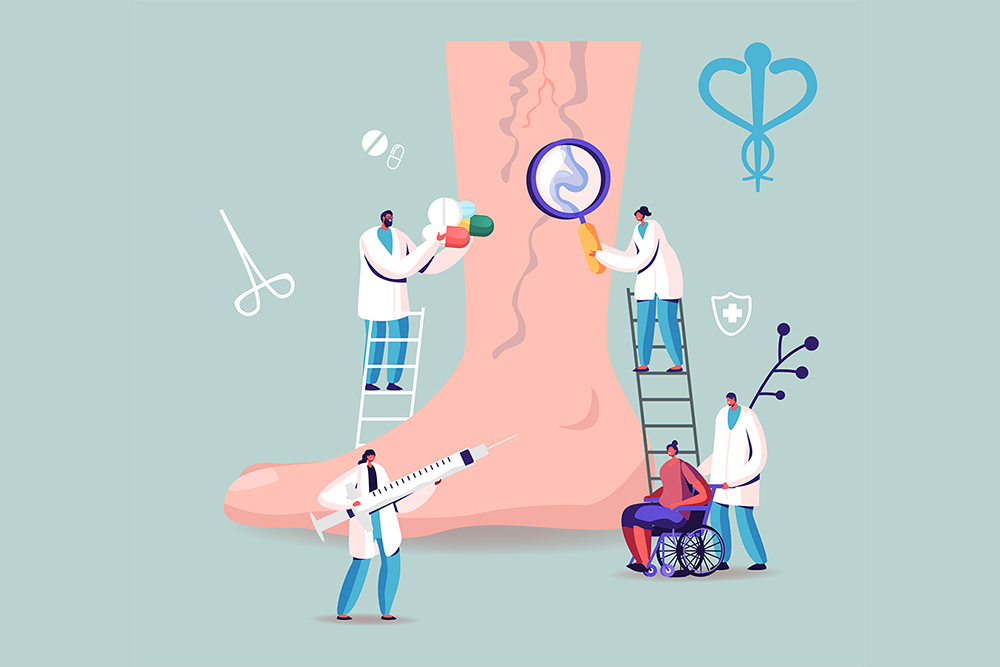
Causes of varicose veins
Varicose veins are caused by valve damage in the veins, leading to abnormal blood flow within the veins.
It occurs when there is a reflux phenomenon where blood flows backward.
Blood from the artery is pushed toward the legs due to the force generated by the heart and gravity.
It flows easily, but veins have to oppose gravity and lack the power, like the heart, to pump the blood.
Only the calf muscles contract, squeezing the veins to push blood toward the heart.
Because blood flows, the blood flow is relatively weaker compared to arteries.
Therefore, the leg veins have valves in the middle to prevent blood from flowing backward.
It is designed to flow only upward without flowing downward.
However, if this valve is damaged due to various causes, the blood does not flow toward the heart.
It flows toward the foot, and if this phenomenon persists for more than 0.5 seconds, it can be diagnosed as varicose veins in the legs.
Typical symptoms of varicose veins
There are several characteristic symptoms of varicose veins.
First, because a lot of blood is pooled in the leg veins, the symptoms include a heavy feeling in the legs.
Leg throbbing, pain, cramps during sleep, and symptoms such as itching around varicose veins may also occur.
These symptoms vary from person to person and are not related to the degree of varicose vein protrusion or reflux.
Even if the blood vessels are severely protruding, there may be no symptoms.
Some people feel their legs are heavy even if the protrusion is not severe. Swelling is also one of the very common symptoms.
When varicose veins occur, the pressure inside the veins increases, causing a type of fluid called interstitial fluid to leak out of the blood vessels. When this accumulates in the subcutaneous fat, swelling occurs.
However, since the causes of leg edema are very diverse, not all cases of edema are due to varicose veins.
Leg swelling occurs due to decreased activity levels, leading to reduced calf muscle mass in the elderly or after surgeries in areas such as the abdomen.
It may occur due to radiation therapy.
In addition, hypothyroidism, heart failure, kidney dysfunction, or certain antihypertensive medications can also be causes.
Therefore, swelling of the lower limbs can temporarily occur in middle-aged and older adults.
If there is no improvement even after a long period, you should check for the presence of the previously mentioned condition.
If further progress occurs here, skin lesions such as recurrent eczema, pigmentation, and congestive ulcers may also develop, so caution is necessary.
Treatment and management according to progress
No severe pain or swelling and no significant inconvenience in daily life
If it is in the early stage, it is okay to wear compression stockings and monitor the condition while going about daily life.
Although individual differences are significant, generally, if the blood vessels are slightly protruding outward,
Since it takes 10 years to proceed to the next stage, if there is minimal discomfort and no significant cosmetic issues
There is no need to rush the treatment.
However, if there are skin symptoms such as eczema, pigmentation, or ulcers, treatment should be started promptly.
Because without surgical treatment, skin lesions repeatedly worsen and improve, gradually deteriorating.
Preventing Varicose Veins
As explained above, if the symptoms of varicose vein surgery are not severe,
There is no benefit to early treatment because it is not absolutely necessary.
Walking exercise that uses calf muscles while wearing compression stockings, as long as it is not inconvenient for daily life
Symptom improvement can be expected with the same conservative treatment.
Prevention is the same. Even if there are no current varicose veins in the legs,
Let's wear compression stockings during working hours and take light walks whenever we have a chance.
Even when resting at home, elevating your legs above your heart to promote upward blood flow is also helpful.
However, realistically, it is not possible to stay in this position for a long time.
The most effective method is to elevate the calf area only during sleep time.