Cashdoc unified search page
1,665 search results for 백내장 증상
Hospital events 4 items

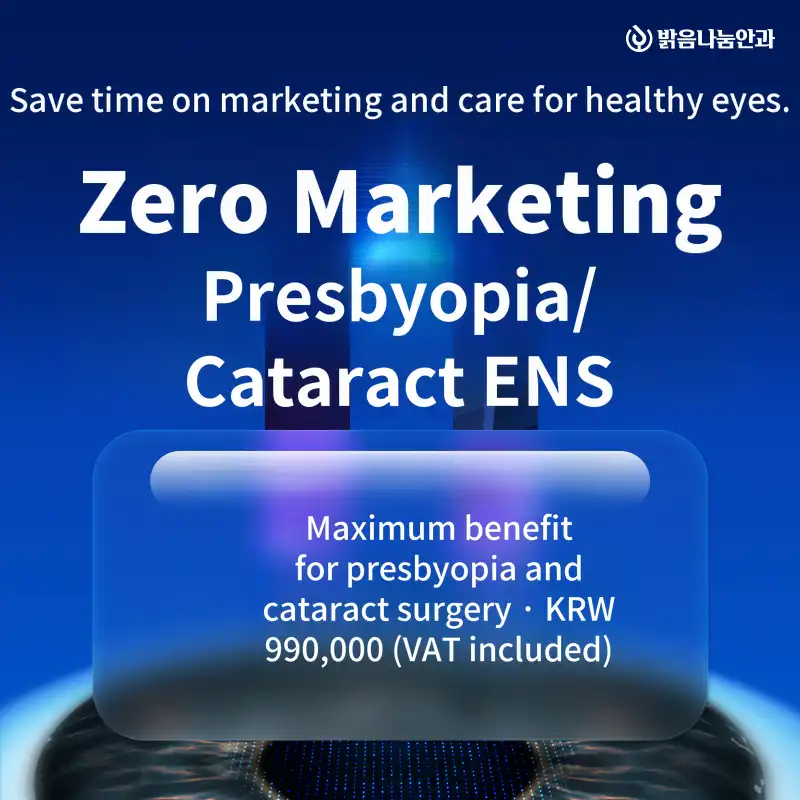
Event price₩990,000 Bright Sharing Eye Clinic Gangnam BranchSeoul Q&A 5Views 125,804
5314 reviews
348
Last Chance for Presbyopia Benefits This Year
Discount rate47% Event price₩950,000Regular price₩1,800,000 Clear Seoul Eye ClinicSeoul Q&A 4Views 157,612
5355 reviews
999+
Hello, magnifying glass! Cataract screening for your second youth!
Event price₩10,000 Gangnam Cube Eye ClinicSeoul Q&A 0Views 387
5519 reviews
13
[Genuine] Zeiss Smile LASIK Discount Event
Discount rate39% Event price₩2,300,000Regular price₩3,800,000 Apgujeong S&B Eye ClinicSeoul Q&A 0Views 6,428
4.751 reviews
91
Hospital reviews 45 items
View moreClear Seoul Eye Clinic
As I got older, my vision became blurry and it was hard to see. I wondered if it was cataracts. I went for a consultation and was grateful for the kind explanation.
25.06.03 Clear Seoul Eye Clinic
After my cataract surgery, I experienced severe dryness, so I went back to the hospital for treatment.
24.01.24 Clear Seoul Eye Clinic
I have been suffering from diabetes for 20 years. I have undergone tests for diabetic retinopathy and cataracts and was told that I have 80% cataract. However, I am having cataract tests every six months, and they do not recommend cataract surgery. Is it enough to just have these tests?
24.08.28 Choi Young-hwan Eye Clinic
I received a prescription because I have early symptoms of cataracts.
24.04.10
Community 1,611 items
View more[Health Column] What is Cataract? A comprehensive overview from early symptoms to post-surgery care[11]
Director Choi Woo-hyuk Hello, this is Director Choi Woo-hyuk. Cataracts are a natural eye condition that can occur with aging. However, if you think, "It's normal for my eyesight to worsen as I get older," and ignore it, you may miss the optimal time for treatment. Today, I would like to talk about cataracts. 1. Early symptoms of cataracts, don't just dismiss them as aging When cataracts begin to develop, vision may feel different in bright and dark environments, and eyes may easily become tired when reading books or using smartphones. In particular, vision may temporarily become more blurred after exercise or when dehydrated. If you notice these changes, it could be a sign of cataracts. 2. What is cataract? A condition where the 'lens' inside the eye becomes cloudy. Cataracts are a condition that occurs as the transparent lens called the 'lens' of the eye gradually becomes cloudy. This lens plays a role in focusing so that we can see objects clearly, but as we age, it loses elasticity and gradually becomes foggy. When the lens becomes cloudy, focus is not properly achieved, causing objects to appear blurry, and light scattering can lead to glare. The symptoms of cataracts can vary depending on the location and degree of cloudiness, and sometimes they only impair vision at certain distances or cause objects to appear overlapped. 3. How is cataract surgery performed? Cataract surgery involves removing the cloudy lens and inserting an artificial lens (intraocular lens) in its place. Recently, ultrasound or laser technology has been used to perform the surgery more precisely. In particular, implanting a multifocal intraocular lens allows for clear vision at both near and far distances, increasing convenience in daily life. The artificial lenses used nowadays have a lifespan of over 80 years, and their durability is so high that most patients do not need to replace them after the initial surgery. 4. Postoperative precautions and management determine recovery. Immediately after surgery, your eyes may become sensitive to light or see colors strangely. Especially in cases where multifocal lenses are implanted, lights may appear to spread or night vision may be somewhat blurry. This usually improves gradually over time, so there's no need to worry too much. After surgery, please use eye drops consistently for three weeks and be careful not to rub or vigorously wipe your eyes. Also, during the first week after surgery, be cautious to prevent water from entering your eyes during washing or showering. Even if you wear glasses, you may experience dryness or foreign body sensation, so using artificial tears can also be helpful. 5. Do not misunderstand color changes, blue light, and misconceptions When cataracts develop, some of the light entering the eye, especially blue spectrum light, is blocked. After surgery removes the cloudiness, this blue light can enter again more easily, which may cause colors to suddenly appear bluish or purplish. However, this is part of the normal recovery process, and the optic nerve gradually adapts. Sometimes, there are claims that wearing blue light blocking glasses can help prevent or improve symptoms of cataracts, but this is incorrect information. Blue light is part of natural sunlight, so it cannot be completely blocked, nor is it necessary to do so. 6. Timing of surgery, "finding the right moment," is the key. Cataract surgery is generally performed when vision deterioration causes inconvenience in daily life. If performed too early, the effectiveness of the surgery may be minimal, and if delayed too long, the risk of other complications such as glaucoma or retinal diseases increases. Just like squeezing acne too early or too late can leave scars, it is important to determine the 'appropriate timing' for cataract surgery. It is advisable to check your eye condition through regular ophthalmic examinations and to make a decision after thorough consultation with a specialist. 7. Recovery period and return to daily life, it is important not to overexert yourself. Vision does not immediately return to normal right after surgery. Most patients feel that their vision clears up within about a day after the procedure, but complete recovery takes a little more time. Washing your face is possible about a week after surgery, and normal daily activities can be resumed without difficulty after approximately three weeks. During this period, the use of eye drops and managing eye dryness are very important, and it is also recommended to limit the use of smartphones and computers during the first two weeks. In conclusion Cataracts are a natural aging phenomenon that anyone can experience. However, the quality of life can vary greatly depending on treatment and management. Instead of thinking "it's a bit uncomfortable but I can tolerate it," it is most important to receive appropriate treatment at the right time based on an accurate diagnosis and the advice of a specialist. Since our eyes are precious organs used throughout our lives, do not hesitate to visit an ophthalmologist if you notice any abnormal signs. Small changes can bring great reassurance. Director Choi Woo-hyuk Graduated from Korea University College of Life Sciences Graduated from Kyung Hee University College of Medicine Kyung Hee University Hospital Resident Full member of the Korean Society of Dermatology and Aesthetic Medicine -------------------------------------------- Are you curious about other people's cataract stories? 👉🏻 What do people in their 60s need when preparing for cataract surgery? 👉🏻 (Concern) Does using a lot of smartphones cause cataracts?
최우혁 원장25.04.01Views 4638Likes 9 Causes and Symptoms of Presbyopia and Cataracts - Professor Cha Heung-won, Seoul Asan Medical Center[4]
https://youtu.be/8tuBj1RqnGU?si=BpTQ0nqpgU60wiJG Q. What are the causes and symptoms of presbyopia and cataracts? Presbyopia is a disease in which nearby objects become difficult to see due to a decrease in accommodative power, and cataracts are a disease in which the lens of the eye becomes cloudy, reducing vision. Both of these diseases can be said to be caused by aging of the eyes. Eventually, as we age, the lens hardens and becomes unable to focus, causing presbyopia. Also, if abnormal proteins accumulate in the lens, it becomes cloudy, which causes cataracts. Professor Cha Heung-won / Department of Ophthalmology, Seoul Asan Medical Center
cogo09224.10.05Views 133Likes 1 Symptoms of cataracts and glaucoma that require immediate hospital visit[1]
괜찮아24.05.19Views 109Likes 0 Are there any signs or symptoms before cataracts develop?[9]
Are there any signs or symptoms before cataracts develop? Whenever something feels off about anything, you go to the hospital for a check-up, right? ^^; Is cataract also a symptom of aging? I've heard that as you get older, you often develop cataracts and need surgery, so I worry even though it might be far off.
김혜민23.10.02Views 143Likes 0
Expert columns 4 items
[Health Column] What is Cataract? A comprehensive overview from early symptoms to post-surgery care[11]
Director Choi Woo-hyuk Hello, this is Director Choi Woo-hyuk. Cataracts are a natural eye condition that can occur with aging. However, if you think, "It's normal for my eyesight to worsen as I get older," and ignore it, you may miss the optimal time for treatment. Today, I would like to talk about cataracts. 1. Early symptoms of cataracts, don't just dismiss them as aging When cataracts begin to develop, vision may feel different in bright and dark environments, and eyes may easily become tired when reading books or using smartphones. In particular, vision may temporarily become more blurred after exercise or when dehydrated. If you notice these changes, it could be a sign of cataracts. 2. What is cataract? A condition where the 'lens' inside the eye becomes cloudy. Cataracts are a condition that occurs as the transparent lens called the 'lens' of the eye gradually becomes cloudy. This lens plays a role in focusing so that we can see objects clearly, but as we age, it loses elasticity and gradually becomes foggy. When the lens becomes cloudy, focus is not properly achieved, causing objects to appear blurry, and light scattering can lead to glare. The symptoms of cataracts can vary depending on the location and degree of cloudiness, and sometimes they only impair vision at certain distances or cause objects to appear overlapped. 3. How is cataract surgery performed? Cataract surgery involves removing the cloudy lens and inserting an artificial lens (intraocular lens) in its place. Recently, ultrasound or laser technology has been used to perform the surgery more precisely. In particular, implanting a multifocal intraocular lens allows for clear vision at both near and far distances, increasing convenience in daily life. The artificial lenses used nowadays have a lifespan of over 80 years, and their durability is so high that most patients do not need to replace them after the initial surgery. 4. Postoperative precautions and management determine recovery. Immediately after surgery, your eyes may become sensitive to light or see colors strangely. Especially in cases where multifocal lenses are implanted, lights may appear to spread or night vision may be somewhat blurry. This usually improves gradually over time, so there's no need to worry too much. After surgery, please use eye drops consistently for three weeks and be careful not to rub or vigorously wipe your eyes. Also, during the first week after surgery, be cautious to prevent water from entering your eyes during washing or showering. Even if you wear glasses, you may experience dryness or foreign body sensation, so using artificial tears can also be helpful. 5. Do not misunderstand color changes, blue light, and misconceptions When cataracts develop, some of the light entering the eye, especially blue spectrum light, is blocked. After surgery removes the cloudiness, this blue light can enter again more easily, which may cause colors to suddenly appear bluish or purplish. However, this is part of the normal recovery process, and the optic nerve gradually adapts. Sometimes, there are claims that wearing blue light blocking glasses can help prevent or improve symptoms of cataracts, but this is incorrect information. Blue light is part of natural sunlight, so it cannot be completely blocked, nor is it necessary to do so. 6. Timing of surgery, "finding the right moment," is the key. Cataract surgery is generally performed when vision deterioration causes inconvenience in daily life. If performed too early, the effectiveness of the surgery may be minimal, and if delayed too long, the risk of other complications such as glaucoma or retinal diseases increases. Just like squeezing acne too early or too late can leave scars, it is important to determine the 'appropriate timing' for cataract surgery. It is advisable to check your eye condition through regular ophthalmic examinations and to make a decision after thorough consultation with a specialist. 7. Recovery period and return to daily life, it is important not to overexert yourself. Vision does not immediately return to normal right after surgery. Most patients feel that their vision clears up within about a day after the procedure, but complete recovery takes a little more time. Washing your face is possible about a week after surgery, and normal daily activities can be resumed without difficulty after approximately three weeks. During this period, the use of eye drops and managing eye dryness are very important, and it is also recommended to limit the use of smartphones and computers during the first two weeks. In conclusion Cataracts are a natural aging phenomenon that anyone can experience. However, the quality of life can vary greatly depending on treatment and management. Instead of thinking "it's a bit uncomfortable but I can tolerate it," it is most important to receive appropriate treatment at the right time based on an accurate diagnosis and the advice of a specialist. Since our eyes are precious organs used throughout our lives, do not hesitate to visit an ophthalmologist if you notice any abnormal signs. Small changes can bring great reassurance. Director Choi Woo-hyuk Graduated from Korea University College of Life Sciences Graduated from Kyung Hee University College of Medicine Kyung Hee University Hospital Resident Full member of the Korean Society of Dermatology and Aesthetic Medicine -------------------------------------------- Are you curious about other people's cataract stories? 👉🏻 What do people in their 60s need when preparing for cataract surgery? 👉🏻 (Concern) Does using a lot of smartphones cause cataracts?
최우혁 원장25.04.01Views 4638Likes 9 [Health Column] Herniated Discs: Why Do They Occur and Why Do They Recur? From Symptoms to Non-Surgical Management[8]
hello, Director Moon Ji-hwan of Rebom Oriental Medicine Hospital no see. When your back is stiff and pain persists, you may start to worry, “Could it be a herniated disc?” , you must have tried it at least once. Herniated disc It feels like a sudden illness, but in reality, The result of accumulated long-term postural habits and alignment breakdown. This is often the case. In particular, the feeling of back pain spreading to the buttocks or legs If this is the case, you should pay more attention. today How lumbar disc herniation begins, why it recurs, and why a structure-centered, nonsurgical approach is important. Let's talk. Read on! Why does a herniated disc occur? 👉 Because the burden on the disc is concentrated due to long-term posture and alignment problems. A herniated disc is a disc that absorbs shock between the vertebrae. A condition in which the nerves are stimulated by being pushed to one side due to the inability to withstand continuous pressure Yes. This pressure does not arise suddenly one day, ✔ Habit of sitting for long periods of time ✔ Working pattern with a bent back ✔ A life of leaning on a deep sofa ✔ Disorientation of pelvic and lumbar alignment These small habits in daily life accumulate over a long period of time and are created. Especially the intervertebral disc The structure is relatively weak at the back, so it is easy to be pushed backwards when repeated postural stress accumulates. This will cause problems. Before you suddenly feel a “twitch!” your back may have been sending signals long ago. It is important to consider the alignment surrounding your lower back rather than just the pain. What symptoms will appear if you have a herniated disc? 👉It doesn't just end with the waist, it can extend to the legs. Back pain isn't everything. When a disc irritates a nerve, pain occurs. ✔ Butt ✔ Thighs ✔ Calf ✔ Up to the feet Radiation tube type It can lead to. Additionally, symptoms may worsen when sitting for long periods of time, bending over, or leaning back excessively, and incorrect stretching may actually worsen the condition. In this case, you definitely need to check If back pain + leg numbness/pulling occurs together You need to check for nerve stimulation. Why do herniated discs recur? 👉Because pain reduction does not mean “alignment has been restored” Just because your symptoms have improved doesn't mean your structure has recovered. If the alignment issue is not resolved, pressure will be concentrated in the same area again, ultimately maintaining the 're-pushing environment'. Originally, the lower back should maintain a gentle C-shaped curve (lumbar lordosis) forward to be stable. When this disc collapses, the load is placed on a specific area of the disc, and the intervertebral disc takes over. So this is a pattern that many people experience. ✔ Get better → let your guard down → get worse again… This is not because the disk is weak, This is often because the lumbar-pelvic-hip axis continues to collapse. Non-surgical Approach: Why Is 'Restoring Spinal Alignment' Important? 👉 An approach that addresses "why the disk was pushed" rather than "the disk was pushed." Spinal alignment restoration surgery does not only look at the lower back, ✔ Waist ✔ Pelvis ✔ Hip joint Evaluating this axis together Focus on correcting broken alignments Leave it. As the alignment returns to its proper position, the pressure concentrated on the disc is relieved, Reduced burden on the nerves A more recovery-friendly environment This is created. The key is not simply to “reduce pain,” Addressing the cause to reduce recurrence are you. FAQ Q1. Do I really need surgery for a herniated disc? A1. Most cases can be recovered without surgery. However, if there are functional changes such as nerve paralysis, muscle weakness, or urinary problems, surgery may be necessary. Q2. Is stretching good for you? A2. Not all stretching is good. Excessive bending or bending of the waist can actually increase pressure, so it is important to proceed according to your individual condition. Q3. If the pain goes away, will it be a complete cure? A3. Pain relief is only part of recovery, and if alignment issues and lifestyle habits are not improved, the possibility of relapse remains. conclusion A herniated disc is not a disease that is simply caused by a single impact. The cumulative result of lifestyle and alignment issues This is often the case. So rather than just temporary pain relief, ✔ Restore balance of the lumbar-pelvic-hip joint structure ✔ Check your lifestyle habits ✔ Sorting-centric approach Doing this together is key to reducing relapse. If the pain is recurring or persists for a long time, check your current alignment and determine the cause of the stress on the disc. “It’s not about pain, it’s about correcting the structure.” It is the most important starting point for returning to a comfortable daily life. Rebom Oriental Medicine Hospital Gangnam Branch Director Moon Ji-hwan Graduated from Kyung Hee University College of Oriental Medicine Kyung Hee University Graduate School of Oriental Medicine, Doctoral Program Visiting Professor, College of Oriental Medicine, Kyung Hee University Former Director of Sasang Medical Banryong Oriental Medical Clinic Former Director of the Department of Oriental Medicine, Chonnam National University Hwasun Geriatric Hospital Executive Director of the Korean Society of Spinal Orthopedics Member of the Korean Society of Oriental Medicine Member of the Korean Society of Oriental Internal Medicine Member of the Korean Society of Acupuncture and Moxibustion Medicine Member of the Korean Society of Oriental Medicine Research Fellow, Korean Society of Joint Rehabilitation Member of the Korean Society of Obesity Studies See other columns by Dr. Moon Ji-hwan of Rebom Oriental Medicine Hospital > [Health Column] Facial Asymmetry: More Than Just a Jaw Problem? - Why Cervical and Whole Body Imbalances Matter [Health Column] Spinal Stenosis: Pay Attention to the Signals Your Legs Send Before Your Back!
문지환 원장25.12.31Views 185Likes 5 [Health Column] Post-Traumatic Stress Disorder (PTSD): Symptoms and Treatment Methods[7]
Director Choi Woo-hyuk Hello, this is Director Choi Woo-hyuk. Post-Traumatic Stress Disorder (PTSD) is a mental health condition that occurs after an individual experiences or witnesses a life-threatening event or severe injury. These traumatic events can include war, natural disasters, serious accidents, violence, and sexual assault, among others, and PTSD is defined as a psychological response that appears following such incidents. Main symptoms of PTSD The symptoms of PTSD are broadly classified into four categories: - Reexperiencing Trauma: The phenomenon of repeatedly recalling the traumatic event or having nightmares about it. This can also manifest as flashbacks, causing the individual to relive the emotions and physical responses experienced at the time. - Avoidance symptoms: behaviors aimed at deliberately avoiding thoughts, feelings, places, or people related to trauma. This can lead to a decrease in daily activities and social isolation. - Negative cognition and emotional changes: Negative beliefs about oneself or others, persistent fears, anger, guilt, and other emotional changes appear. This can lead to decreased interest, emotional blunting, and forgetting traumatic experiences. - Hyperarousal symptoms: Hyperarousal leads to heightened anxiety, resulting in hypersensitivity, sleep disturbances, decreased concentration, and excessive vigilance. This can manifest as easily startling or irritability. Some PTSD patients may experience dissociative symptoms after traumatic events. Dissociative symptoms refer to phenomena where individuals experience amnesia or temporary separation or disconnection of consciousness, identity, or emotions. In particular, those with a history of childhood abuse, neglect, or psychological trauma are more likely to exhibit dissociative symptoms. This is because stress caused by trauma can impair the ability to integrate consciousness and memory. PTSD treatment methods Treatment for PTSD mainly involves psychotherapy and medication. - Psychotherapy: Cognitive Behavioral Therapy (CBT), exposure therapy, Eye Movement Desensitization and Reprocessing (EMDR), and others are known to be effective. These treatments help reconstruct negative cognitions and emotions related to traumatic events and reduce avoidance behaviors. - Pharmacotherapy: Medications effective for various PTSD symptoms, including antidepressants such as selective serotonin reuptake inhibitors (SSRIs), are used. These medications can include those for re-experiencing, hyperarousal, anxiety, and depression. Pharmacotherapy can be used in conjunction with psychotherapy to help alleviate symptoms. PTSD brain injury PTSD is a mental health issue that appears after experiencing a severe traumatic event and can cause brain damage. Studies show that the hippocampus in PTSD patients shrinks, which can affect memory and learning abilities, and hyperactivation of the amygdala can lead to excessive fear responses. Additionally, decreased function of the prefrontal cortex can impair emotional regulation and decision-making abilities. These brain changes are closely related to the severity of PTSD symptoms. PTSD diagnostic criteria The diagnosis of PTSD is made by mental health professionals, and the main diagnostic criteria are as follows: Experience of traumatic incidents: actual or threatening death, serious injuries, sexual violence, or witnessing such events. - Re-experiencing symptoms: recurrent recollections of traumatic events, nightmares, flashbacks, etc. - Avoidance symptoms: behaviors aimed at avoiding trauma-related thoughts, feelings, places, and people. - Negative changes in cognition and emotion: negative beliefs about oneself or others, persistent negative feelings, decreased interest, etc. - Hyperarousal symptoms: hypersensitivity, sleep disturbances, decreased concentration, excessive vigilance, etc. If these symptoms persist for more than a month and significantly interfere with daily life, they can be diagnosed as PTSD. Limitations of self-diagnosis and self-treatment of PTSD PTSD involves complex symptoms, so self-diagnosis and self-treatment have limitations. For accurate diagnosis and effective treatment, evaluation and guidance by a psychiatrist specializing in mental health are essential. Therefore, if symptoms are suspected, it is important to visit a specialized medical institution for consultation. The difference between PTSD and trauma 'Trauma' refers to the psychological wounds or shocking events experienced by an individual, which can be the cause of PTSD. On the other hand, PTSD is a specific mental health disorder that appears after such trauma, encompassing various symptoms mentioned earlier. Therefore, trauma refers to the event itself, while PTSD denotes the resulting condition. Difference between PTSD and Panic Disorder PTSD and panic disorder both fall under anxiety disorders, but they differ in their causes and symptoms. PTSD occurs after a traumatic event and is characterized by flashbacks, nightmares, and avoidance behaviors related to the event. In contrast, panic disorder is characterized by recurrent sudden panic attacks without a specific trigger. Therefore, different treatment approaches are applied to each disorder. PTSD is a disorder that can seriously affect an individual's life, but recovery is possible through proper treatment. If you suspect symptoms or are experiencing difficulties, do not hesitate to seek professional help. With accurate diagnosis and treatment, you can return to a healthy daily life. Director Choi Woo-hyuk Graduated from Korea University College of Life Sciences Graduated from Kyung Hee University College of Medicine Kyung Hee University Hospital Resident Full member of the Korean Society of Dermatology and Aesthetic Medicine -------------------------------------------- Are you curious about how others overcome PTSD? 👉🏻 I am recovering from PTSD caused by a near-drowning experience. 👉🏻 The meaning, symptoms, and treatment of PTSD 👉🏻 I am sharing two methods I used to overcome PTSD.
최우혁 원장24.12.04Views 5980Likes 16 [Health Column] 7 Key Things to Know if You're Experiencing Early Symptoms of Shingles[16]
Choi Woo-hyuk ledger Hello, this is Director Choi Woo-hyuk. Shingles is a disease that requires caution at this time of year when immunity is easily weakened due to large daily temperature fluctuations. In this article, All information about shingles, including early symptoms, contagiousness, causes, recovery period, self-diagnosis and self-treatment, and treatment. I would like to organize it for you. Shingles is A disease in which the varicella-zoster virus (VZV) remains dormant and becomes active when immunity is weakened. It is usually caused by infection in childhood, causing chickenpox, and then lying dormant around the nerves without any symptoms, and then coming out through the nerves when the immune system is weakened. A disease that causes skin rashes and severe pain no see. Early symptoms of shingles Early symptoms of shingles If you have pain and a red rash There are many. It usually appears on one side, and if you divide the body in half with the head as the center, the rash appears on only one side and does not spread to the other side. It most often appears on the torso or buttocks, but it can appear anywhere, including the face, arms, and legs. The rash appears 2-3 days after the pain occurs, and it may be accompanied by severe pain, fever, and headache. The blisters last for about 2-3 weeks, and after the blisters disappear, pustules and crusts form, and then gradually disappear. Recognizing these early symptoms of shingles and treating them promptly can help reduce the severity of the disease and shorten its duration. Shingles symptoms Shingles symptoms are usually A painful, red rash on one side of the body or face . Within a few days, this rash may develop into fluid-filled blisters. Systemic symptoms, such as fever, fatigue, and headache, may also occur. Especially in people over 50, pain that persists after the rash subsides (postherpetic neuralgia) may also occur. Shingles contagiousness Shingles Although the contagiousness is low, people who have not been exposed to the chickenpox virus should be careful. You should. Shingles and chickenpox are the same virus, so being infected with this virus can cause chickenpox. Because the blisters that result from shingles are contagious, direct contact should be avoided to prevent transmission of the virus. You are usually contagious for 2-3 days after the rash begins, and if it persists for longer, you may be contagious for up to 7 days. This period may vary from person to person, but In the early stages, when the blisters have subsided and all the blisters have crusted over, there is little chance of transmission. You can rest assured at this time. Why do you get shingles? The main reason for getting shingles is weakened immunity It is in. A weakened immune system is not only due to natural aging or old age, but also has various causes such as AIDS, organ transplant, chemotherapy/radiation therapy, use of immunosuppressants, stress, illness, and accidents. Even in people who have had chickenpox, if their immune system is significantly weakened, the virus can reactivate and cause shingles. For this reason, shingles is more likely to occur in adults over 50-60 years of age, who have a weakened immune system, so prevention and immune management are important. Shingles recovery period Shingles recovery period Usually about 2 to 4 weeks The recovery period varies depending on the individual's immune response and the severity of symptoms, but skin lesions usually heal within 2 to 4 weeks. However, If you have neuralgia, the pain lasts for more than 6 months. Additional care may be required as this may be necessary. Self-diagnosis and self-treatment Shingles Self-Diagnosis Shingles can be difficult to distinguish from other skin conditions because its symptoms are similar to those of other skin conditions. ▷ Do you feel a tingling or itching sensation in a specific area of your skin? ▷ Do you have any local pain or burning sensation? ▷ Is the rash or blisters concentrated on one side of your body? ▷ Do you have any systemic symptoms such as fatigue, fever, or headache? If you experience these symptoms, you may suspect shingles, and it is recommended that you consult a specialist for an accurate diagnosis. How to self-treat shingles The effect is small, and the most certain way to treat it is Taking antiviral medication as soon as possible However, if it is difficult to take antiviral medication immediately, pain can be temporarily controlled through methods such as cold compresses, use of general pain relievers, and rest. however Golden time for shingles treatment If treatment is not sought within 72 hours of the first rash appearing, the severity of the pain may increase or the duration of the illness may be prolonged. Therefore, it is recommended to seek treatment as soon as possible when the initial symptoms of shingles appear. Shingles treatment Treatment of shingles is mainly Use antiviral drugs to suppress the activity of the virus and relieve symptoms Antiviral drugs can cause rashes It is more effective if administered within the first 72 hours. If the pain is severe, additional painkillers or tranquilizers may be prescribed. Applying soothing ointments or applying compresses to the affected area can help alleviate discomfort. Furthermore, adopting lifestyle habits that strengthen the immune system can help reduce the risk of recurrence. Shingles is a disease that can easily occur when the immune system is weakened, and it can lead to aftereffects like neuralgia, so early treatment is crucial. Middle-aged and older adults are particularly at risk, so vaccination is recommended even if they have no symptoms. Focusing on prevention and management, as well as maintaining immune-boosting lifestyle habits, is helpful. We encourage you to reduce your risk of shingles by living a healthy lifestyle and maintain physical and mental stability. Director Choi Woo-hyuk Graduated from Korea University's College of Life Sciences Graduated from Kyung Hee University College of Medicine Kyung Hee University Hospital Resident Regular member of the Korean Society of Dermatology -------------------------------------------- Other people's Stories about shingles Go see 👉🏻 Shingles Vaccination Summary (Price, Side Effects, Frequency, etc.) 👉🏻 [Honey Tip] How to Prevent and Deal with Shingles 👉🏻 Share your shingles symptoms, pain, treatment reviews, and recovery process.
최우혁 원장24.11.20Views 12320Likes 22