

거친 찔레꽃
라운더  숄더 목디스크 위험
저도 조심해야 겠는데요
어깨아파 병원갔을때 목디스크도
조심하라고 했거든요
정보감사합니다


Install the Cashdoc app
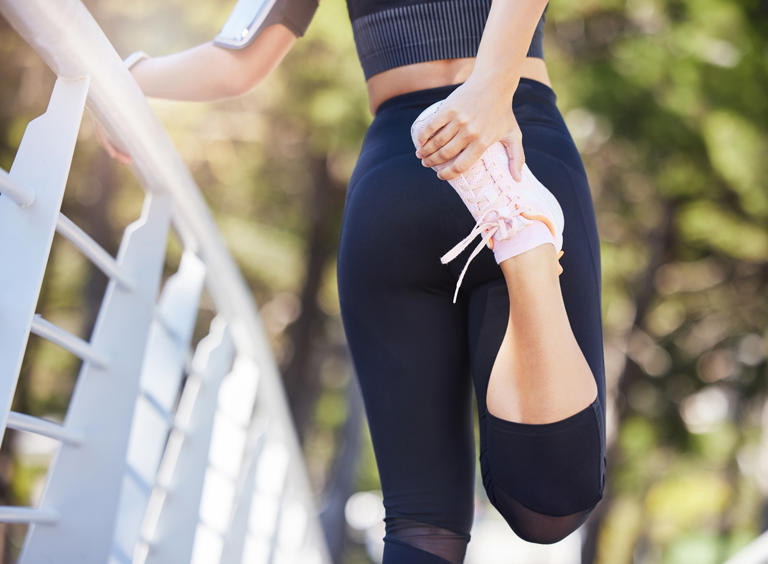
Improper bone and muscle health can be easily detected by physical appearance. Some conditions, in particular, can be suspected simply by looking at someone's back.
Flat buttocks, risk of spinal and knee diseases
A flat buttocks without muscle is a warning sign of back and knee problems. A flat buttocks often means weak muscles around the spine, which directly transfers the shock from exercise to the lower back and knees. Flat buttocks also cause friction with the pelvis, potentially leading to bursitis, an inflammation of the bursa surrounding the ischial bone. Climbing stairs stimulates the buttock muscles more than walking on level ground. Regularly climbing stairs will naturally strengthen the buttock muscles, leading to a more upright hip. Strengthening your buttocks further enhances the benefits. Keep your back, waist, and shoulders straight, and your lower abdomen pulled in. Keep your buttocks engaged and your heels touching the floor as you walk.
Weak calves, a sign of sarcopenia
People with weak calves in middle-aged and older adults are more likely to have sarcopenia. Sarcopenia is a decline in muscle mass and function due to aging or decreased exercise, and is most common in people over 65 years of age. According to the University of Tokyo's Institute of Geriatrics, if the circle is larger than the circumference of the calf and leaves a loose area around the circumference, sarcopenia may be present. Sarcopenia is dangerous, as it can lead to falls and fractures, increasing the risk of death by two to five times. To prevent muscle loss, consume a balanced diet of animal proteins like meat and fish and plant proteins like beans and nuts. Vitamin D supplementation is also recommended. Heel raises can also help strengthen calf muscles. Place both hands on a wall or chair, stand vertically, and raise and lower your heels. Do three sets of 10 repetitions.
◇Different shoulder and hip heights on both sides, suspected scoliosis
If you see a significant difference in shoulder and hip height when viewed from behind, this could be scoliosis. Scoliosis causes the spine to curve in a C or S shape, resulting in differences in pelvic and shoulder height. This can make the body appear tilted to one side. Mild scoliosis may not appear different from the front, but in severe cases, the difference can be seen by bending over at a 90-degree angle and observing the shoulder height. Severe deformities can affect breathing, leading to decreased lung function and, with age, degenerative arthritis in the spine. Foam roller stretching can be helpful for scoliosis. It relaxes the thoracic and lumbar muscles, correcting posture and relieving pain.
◇Round shoulders, risk of cervical disc herniation
If you have rounded shoulders, which are rounded shoulders on both sides, your neck health is poor. Rounded shoulders cause you to lean your neck back too much and hunch your back. This can lead to cervical or lumbar disc herniation, as well as myofascial pain syndrome, which causes pain around the neck and shoulders. This problem is especially common among those who sit for long periods of time, students preparing for exams, and those who don't get enough exercise. To alleviate rounded shoulders, maintain good posture and stretch regularly. Open your chest, pull your shoulders back and down, contracting the muscles behind your shoulder blades and under your armpits. Hold for five seconds. Repeat at least 10 times. It's even better if you combine this with exercises that strengthen your back muscles (trapezius and latissimus dorsi).
===================
Since it's called a full round solder, the shoulders are also like that.
There are also some dark trees
I have a herniated disc
I think I've been suffering from back pain for quite some time.
I've been working hard on my shoulder blades these days.