


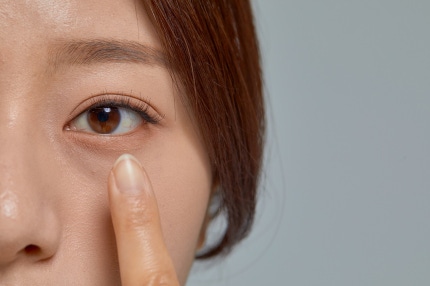
 If dark circles do not disappear even after getting enough sleep, pigmentation, under-eye fat, or rhinitis may be the cause./Photo = Getty Images Bank
Some people are stressed because no matter how much they endure, the dark circles under their eyes do not disappear. If dark circles do not go away even after getting enough sleep, there may be other causes.
Pigmentation under the eyes can become darker like dark circles due to excessive secretion of pigmented substances such as tonal cosmetics or melanin (the pigment produced by melanocytes in the skin in response to ultraviolet rays). In particular, repeated heavy eye makeup or sleeping without removing makeup can easily cause pigmentation around the eyes. Dark-colored eye shadows, eyeliners, mascaras, and other products contain high concentrations of pigments along with additives that enhance adhesion to the skin. Additionally, allergic reactions to ingredients in cosmetics can cause dermatitis, leading to darkening around the eyes. In such cases, it is recommended to apply cosmetics containing glycolic acid, which has the effect of brightening skin tone. Furthermore, since ultraviolet rays can stimulate melanin production and cause pigmentation, it is essential to apply sunscreen when going outside.
If the fat under the eyes protrudes, it appears sunken like dark circles, creating grooves. The fat under the eyes is usually caused by skin sagging due to aging. Stress, irregular lifestyle habits, and genetic factors can also influence it. The fat under the eyes can be repositioned through a procedure to alleviate symptoms. Eyelid fat repositioning refers to a procedure that smooths out bulging fat under the eyes and moves it to the sunken areas. If the entire area under the eyes, including the grooves, is severely sunken, fat grafting or filler procedures to fill the grooves can also be performed. To prevent the formation of fat under the eyes, it is important to improve daily lifestyle habits. Avoid rubbing the eye area vigorously, and maintaining good skin condition through sufficient sleep and stress management is essential.
If dark circles worsen during seasonal changes, allergy rhinitis may be the cause. When allergy rhinitis occurs and the nose becomes blocked, blood circulation in the nasal cavity is hindered, causing blood flow beneath the eyelids to stagnate. At this time, a pigment called hemosedrin, which has a dark red color, deposits in the skin, making it appear bluish like dark circles. In fact, about 60-70% of children with allergic rhinitis also have dark circles, and there are reports that the darker and larger the dark circles, the more severe the allergy rhinitis. Therefore, it is advisable to avoid the triggers that cause allergies as much as possible. If symptoms do not improve after removing the cause, medication such as antihistamines or immunotherapy can be administered.
Pigmentation
Under-eye fat
Rhinitis
