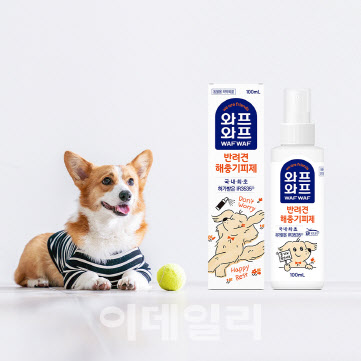


A bug repellent is a product that does not directly kill insects but uses ingredients that insects dislike to block their approach. The Korea Food & Drug Administration (MFDS) has approved it as an over-the-counter drug after confirming its repellent effect and safety. However, bug repellents in the form of bracelets or stickers are non-medicinal products that have not received MFDS approval, and their effectiveness has not been verified. When purchasing, it is advisable to check whether the container or packaging has the words "over-the-counter drug" printed on it.

According to the Pharmaceutical Information Center, in Korea, ingredients such as diethyltoluamide (DEET), ikaridin, ethyl butyl acetylaminoproprionate (IR3535), and lemon eucalyptus oil (para-menthane-3,8-diol·PMD) are recognized as insect repellents.
When using double sunscreen, that is, sunscreen and insect repellent, be cautious of ingredients containing DEET. Higher concentrations can cause side effects such as skin irritation. When used together with sunscreen, DEET can be absorbed into the skin more easily, so it is recommended to apply the insect repellent 20 to 30 minutes after applying the sunscreen.
The ingredients DEET and IR3535 should be used with caution even by people wearing glasses, as these two substances can damage plastic eyeglass frames, watch glass, rayon, spandex, and acetate.
Icaridin-based insect repellent has low skin irritation and toxicity, and is increasingly used recently. It was developed from plants related to pepper, and it prevents insects from approaching by blocking their ability to detect human scent.
Even if the insect repellent containing the mentioned ingredients is approved as a quasi-drug, sensitive skin may experience irritation. This is why you should not spray excessively, and after returning home, you should thoroughly wipe off the repellent from your skin and wash your clothes. When spraying, keep a distance of 10-20 cm and avoid inhaling when applying to the face. It is especially recommended not to use it in enclosed spaces or near food and kitchenware.
Do not apply or spray on areas with wounds or inflammation, or on mucous membranes or around the eyes. Usually, the effect lasts for about 4 to 5 hours after a single application or spray, so be careful not to use it more frequently than necessary. Do not use on infants under 6 months old, and when applying to children, adults should be careful to avoid wounds, mucous membranes, and eyes.