

훔
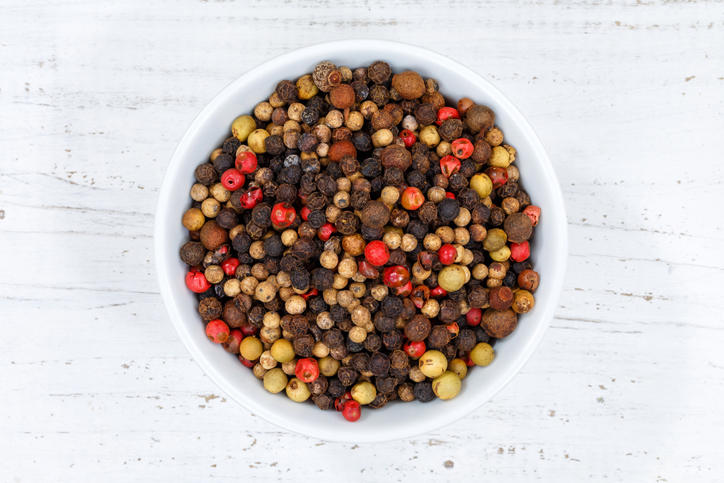
적후추는 처음보네요
흑후추를 주로 먹는데 가열하면 안좋다는 말도 있던데 맞는지 모르겠어요


Install the Cashdoc app
This crunchy, chewy treat... Eating it well will help you age less. © Provided by: Health Chosun
Pepper, a spice that balances the bland flavor of food, comes in a variety of forms, from powdered pepper to whole, ground peppercorns. It's used in a variety of dishes, including seolleongtang (ox bone soup), manduguk (dumpling soup), soups, and steaks. While many people think of pepper as a simple seasoning, its use can surprisingly have health benefits. Let's explore the health benefits of pepper.
◇Black pepper, white pepper, green pepper, red pepper… there are countless varieties.
Peppers come in a variety of colors depending on the variety.
. ▲Black pepper is made by picking unripe peppercorns and drying them in the sun for 7 to 10 days. It has a strong spicy flavor and aroma, so it is used in meat dishes such as steak.
▲White pepper refers to peppercorns that have been soaked in water and the skin removed when fully ripe. Because of their mild flavor and neutral color, they are often used with fish dishes.
Green pepper is made from unripe peppercorns, either dried or soaked in brine. Its fresh aroma and chewy texture make it ideal for eating raw or as a side dish with salmon salad. These three varieties, while differing in color, are essentially the same peppercorns, harvested at different times and dried using different methods.
▲Red pepper is a different species of pepper plant. It has a reddish color and is mainly used in fruit sauces and salad dressings.
The quality of pepper is determined by various factors, such as the size of the peppercorn, its uniform color, and the content of 'piperine', which gives pepper its flavor, and 'pinenferlandrene and piperonal', which are volatile essential oil components.
◇Anti-aging and antipyretic analgesic with 13 times stronger antipyretic effect
Pepper helps prevent cellular aging. Piperine, which determines the spiciness and aroma of pepper, is classified as a polyphenol and has antioxidant properties. In fact, research from the University of Missouri in St. Louis, Missouri, found that pepper contains various antioxidants, which inhibit the proliferation of colon cancer cells.
Pepper also has anti-inflammatory properties, and several related studies have published results. In fact, an animal experiment conducted by a research team at Kyung Hee University found that the piperine component in pepper suppresses inflammation-causing substances, exerting anti-inflammatory effects. An animal experiment conducted by the Seoul National University Herbal Medicine Research Institute found that pepper exhibited antipyretic effects 13 times stronger than acetaminophen, an antipyretic analgesic.
◇“It’s bad for the stomach” “It sticks to the stomach wall”… Nonsense
Meanwhile, some say pepper is bad for the stomach. Unless you consume excessive amounts at once, this isn't true. Pepper actually promotes digestion. This is because pepper stimulates the secretion of digestive juices. When you eat pepper, the pungent spiciness of piperine stimulates the tongue, which stimulates the secretion of digestive juices in the stomach, thus aiding digestion.
The myth that pepper sticks to the stomach lining is also a myth. While pepper is a spice, it's also a food, so it can't stick to the stomach or intestinal walls. Food is broken down by digestive juices, and any substances not broken down by digestive juices are broken down by intestinal bacteria.
◇When cooking meat, be sure to sprinkle it after heating.
To enjoy the strong aroma and spiciness of pepper, add it at the end of cooking. However, when cooking meat, always sprinkle the pepper after cooking. This is because pre-cooking increases the amount of acrylamide, a known carcinogen.
According to the results of an experiment by the Ministry of Food and Drug Safety, the amount of acrylamide in a dish sprinkled with pepper after grilling meat was 492 ng (nanograms), but when grilled with pepper sprinkled on, the acrylamide increased by more than 14 times to 7139 ng.
Powdered pepper loses its flavor if stored for a long time, so store it in an airtight container.
Since ground whole peppercorns lose their flavor and aroma when ground in advance, grind them and sprinkle them on whenever you cook. Peppercorns are prone to mold, so they should be stored in the freezer.
==============
This is my first time learning about freezing pepper.
Aging is a constant concern.
I like to sprinkle pepper on food.
I didn't know there were so many pepper colors.