


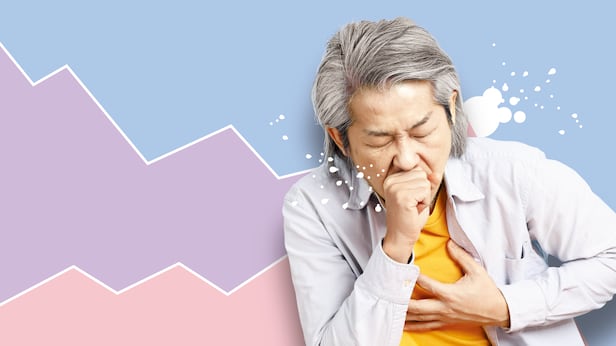
A 73-year-old woman, Ms. Han, had mild heart failure and was receiving treatment for hyperlipidemia.
I can't do strenuous exercise, and I walk, but recently, I started feeling short of breath after just a short walk. I thought it was a heart condition and just ignored it. The lung CT scan I had during a health checkup was also normal. Then, one night, I had a severe coughing fit and went to the emergency room, where I was diagnosed with asthma. While asthma develops later in life, symptoms are often mild due to lack of physical activity, and other conditions often mask it, leading to a late diagnosis.

◇Significant increase in asthma among the elderly
Asthma is a chronic allergic inflammation of the respiratory tract, causing swelling of the airways, coughing, wheezing, and, in severe cases, shortness of breath. While childhood asthma was previously associated with dust mite, dog, or cat allergies, the prevalence has recently increased significantly in elderly individuals, often due to the aftereffects of respiratory viral infections. This suggests a shift in the age distribution of asthma onset.

Asthma in the elderly began to increase in the late 2000s when the aging population exceeded 10%. Combined with factors such as increased fine dust air pollution and respiratory infections, it is now estimated that one in eight (12.7%) of seniors aged 65 or older suffer from asthma.
According to an analysis by the Korean Academy of Asthma, Allergy and Clinical Oncology, the number of asthma patients aged 50 to 80 has increased by 45% since the COVID-19 pandemic, with the majority of these patients in their 70s and 80s. The number of asthma patients, which was around 1.4 million before the pandemic, fell to around 690,000 in 2021, the peak of the pandemic, before rebounding to an estimated 1.42 million last year.

Kim Sang-heon (Professor at Hanyang University College of Medicine), Executive Director of the Korean Society of Asthma and Allergy, said, “We believe that respiratory virus infection disrupts the immune system of the respiratory mucosa that comes into contact with external air and substances, thereby inducing the development of asthma.” He added, “Elderly people are vulnerable to respiratory infections, and non-allergic asthma has recently increased significantly due to the long-term sequelae of COVID-19 infection.” It seems that COVID-19 has left scars on the respiratory tract. As such, most cases of asthma in the elderly occur later in life, after having developed asthma within the past 10 years.
◇Elderly asthma, diagnosed late
Older adults tend to accept shortness of breath as a natural consequence of aging or as a consequence of age-related changes in bodily functions. Similar symptoms can also occur in other conditions, such as heart disease or chronic obstructive pulmonary disease (COPD), or in long-term smokers, so asthma can often be overlooked.
Jang An-soo (Professor at Soonchunhyang University School of Medicine), Chairman of the Korean Society of Respiratory Allergy, said, “A pulmonary function test is absolutely necessary to diagnose asthma, but since most local clinics do not perform this test, many people go undiagnosed and are diagnosed with asthma later when their symptoms worsen and they come to the hospital.” He added, “Once lung function is damaged, it is difficult to restore it, but recently, there are various effective inhaled steroids and biological agents being used, so if you receive asthma treatment at the right time, you can preserve lung function and lead a good daily life.”
If you're older and experiencing coughing or shortness of breath, don't simply dismiss it as a cold. Consider asthma. If your cough is particularly worse at night, your chest tightens when exposed to cold air, your cold symptoms persist for more than a month, or your breathing is more labored or wheezing than usual, you should consider asthma and consult an allergist or respiratory specialist at a general hospital.
==============
My father has a bit of a cough.
Is this Yonggaksan?
It tastes like peppermint and is good for your throat.
You can also eat it
Cough -> I guess I should suspect asthma.


